Band 4 of 4Formality 1 through 47 dress codesUnited States edition
Casual Dress Codes
The bottom of the DressDex scale, plus the four codes that carry the word casual from a step above it. Seven codes where the cloth does all the work.
The ten point scaleEvery band, and where this one sits
- Casual7 codes, on this page
- Semi formal13 codes
- Formal17 codes
- Most formal4 codes
What the casual band means
Casual on an invitation almost never means what casual means at home. Formality 4 and below is the part of the scale where nothing is prescribed and everything is judged, which makes it the hardest band to dress for and the one people most often underestimate. There is no garment you must wear and no garment that is automatically safe. What the codes here have in common is that they ask for clothes that fit, clothes in good condition and clothes that were chosen rather than grabbed. A host who writes Smart Casual is not asking for less than a suit. They are asking for the same amount of attention spent somewhere other than tailoring. The practical consequence is that this band rewards fabric, fit and shoes, in that order, and punishes anything that looks worn out. A plain merino knit that fits properly outranks a jacket that does not. A clean leather shoe outranks a smart shirt above a scuffed one. Nothing here is about how much a garment cost, and everything here is about whether it looks looked after.
The 7 codes in this band
Most formal first
- Business Casual
Formality 5 of 10. Sits at 5. The office code that keeps a collar and a smarter shoe without asking for a suit.
- Dressy Casual
Formality 5 of 10. Sits at 5. Nice dinners and slightly upscale gatherings, one clear step above a weekend.
- Luxury Casual
Formality 5 of 10. Sits at 5. The only code here that is genuinely about materials rather than shapes.
- Upscale Casual
Formality 5 of 10. Sits at 5. A host asking for visible effort without naming a garment.
- Corporate Casual
Formality 4 of 10. The default in flexible workplaces. Conservative colour and shape, and no jacket unless a client is coming.
- Elevated Casual
Formality 4 of 10. Fashionable weekday events and creative offices. The same categories of garment in a better cloth.
- Smart Casual
Formality 4 of 10. The most requested and most misread code on the site. Structure without formality, and a real shoe.
The number is where the code sits on the ten point scale. Each name opens that code and its plates.
Which codes are in this table and why
Three codes sit at formality 4 or below on the DressDex scale. Smart Casual, Elevated Casual and Corporate Casual are the true members of this band. Four more appear in the table with the number 5 beside them, which is honest rather than an error. Business Casual, Dressy Casual, Upscale Casual and Luxury Casual all carry the word casual, all of them are what people are looking for when they arrive here, and all of them sit one step up in the semi formal band. Leaving them out would make the table tidy and make it less useful, so they are here with their real formality showing. Read the number in the second column before you read the name. It is the more reliable of the two, because these seven names were written by different hosts over several decades and none of them agreed on a scale. If a code in the table is a step above what you need, the codes at 4 are directly below it and the same wardrobe usually covers both.
How the codes inside it differ
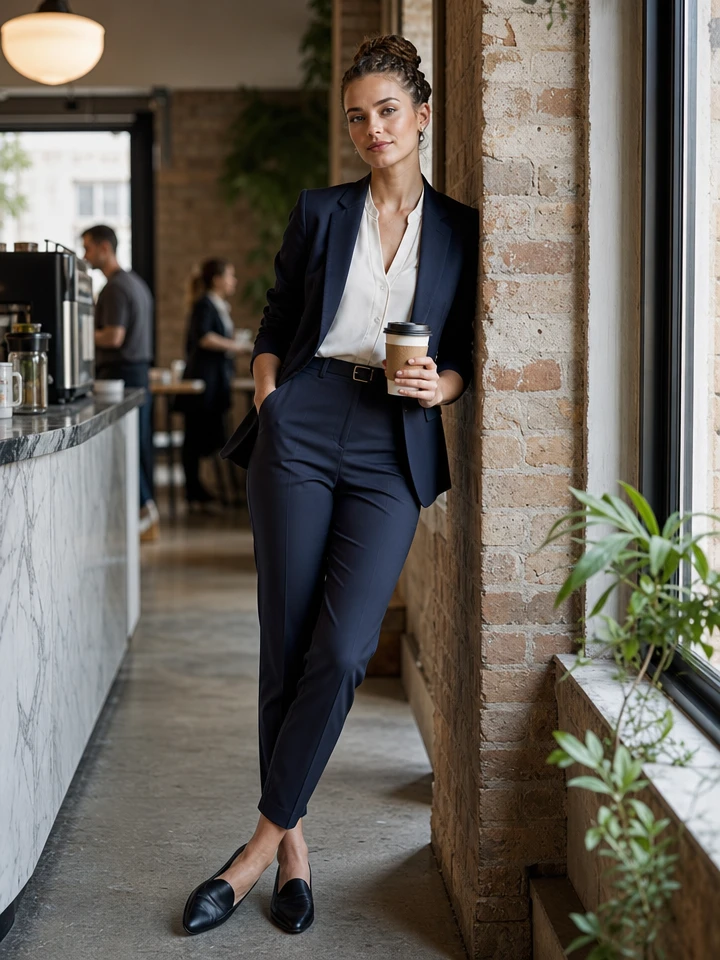
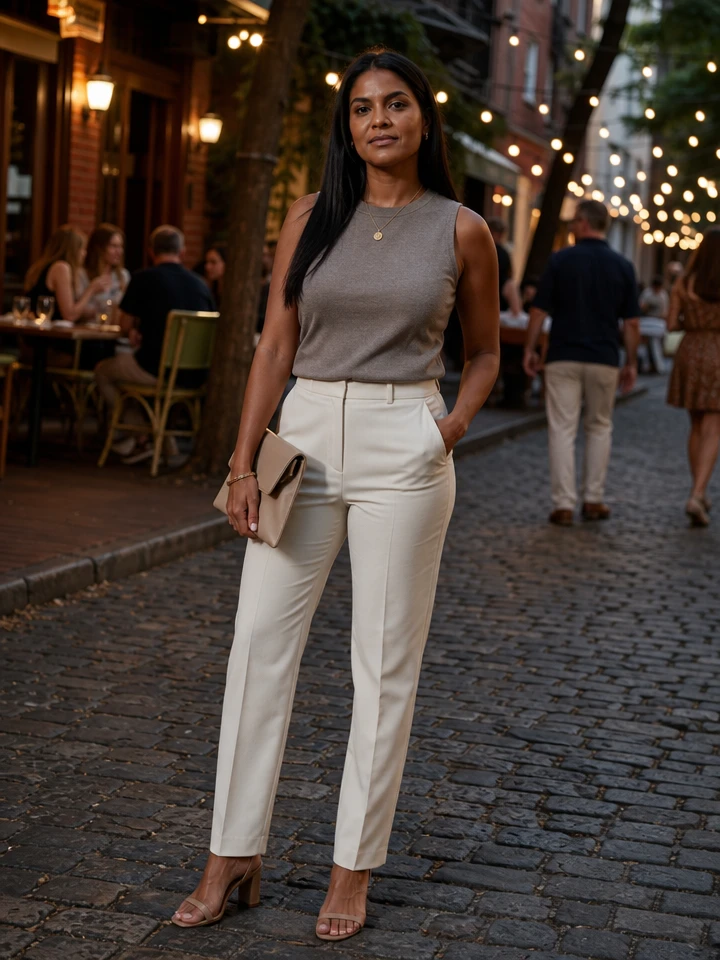
Smart Casual is the one you will meet most and the one that is most often misread. It means clothes with structure but without formality, so a collar or a good knit, a trouser or a dark jean, and a real shoe. It is not a suit without a tie and it is not a weekend outfit with a jacket thrown over it. Elevated Casual takes the same territory and pushes it toward quality and cut. The garments are the same categories and the fabric is a level better, and it is the code fashionable weekday events and creative offices tend to use. Corporate Casual is the office version of the same idea, more conservative in colour and shape, and it is the default in most flexible workplaces where nobody wears a jacket unless a client is coming. The four codes at 5 differ from those three in one way and one way only, which is that they expect the outfit to look deliberately dressed rather than simply neat. Business Casual keeps the office context and adds a collar and a smarter shoe. Dressy Casual and Upscale Casual are the same social idea written by two hosts, one clear step above a weekend. Luxury Casual is the only one of the seven that is genuinely about materials, and it asks for cashmere, silk, fine cotton and good leather in shapes that are not dressed up at all.
Moving up and down from here
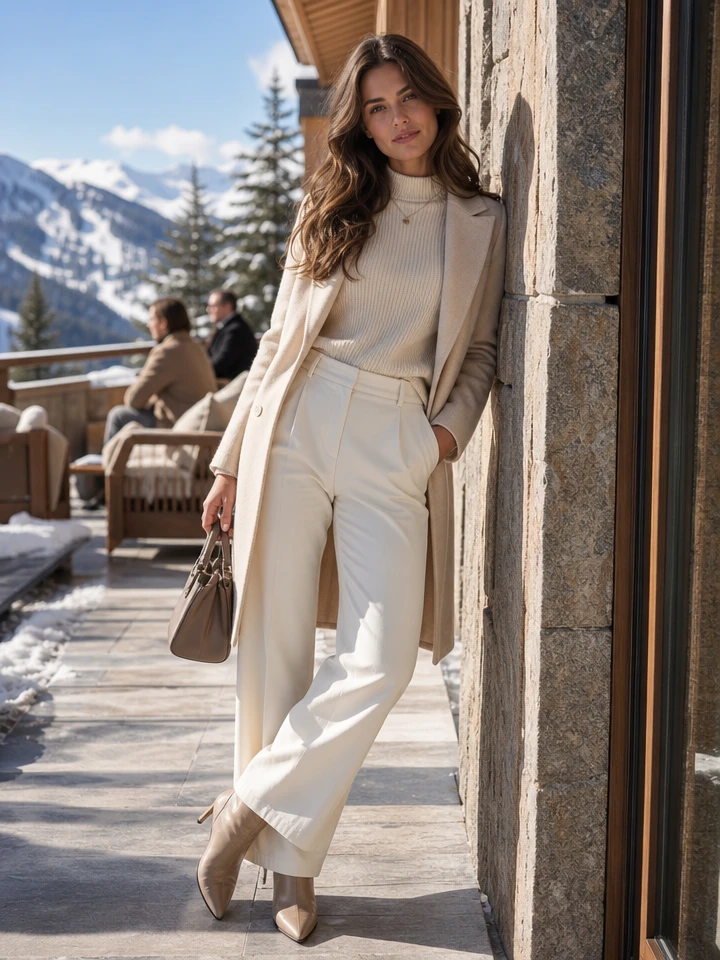
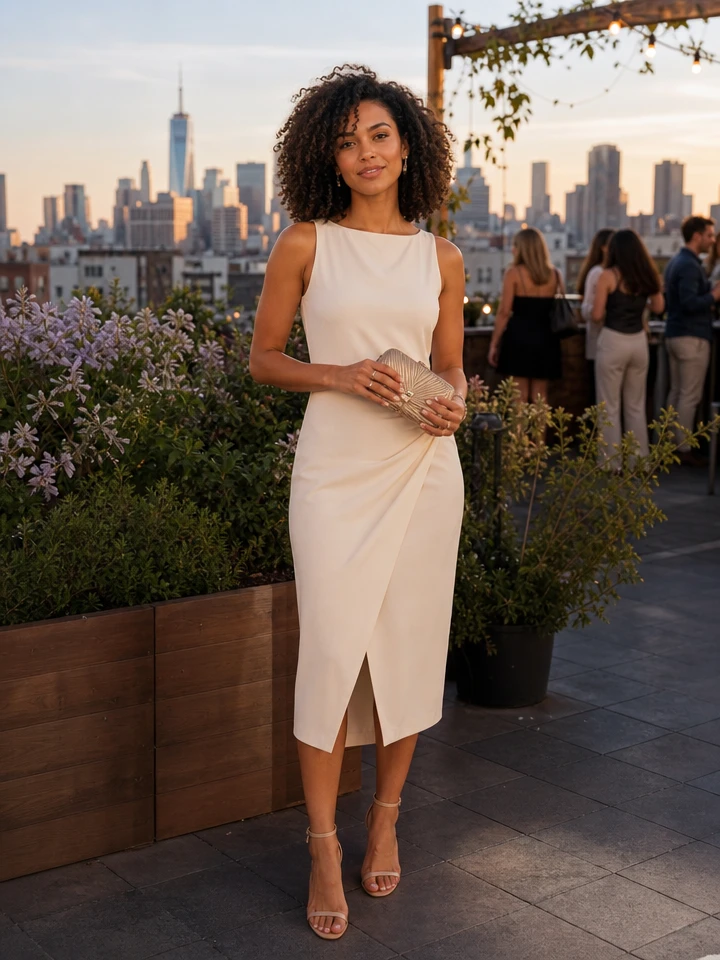
Moving up out of this band is the easiest move on the whole scale, because it needs one garment rather than a change of outfit. Add a tailored jacket to any correct Smart Casual outfit and it reads at 5 or 6 immediately. Swap the shoe from a sneaker to a leather loafer or a boot at the same time and it will carry most events described as Dressy Casual or Business Casual without anything else changing. That is why a single well cut jacket in navy or a mid grey is the most useful thing in a wardrobe that spends most of its time in this band. Moving down from here is a matter of subtraction and one small caution. Removing the collar and the jacket takes you into genuine everyday clothes, and the caution is that this band's floor is condition rather than formality. A stretched neckline, a bobbled knit or a broken heel drops an outfit out of every code here at once, which is not true higher up the scale where a slightly tired shirt hides under a jacket.
Where people go wrong
The commonest mistake is hearing casual and dressing for a Saturday. Almost every code here appears on an invitation or in a handbook, which means somebody is going to look at the result, and a host who wanted a Saturday would not have written a dress code at all. The second is the fit of the wrong garment. This band lives in knitwear, chinos, jeans and simple dresses, and all four of those show fit problems more clearly than tailoring does, because there is no structure to hide behind. The third is footwear again. Shoes are the fastest read in the room at any formality, and they are the single most common reason an otherwise correct casual outfit looks unfinished. The fourth is logo and slogan clothing, which is out of place in all seven codes here even at their most relaxed. The fifth is layering into shapelessness, which happens when a long open cardigan or an oversized shirt is used as a substitute for a jacket. If the layer has no shoulder, it is not doing the jacket's job. The sixth is condition, and it deserves repeating because it is the one thing that fails every code in this table simultaneously.
Which one you needRead the line on the left, take the code on the right
- The invitation says Smart Casual and you do not know how smart
- Smart Casual
- It is an ordinary day at a flexible office
- Corporate Casual
- The office has clients in and expects a collar
- Business Casual
- It is dinner somewhere good and the host said casual
- Dressy Casual
- The event is fashionable and the room will be looking at the cloth
- Luxury Casual
Frequently asked
Are jeans allowed in a casual dress code?
In most of them, with conditions. Dark, unfaded, well fitted denim with no distressing passes at Smart Casual, Elevated Casual and Corporate Casual in nearly every market, and passes at Business Casual in a good many workplaces. What sinks it is fading, rips, a loose or stacked leg, and pairing it with a trainer that is also casual. Denim works in this band when everything around it is a step smarter than the denim is. If the jean is the smartest thing in the outfit, the outfit is too low.
What does Smart Casual actually mean?
Clothes with structure and no formality. In practice that is a collared shirt or a fine knit, a trouser or a dark jean, and a leather shoe or a clean minimal sneaker. It is not a suit with the tie removed, which reads as an interrupted work day, and it is not a weekend outfit with a blazer added, which reads as an afterthought. The test that works best is whether every item in the outfit would look right on its own in a decent restaurant. If one of them would not, that is the item to change.
Can I wear shorts to anything in this band?
Only where the climate genuinely makes them normal and never where the code names an office. Tailored shorts in a linen or a heavy cotton, worn with a proper shirt and a real shoe, are accepted at relaxed daytime social events in Australia, New Zealand and Singapore, and they read as underdressed at the same event in London or New York. Nowhere in this band do athletic shorts, cargo shorts or anything above mid thigh work. If you are unsure, a lightweight trouser in the same colour solves it and costs nothing in comfort.
Which shoes carry the most codes in this band?
A plain leather loafer or a clean Chelsea boot in a dark colour will carry all seven codes in this table, and both will also carry Business Casual and Dressy Casual a step above. A minimal leather sneaker in white or black covers the three codes at formality 4 and about half of the ones at 5, depending on the city. What does not carry is a running shoe, a heavy hiking sole or anything visibly worn at the heel. Shoes are the first thing a room reads and the last thing most people update.
Why does the table show codes at formality 5?
Because they carry the word casual and this is where people look for them. Only three dress codes sit at formality 4 or below, so a table of just those three would leave out Business Casual, Dressy Casual, Upscale Casual and Luxury Casual, which are the four codes most often searched for alongside them. They appear here with their real number in the second column, so nothing is being hidden. If you need the whole of formality 5 and 6 rather than only the casual named part of it, the semi formal band listed at the foot of this page covers all thirteen of those codes.
The other bands
- The Most Formal Dress Codes
Formality 9 and 10 on the DressDex scale. Four codes where the invitation has already made almost every decision for you.
- Formal Dress Codes
Formality 7 and 8 on the DressDex scale. Seventeen codes that all ask for tailoring, and disagree about almost everything else.
- Semi Formal Dress Codes
Formality 5 and 6 on the DressDex scale. Thirteen codes that ask you to look considered without asking for a suit.
The DressDex letter
One note when a code changes or a new edition lands. No more than that.