THE OFFICE · 12 DRESS CODES
Office Dress Codes
Twelve codes that workplaces use to describe the same wardrobe at twelve different settings. What each one asks for, and how to work out which one your own office actually runs.
How to read this
The 12 codes below are the ones a office invitation or handbook is most likely to name, listed most formal first. The number beside each one is where it sits on the ten point scale.
Formality
Formality 4 through 8, the range these codes cover on the ten point scale.
What an office dress code is actually asking
An office dress code is not a list of permitted garments. It is a statement about who is going to see you and how much authority the clothes are expected to carry. That is why the same handbook phrase produces one outfit in a law firm and a different one in a design studio, and why both are correct. Every code on this page can be read through three questions. Is a jacket expected, assumed or absent. Is a tie live at all. And what is the floor for footwear. Answer those three and you have placed yourself within one step of the right code without knowing its name. The scale runs from Business Formal at the top, where the suit is the uniform and the room reads a departure from it as a statement, down to Corporate Casual and Smart Casual at the bottom, where nothing is prescribed and everything is judged. In between sit the codes most people actually work in, and the confusion lives there because their names overlap far more than their meanings do.
The codes and how they rank
Business Formal is a matched suit, a proper shirt and leather shoes, and in the industries that still use it a tie as well. It is the code for court, for a board meeting, for banking on the client side, and for the day a regulator visits. Business Professional sits one step below it and is the same wardrobe with the strictness taken out. The suit is still assumed and the pieces need not match perfectly, and this is the default in most professional services offices. Lounge Suit is what British, Irish and Singaporean employers write when they mean the same thing, and it is worth knowing that a British Lounge Suit invitation and an American Business Professional handbook are describing one outfit. Corporate Attire is the general purpose phrase a company uses when it wants the look of an office without naming a suit. Business Casual keeps the collar and the smarter shoe and drops the jacket requirement. Corporate Casual is the conservative version of an ordinary day, and Smart Casual is the same idea outside an office context altogether. The two at the bottom are where a handbook is least reliable and where watching the room matters most. Below Business Casual sit two codes a company reaches for when it wants a standard without a uniform. Dressy Casual is the one an invitation uses for a client dinner, a team evening or a relaxed corporate event, and it asks for a neat and put together look with denim, trainers and anything sloppy off the table. Elevated Casual is the creative studio version of an ordinary day, and it stresses quality, fit and condition rather than formality, which makes it the hardest code on this page to fake because there is no jacket to hide behind.
When the office code is written in Italian or French
International employers, and the events they host, often name a code in a language other than English, and two of those turn up constantly. Abito Scuro is Italian for dark suit and reads as Business Professional with the tailoring taken seriously, so a navy or charcoal suit, a plain shirt, and a tie that is not up for discussion. It appears on invitations to conferences, awards, and formal dinners hosted by European companies, and it is stricter than the plain English translation sounds. Tenue de Ville is French for city dress and covers the formal daytime end of office life, the corporate luncheon, the chamber of commerce breakfast, the consular reception and the institutional ceremony. It also asks for a suit and a tie, and because it is a daytime code by definition it does not climb when the event runs past six. Both are worth recognising on sight, because an American handbook and a European invitation can describe one identical outfit with almost no shared vocabulary. If either term appears and you are unsure how literally to take it, read it as Lounge Suit rather than as Business Casual, because the cost of being the only person in the room without a tie is higher than the cost of loosening one.
How to read your own workplace
The handbook tells you what the company wrote down. The room tells you what it means. The reliable method is to find the person two levels above you who does your kind of work, and to notice what they wear on an ordinary Tuesday rather than on a day with visitors. That reading beats any written policy, because policies are updated once every few years and rooms adjust continuously. Look for the jacket first. If jackets are on chair backs by ten in the morning, the office is Business Professional in writing and Business Casual in practice, and either reading will pass. If nobody owns one, the office is genuinely Corporate Casual and turning up in a suit is the visible error rather than the safe choice. Then look at the shoes, which move last and therefore tell you where the real floor is. A room in trainers is not a Business Casual room whatever the handbook says. Finally, notice what changes on client days, because that is the code the company actually believes in and the one you will be judged against when it matters.
Interviews and visiting another office
Dress one step above the code you expect to find whenever you are a visitor. For an interview that means a jacket in almost every case, even at a company where nobody who works there wears one, because the jacket reads as effort rather than as a claim about the culture. The exception is a workplace that has told you explicitly not to, and a few technology companies now do. Take them at their word and go one step above their ordinary day instead. When you are visiting another company's office, the same rule holds for the same reason. You are being read by people who have no other information about you, and the more conservative reading costs you nothing. The best single question before a first day or a first meeting is not what the policy says but what the person who invited you was wearing when you met them. That answer is specific to the room you are walking into, which is more than any code name can be.
Office parties and festive events
The work Christmas party is the one office event where the code goes up rather than down, and Festive Attire is the phrase most companies reach for. It sits at roughly the Cocktail level and licenses colour, metallics, velvet and sequins in a way no ordinary working day would, which is exactly why people misjudge it in both directions. Turning up in the suit you wore to your desk reads as though you did not want to be there. Turning up in something built for a nightclub reads as though you forgot who is in the room, and the people at that party are the people who decide your next promotion. The reliable calibration is one clear festive element carried well, a velvet jacket, a jewel colour or a good sequin, with everything else dialled back to support it. Summer parties, awards nights and away days follow the same logic at a lower temperature. Read the invitation for the venue rather than for the season, because a rooftop bar and a hotel ballroom ask for different answers to the same two words. If the invitation names no code at all, the safe reading for a work event is one step above the office code you already run.
Where people go wrong
The first mistake is treating a code name as a garment list. Business Casual is not a chino and a polo shirt, it is a level of formality that a chino and a polo shirt sometimes reach and often do not. The second is fit. Office wardrobes are dominated by trousers, shirts and knitwear, and all three show fit problems immediately because there is no structure to hide behind. A cheap suit that fits outranks an expensive one that does not, every time. The third is condition, which fails every code on this page at once. A stretched collar, a bobbled knit or a scuffed shoe drops an outfit out of Business Formal and Corporate Casual with equal speed. The fourth is dressing for the desk rather than for the day. If a meeting is in the diary, dress for the meeting. The fifth is the casual Friday trap, where a relaxed day becomes a relaxed week without anybody deciding to change the code.
How office codes shift by market
Office dress is one of the most market sensitive things on this site, because it follows local business culture rather than climate alone. American offices moved furthest and fastest toward Business Casual, so an American handbook usually means what it says, with New York and Washington reading a clear step more conservative than the west coast. British and Irish offices kept the suit longer in law and finance and use Lounge Suit to say so, while everything outside those sectors reads much closer to Smart Casual than the words suggest. Australian and New Zealand offices assume heat for months of the year and treat a jacket as situational rather than standing. Singapore holds a formal office culture inside a tropical climate, so Business Casual there is a real code with real expectations and short sleeves sit comfortably inside it. In the United Arab Emirates a coverage expectation applies at every level and is the first thing to plan around. Canadian offices read close to American ones with a real winter attached, which makes the coat part of the professional impression rather than an afterthought. Use the editions strip above to read any code below as your own market writes it.
The codes side by side
| Plate | Dress code | Formality | What it means | When it is used |
|---|---|---|---|---|
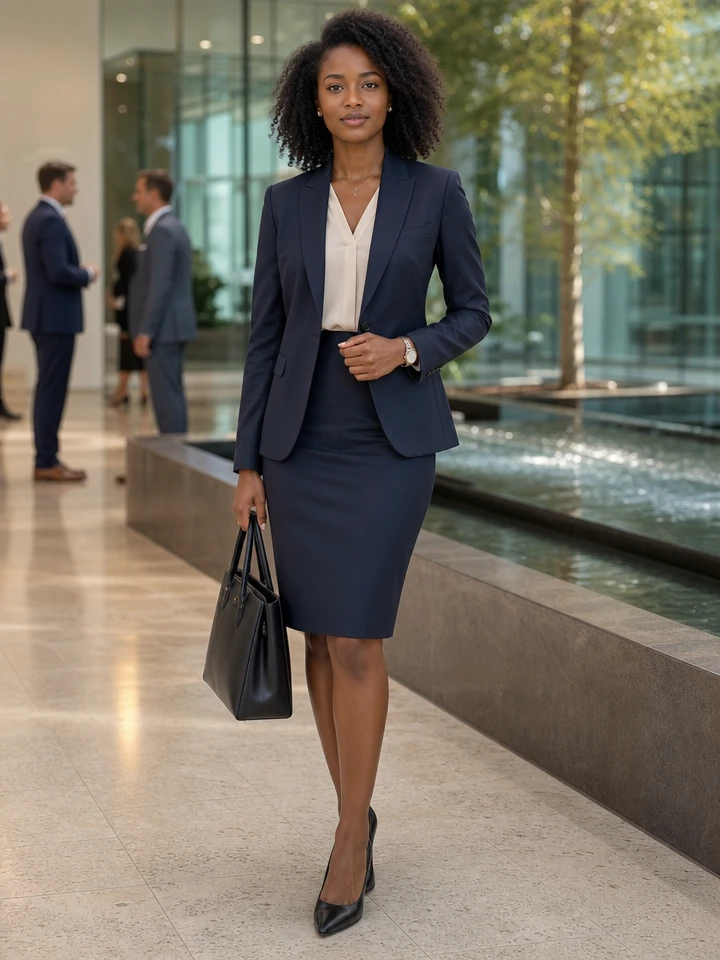 | Business Formal | 8 | The most polished and conservative corporate look, requiring a full, well tailored suit and professional accessories. | Court, boards, regulators and the client side of banking. The matched suit is the uniform. |
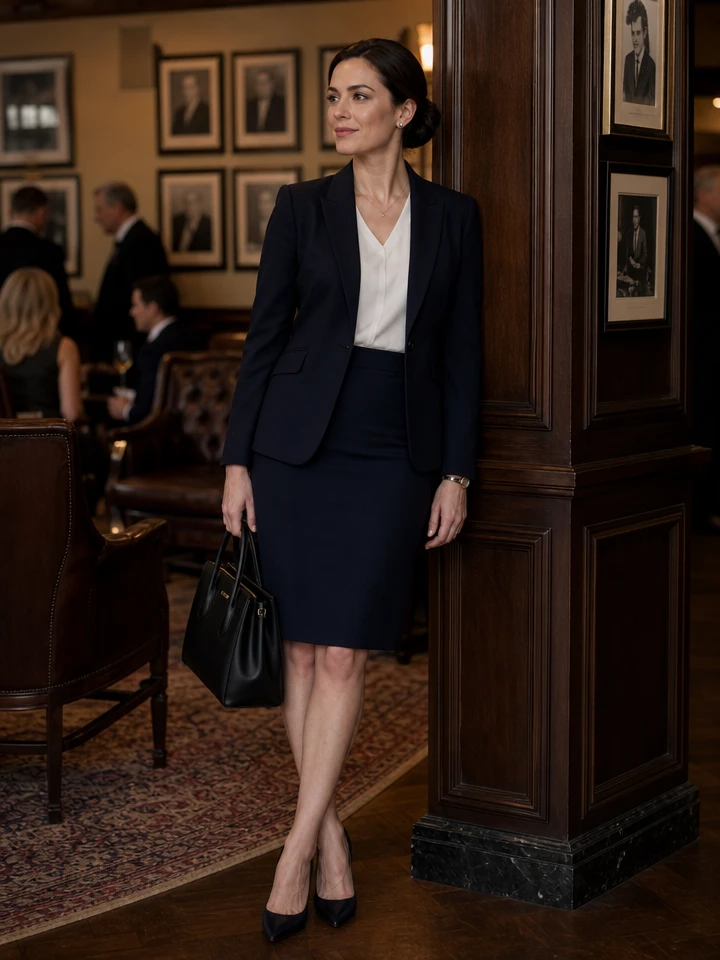 | Abito Scuro (Dark Suit) | 7 | A conservative European formality, strictly requiring a dark, well tailored business suit or its equivalent. | Italian for dark suit. Business Professional with the tailoring taken seriously and the tie fixed. |
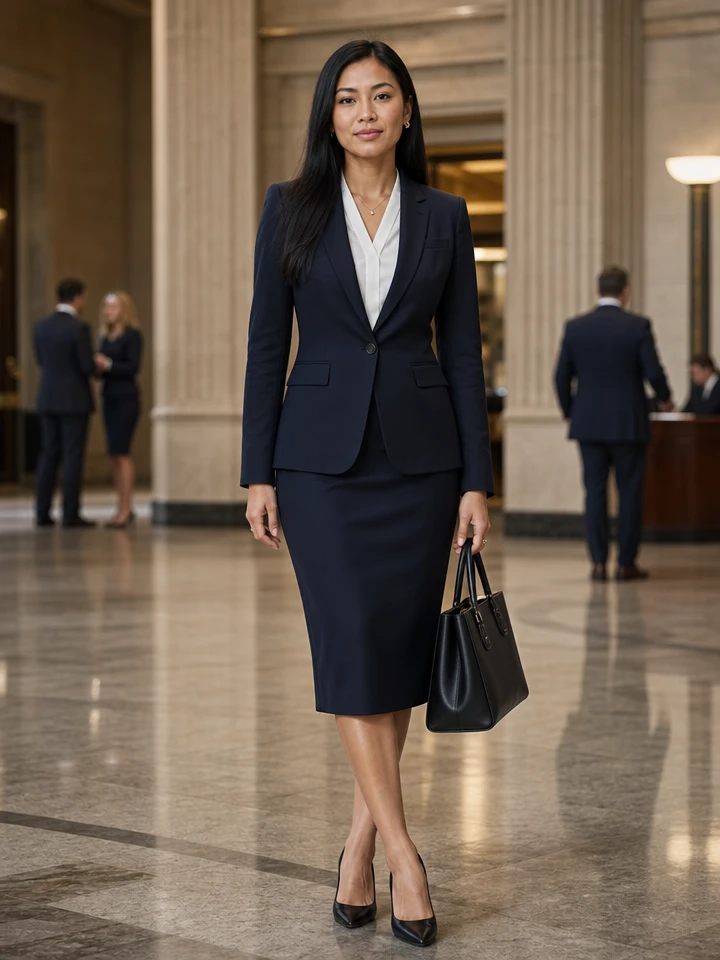 | Business Professional | 7 | A conservative, classic corporate style, slightly less formal than Business Formal but still requiring an immaculate, tailored appearance. | The default in professional services. The suit is assumed and the strictness is not. |
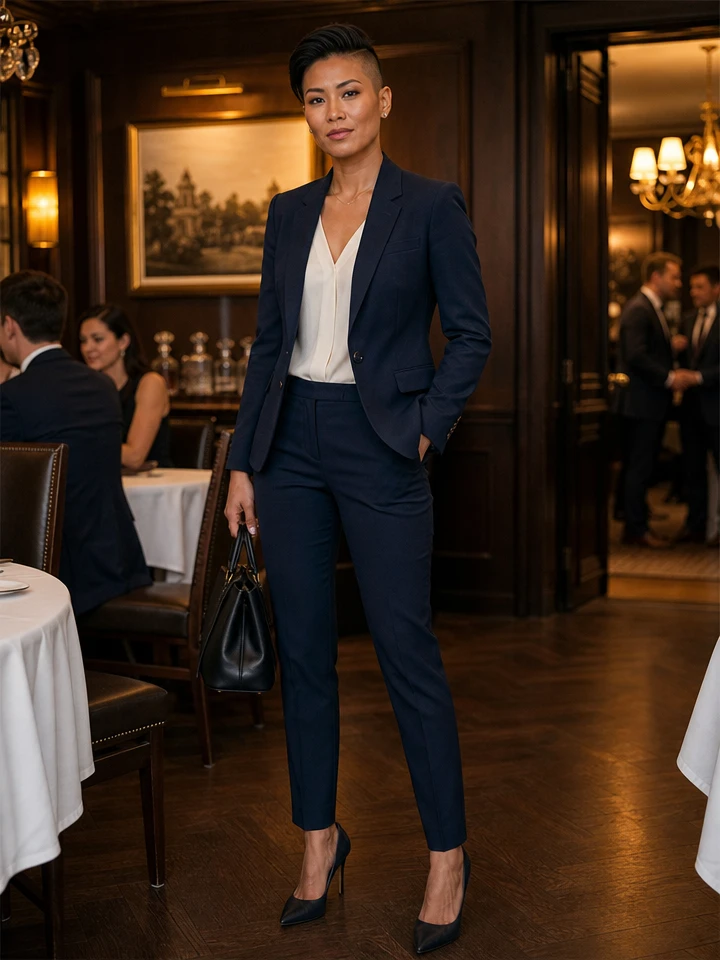 | Lounge Suit | 7 | A standard, dark colored business suit, typically used for daytime formal events, business meetings, or formal funerals. | British, Irish and Singaporean phrasing for the same outfit as Business Professional. |
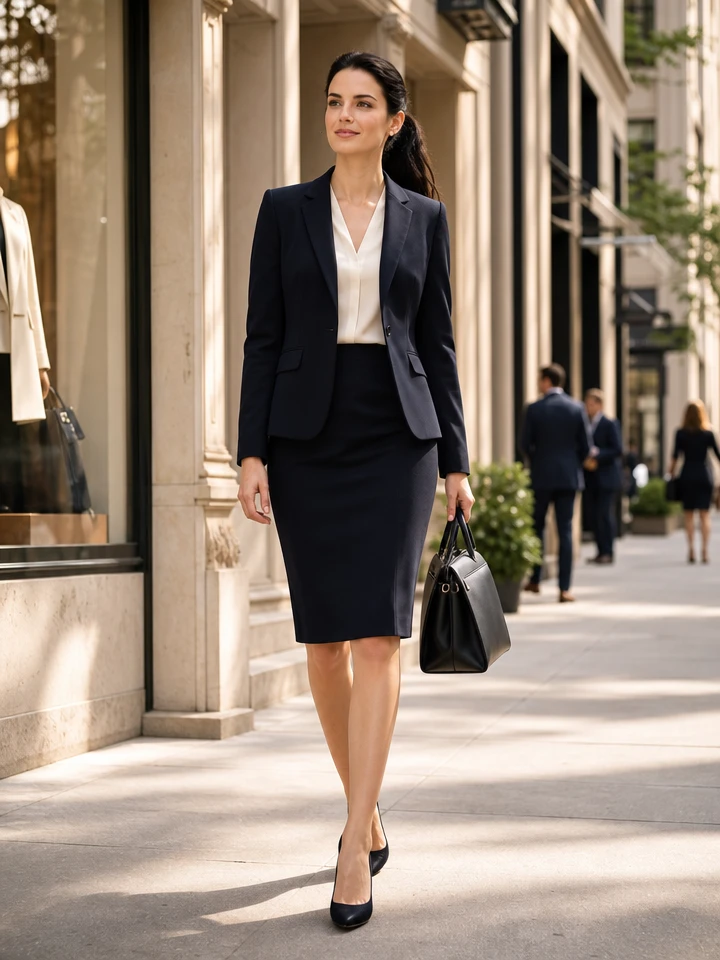 | Tenue de Ville (City Dress) | 7 | The French wording for formal daytime dress, read in America as a suit and tie occasion before six rather than as anything more elaborate. | French for city dress. The formal daytime end of office life, answered with a suit and a tie. |
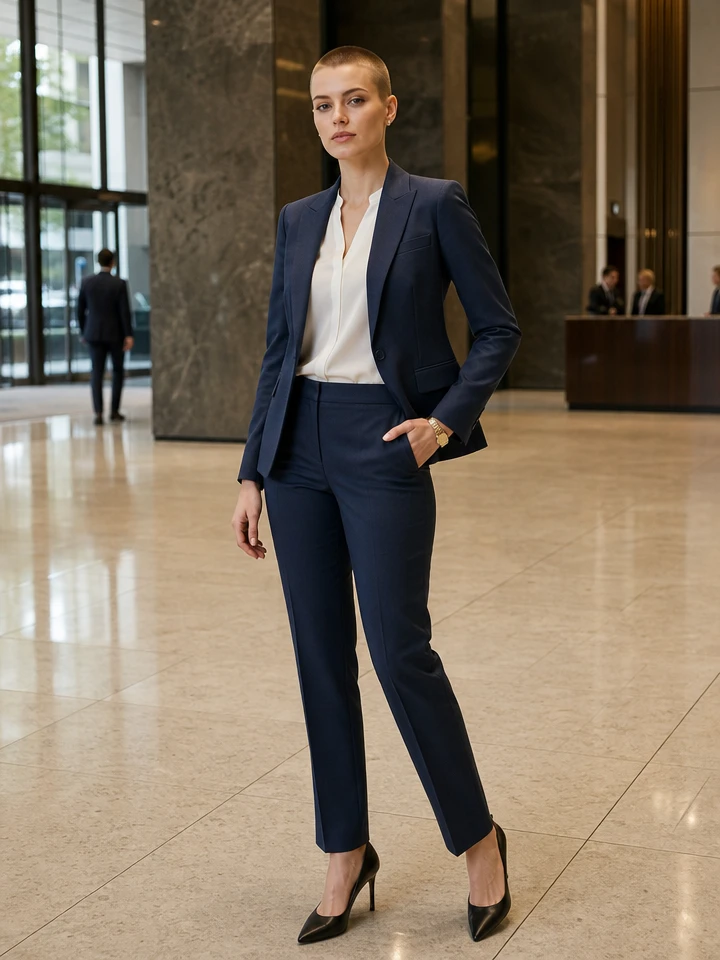 | Corporate Attire | 6 | A general term for professional workwear, sitting between Business Professional and Business Casual, often requiring a jacket or blazer. | What a company writes when it wants the look of an office without naming a suit. |
 | Festive Attire | 6 | Celebratory, fun, and colorful dress code that encourages holiday themes, sparkle, and high energy accessories. | Work parties and seasonal events. Cocktail level, with colour, velvet and metallics allowed. |
 | Business Casual | 5 | Office ready separates that look polished without requiring a matching suit or tie. | The collar and the smarter shoe stay, the jacket requirement goes. The commonest office code today. |
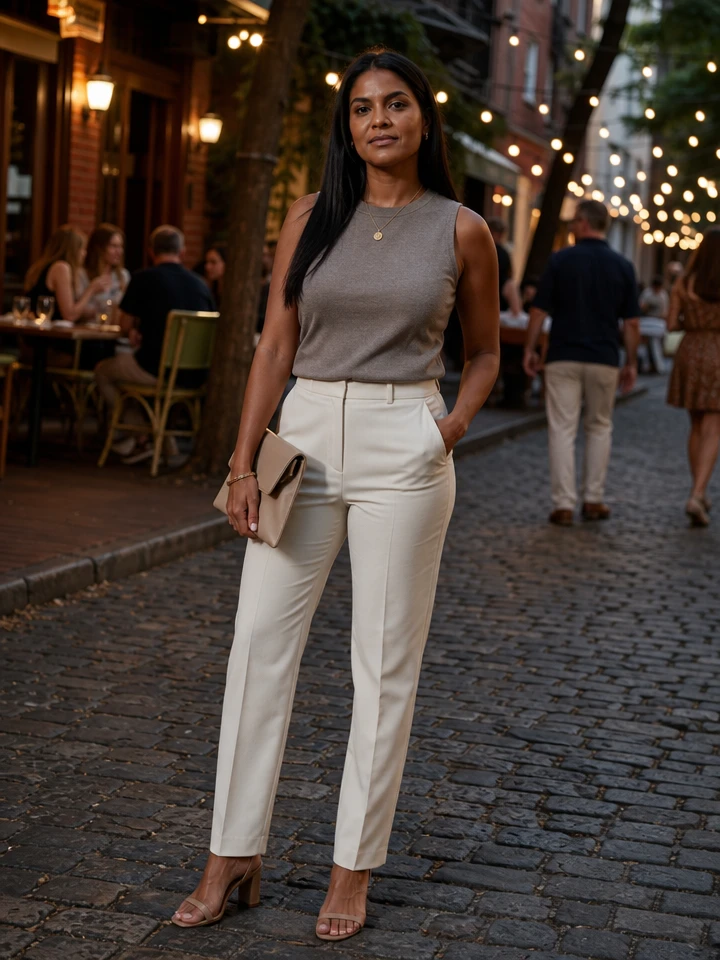 | Dressy Casual | 5 | Polished and intentional, this code is a step up from Smart Casual, requiring a more considered outfit that excludes basic everyday wear. | Client dinners and team evenings. Neat and put together, with denim and trainers off the table. |
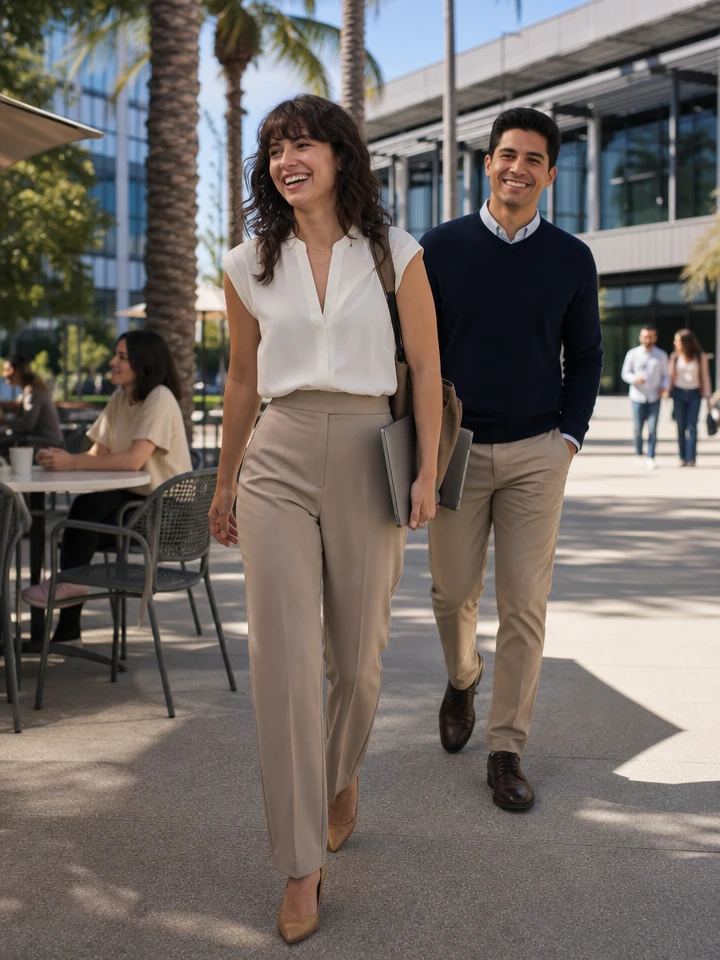 | Corporate Casual | 4 | Professional comfort. A tidy, neat, and appropriate look for a relaxed office, excluding sportswear and denim. | An ordinary day in a flexible workplace. Conservative colour and shape, and no jacket unless a client is coming. |
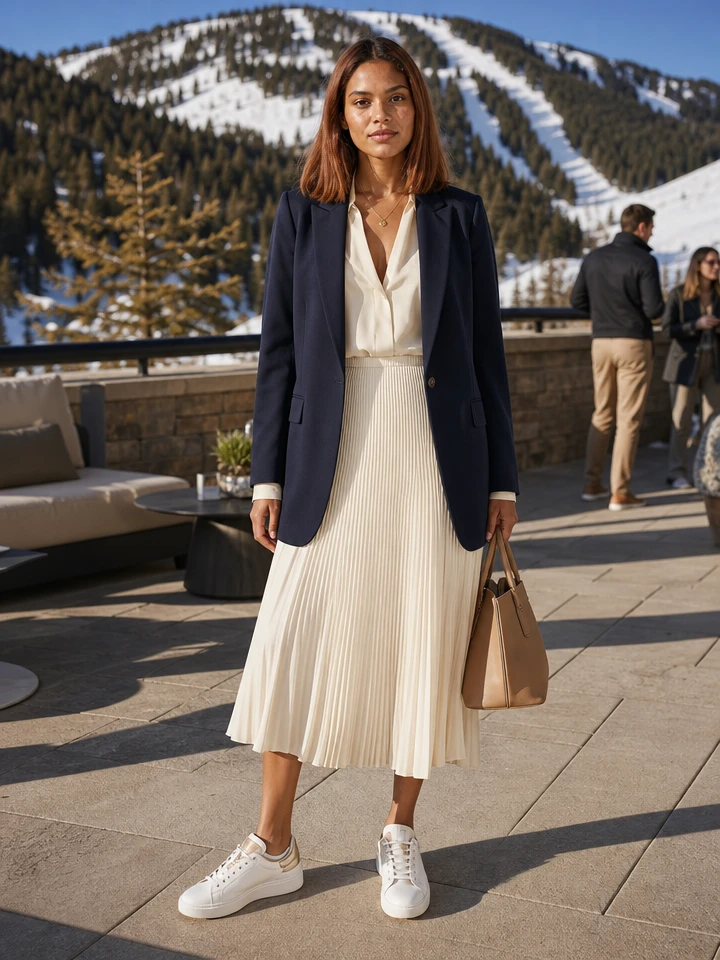 | Elevated Casual | 4 | A synonym for a modern, high end Smart Casual, focusing on quality fabrics, clean lines, and an intentional, tidy appearance. | Creative studios on an ordinary day. Quality and fit doing the work formality usually does. |
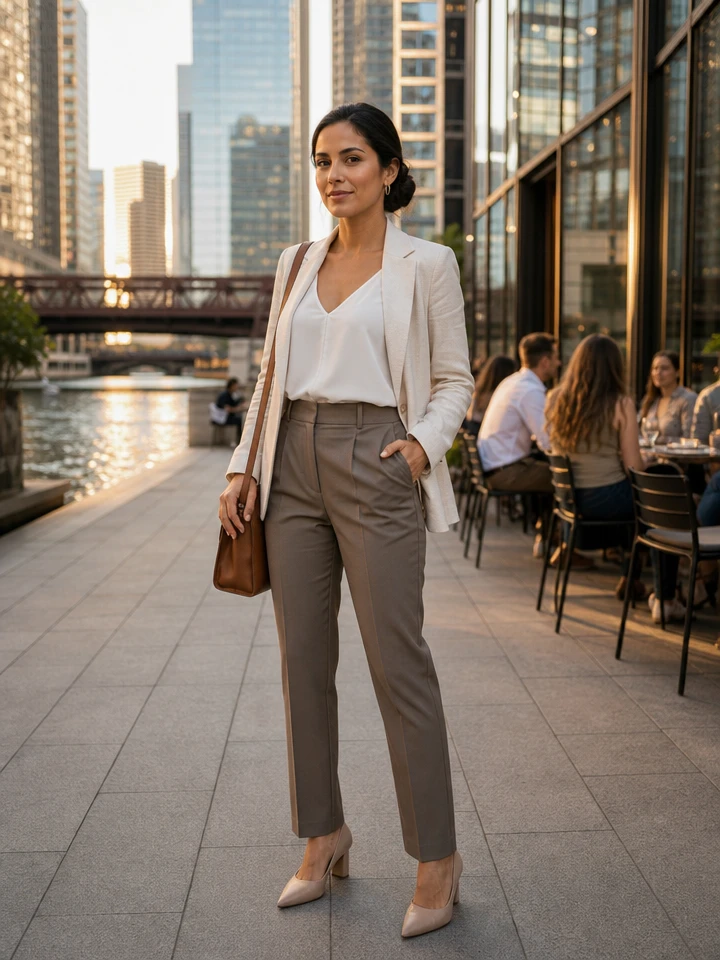 | Smart Casual | 4 | Polished and neat, blending tailored pieces with comfortable items, often described as 'elevated casual'. | The same idea as Corporate Casual outside an office context. Structure without formality. |
Which one you need
- You have an interview and the office looks relaxed
- Business Professional
- A regulator, a board or a court is in the diary
- Business Formal
- The handbook says a suit and nobody wears one
- Corporate Attire
- Clients are in the office and a collar is expected
- Business Casual
- It is an ordinary day and nobody is visiting
- Corporate Casual
- The work event is outside the office altogether
- Smart Casual
- A British or Irish employer wrote Lounge Suit
- Lounge Suit
- The invitation to a work event says Festive Attire
- Festive Attire
- An Italian employer or invitation says Abito Scuro
- Abito Scuro (Dark Suit)
- A French invitation says Tenue de Ville
- Tenue de Ville (City Dress)
- A work dinner asks for something neat rather than formal
- Dressy Casual
- The studio names no code and everybody still looks considered
- Elevated Casual
Frequently asked
What is the difference between Business Casual and Business Professional?
The jacket, and what the jacket implies. Business Professional assumes a suit or something close to one, so a jacket is standing rather than situational and a tie is at least possible. Business Casual keeps the collar and the leather shoe and drops the jacket from the requirement, which usually drops the tie with it. In practice the same person can wear the same trousers and the same shirt under both codes, and the outfit moves between them by adding or removing one garment. If you are unsure which one your office runs, look at whether jackets are worn or merely owned.
Are jeans acceptable in an office?
At Corporate Casual and Smart Casual, yes, with conditions. Dark, unfaded and undistressed denim that fits properly passes in most flexible workplaces, and it passes at Business Casual in a good many of them, particularly in technology and on the American west coast. It does not pass at Business Professional or Business Formal anywhere. The reliable test is whether everything else in the outfit is a step smarter than the denim. If the jean is the smartest thing you are wearing, the outfit has fallen out of the code. On a client day, wear something else.
What should I wear to a job interview?
One step above the code you expect the office to run, which in almost every case means a jacket. It reads as effort rather than as a claim about the culture, and nobody has ever lost an interview for it. The single exception is a company that tells you explicitly to dress down, and some technology employers now do. Take them at their word and aim one step above their ordinary day rather than at it. If you can find out what the person who invited you wears, that beats every general rule on this page.
Which shoes work across office dress codes?
A plain leather shoe in black or dark brown carries every code here from Business Formal down to Corporate Casual, which makes it the single most useful thing in a working wardrobe. Loafers, Derbies, brogues, smart flats and low block heels all read correctly at Business Professional and below. Trainers belong only at Corporate Casual and Smart Casual, and only when they are clean, plain and leather. Shoes are also the fastest read in any room and the most common reason an otherwise correct outfit looks unfinished, so they repay attention more than any other garment.
How do office dress codes work in hot weather?
The code does not change, the cloth does. An unlined jacket, a lighter wool, a cotton or a linen blend hold the same formality at a much lower weight, and they are the reason a suit is bearable in a Singapore or Dubai summer. Short sleeves are normal at Business Casual in tropical markets and read as a step down in London or New York, which is the clearest single example of why market matters here. Shorts sit outside every code on this page. If your office runs a summer policy, it will say so, and that policy outranks anything written here.
The other occasions
- What to Wear to a Wedding
Twenty one dress codes a wedding invitation can name, read in one place. What each one asks for, how they differ, and what to do when the invitation says nothing at all.
The DressDex letter
One note when a code changes or a new edition lands. No more than that.