Band 3 of 4Formality 5 and 613 dress codesUnited States edition
Semi Formal Dress Codes
Formality 5 and 6 on the DressDex scale. Thirteen codes that ask you to look considered without asking for a suit.
The ten point scaleEvery band, and where this one sits
- Casual7 codes
- Semi formal13 codes, on this page
- Formal17 codes
- Most formal4 codes
What the semi formal band means
This is the band most invitations actually land in, and the band with the least agreement about what its words mean. Formality 5 and 6 covers everything that is clearly dressed up and clearly not black tie. A jacket is welcome and rarely compulsory. A tie is unusual. A dress can be short. Denim is out at 6 and arguable at 5. The foundation is quality and intent rather than a specific garment, which is exactly why hosts find it so hard to describe and why thirteen different codes exist to describe roughly the same territory. The single most useful thing to know about this band is that it is judged on fabric and fit rather than on formality of shape. A well cut jacket in a good cloth over a plain top will clear almost every code here. A poorly fitted suit will not, even though a suit is nominally more formal. When a host writes one of these codes they are usually asking you to look like you thought about it, and thought is visible mostly in the cloth.
The 13 codes in this band
Most formal first
- Cocktail Attire
Formality 6 of 10. The default evening answer. Work parties, engagement drinks, weddings after five and anything the host called semi formal.
- Corporate Attire
Formality 6 of 10. Office events and client facing days where a jacket is expected but a tie is not.
- Elegant Casual
Formality 6 of 10. Private house gatherings, relaxed charity events and good restaurants. Polished, without tailoring.
- Evening Wear
Formality 6 of 10. A host naming the hour rather than the garment. Anything after six that is not a named code.
- Festive Attire
Formality 6 of 10. Holiday parties between late November and early January. Cocktail with permission for velvet, sequins and strong colour.
- Resort Elegant
Formality 6 of 10. Upscale hotels, cruise dining rooms and destination evenings where the climate rules out heavy cloth.
- Summer Cocktail
Formality 6 of 10. Cocktail read for heat. Lighter fabric, brighter colour, and a shoe that survives a lawn.
- Business Casual
Formality 5 of 10. The default in most modern offices. Professional without a suit and without a tie.
- Chic Attire
Formality 5 of 10. Fashionable luncheons, gallery openings and daytime receptions where personality is welcome.
- Dressy Casual
Formality 5 of 10. Nice dinners and slightly upscale social gatherings. One clear step above what you would wear on a weekend.
- Garden Party
Formality 5 of 10. Afternoon events on grass. Print, lighter colour, a hat at some, and a heel that will not sink.
- Luxury Casual
Formality 5 of 10. Where the fabric does the talking. Cashmere, silk, fine leather, and nothing that looks cheap up close.
- Upscale Casual
Formality 5 of 10. A host asking for visible effort without naming a garment. Read it as Dressy Casual with better shoes.
The number is where the code sits on the ten point scale. Each name opens that code and its plates.
How the codes inside it differ
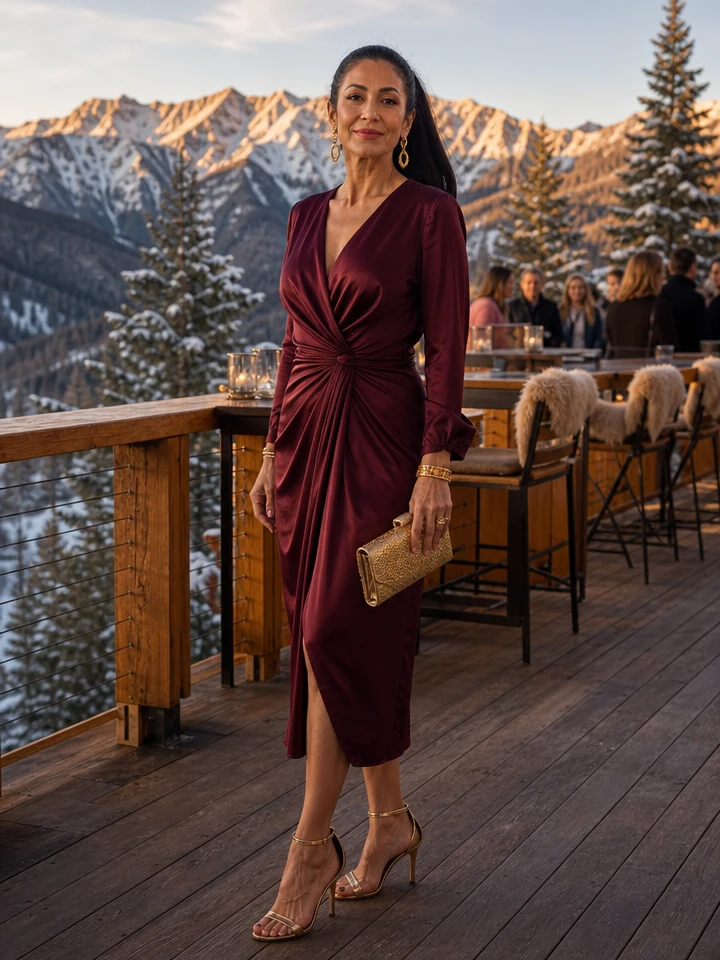
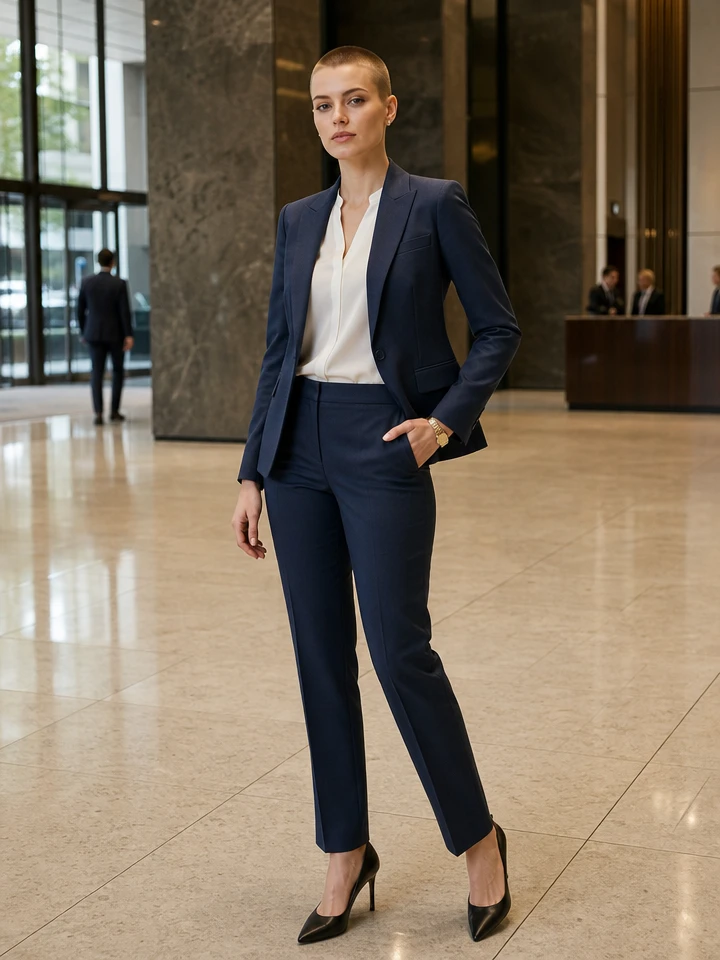
Read them in four small groups and the differences resolve. The evening group is Cocktail Attire, Evening Wear, Summer Cocktail and Festive Attire. All four assume an event that starts after five, all four accept a short dress, and they differ mainly in cloth and season. Cocktail is the default and the one to fall back on when nothing else fits. Summer Cocktail is the same code in lighter fabric and brighter colour. Festive Attire is Cocktail with permission to use velvet, sequins or a strong colour, and it appears almost exclusively between late November and early January. Evening Wear is the loosest of the four and mostly signals the hour rather than the garment. The social daytime group is Garden Party, Chic Attire and Elegant Casual. These are the codes for a lunch, an afternoon reception or a private house, and they want texture, print and a lighter palette rather than evening cloth. Garden Party in particular is a grass and heels problem as much as a dress code problem, and a block heel solves more of it than any fabric choice will. The workplace group is Corporate Attire and Business Casual. Both describe an office, and both are a full step less formal than Business Professional a band above. Corporate Attire keeps a jacket in play, Business Casual does not require one, and neither expects a tie in most modern firms. The upscale group is Resort Elegant, Luxury Casual, Upscale Casual and Dressy Casual. These four are close enough that hosts use them interchangeably, and the honest summary is that all four mean good clothes without tailoring. Resort Elegant adds a hotel and a climate, Luxury Casual leans hardest on fabric, and Dressy Casual and Upscale Casual are the same idea written by two different hosts.
Moving up and down from here
This band is the hinge of the whole scale, and one wardrobe can cover both directions if it is built around a jacket. Moving up into formal means adding structure. The same dress that carries Cocktail will carry an event at 7 once the shoe becomes a heel, the fabric moves to crepe or satin and a tailored jacket or a wrap replaces the cardigan. On the other side, a navy or charcoal jacket with a fine knit underneath moves up simply by adding a tie and a leather shoe. Moving down into casual means removing the jacket rather than changing everything under it. That is the most useful single move in the wardrobe, because it means a Business Casual outfit and an Elevated Casual outfit can share every component except one. The failure mode in both directions is trying to travel more than one step. An outfit built for Smart Casual cannot be lifted to Black Tie Optional by any accessory, and an outfit built for a gala looks stranger at a barbecue than jeans would.
Where people go wrong
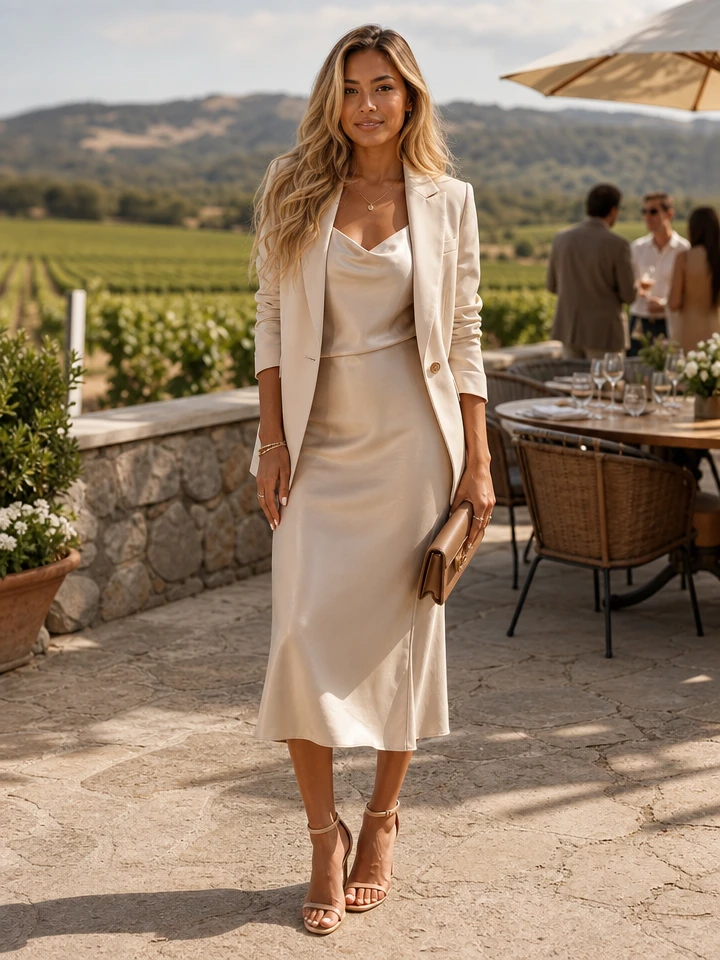
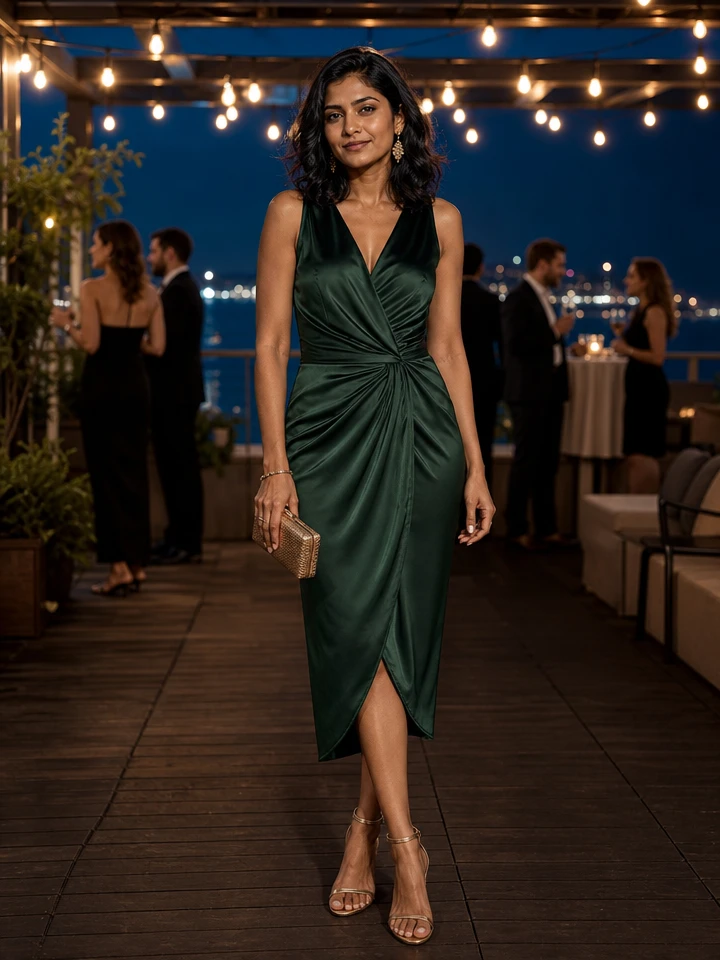
The commonest mistake here is treating semi formal as a licence to wear office clothes to a party. A grey work suit at an evening Cocktail event is technically formal enough and reads as though you came straight from a meeting, which is not the impression the host was after. Change the fabric or change the shirt. The second mistake is the fabric floor. Jersey, thin cotton and anything with a visible synthetic sheen drop an outfit below this band no matter how good the cut is, and this is the band where fabric does the most work. The third is footwear, specifically the trainer question. A clean leather sneaker passes at 5 in most cities and fails at 6 almost everywhere, so if the code is Cocktail or above, wear a real shoe. The fourth is the seasonal codes. Festive Attire and Summer Cocktail both look wrong outside their season, and wearing sequins to a June wedding is a bigger error than being slightly underdressed. The fifth is denim, which sits exactly on this band's lower boundary. Dark, unbroken, well fitted denim can pass at 5 in a relaxed city and never passes at 6.
Which one you needRead the line on the left, take the code on the right
- The invitation says semi formal and the event starts after five
- Cocktail Attire
- It is a December work party
- Festive Attire
- The reception is on a lawn in the afternoon
- Garden Party
- It is a normal day at a modern office
- Business Casual
- The event is at a resort or on a ship in the evening
- Resort Elegant
- The host wrote something vague and clearly wants effort
- Upscale Casual
Frequently asked
Do I need a suit for a semi formal dress code?
No, and at the social end of this band a full suit is often slightly too much. A tailored jacket with trousers in a different cloth reads as considered without reading as corporate, and that combination will carry Cocktail, Elegant Casual, Dressy Casual and Upscale Casual comfortably. Where a suit does help is Corporate Attire and any evening event in a formal room, and even there the shirt and the shoes matter more than whether the jacket and trousers match.
Can I wear jeans anywhere in this band?
At formality 5 you sometimes can and at 6 you cannot. Dark, unbroken, well fitted denim with a jacket and a leather shoe passes at Business Casual and Dressy Casual in most cities, and it fails at Cocktail, Festive Attire and anything with the word evening in it. The tells that sink it are fading, distressing, a loose leg and a trainer. If you are unsure, a pair of trousers in a soft wool or a heavy cotton twill does the same job with none of the risk.
How short can a cocktail dress be?
Knee length and just above is the classic reading and midi is now equally common. Much above mid thigh moves the outfit out of this band and into nightlife territory, which is a different code. The more useful question is the fabric. A knee length dress in crepe, satin or a structured jacquard is unmistakably Cocktail, and the same shape in jersey or thin cotton reads as a summer day dress whatever the length. If the event is outdoors or on grass, favour midi and a block heel.
Are clean white trainers acceptable at semi formal?
At the lower edge of the band, in a relaxed city, with the rest of the outfit doing real work, a plain leather sneaker in white or black can pass at Business Casual, Elegant Casual and Luxury Casual. At Cocktail, Evening Wear, Festive Attire and Corporate Attire it does not, and it is the fastest way to look like you missed the code. The line is roughly the hour. Before five a good sneaker is a style choice, and after five it is a mistake.
Is it worse to be overdressed or underdressed here?
Underdressed, comfortably. This band tolerates one step up almost invisibly, because an extra jacket or a better shoe simply reads as someone who cares. One step down is visible immediately, especially in the evening, and there is no way to fix it once you arrive. If you genuinely cannot read the invitation, build the outfit for Cocktail and carry the jacket rather than wearing it. Putting a jacket on takes a second, and finding one at the venue takes the rest of the night.
The other bands
- The Most Formal Dress Codes
Formality 9 and 10 on the DressDex scale. Four codes where the invitation has already made almost every decision for you.
- Formal Dress Codes
Formality 7 and 8 on the DressDex scale. Seventeen codes that all ask for tailoring, and disagree about almost everything else.
- Casual Dress Codes
The bottom of the DressDex scale, plus the four codes that carry the word casual from a step above it. Seven codes where the cloth does all the work.
The DressDex letter
One note when a code changes or a new edition lands. No more than that.