FESTIVE ATTIRE · US / GLOBAL · FORMALITY 6 OF 10
Festive Attire
Celebratory, fun, and colorful dress code that encourages holiday themes, sparkle, and high energy accessories.
Formality
Sits in the semi formal band of the scale.
Quick answer
Festive Attire is primarily used for holiday parties and celebratory seasonal events. It usually sits at the Cocktail Attire level of formality but gives guests license to be much more creative and themed. In the US, this often means embracing bright colors, metallics, texture such as velvet or sequins, and playful accessories, particularly across the holiday season that runs from Thanksgiving to New Year.
Showing US / Global
What to wear
Look plates
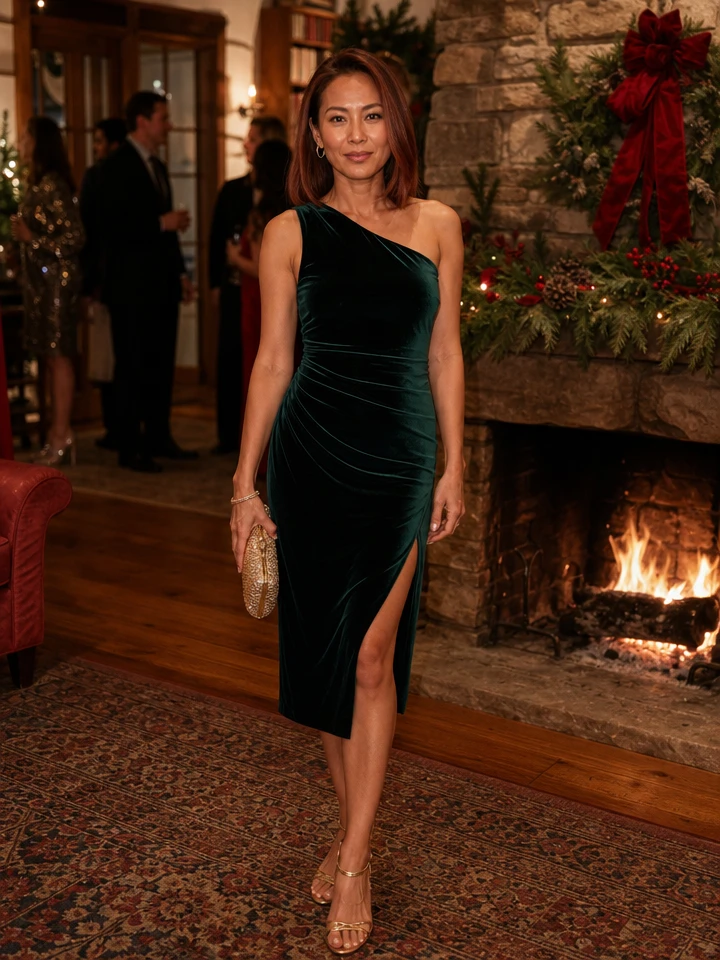
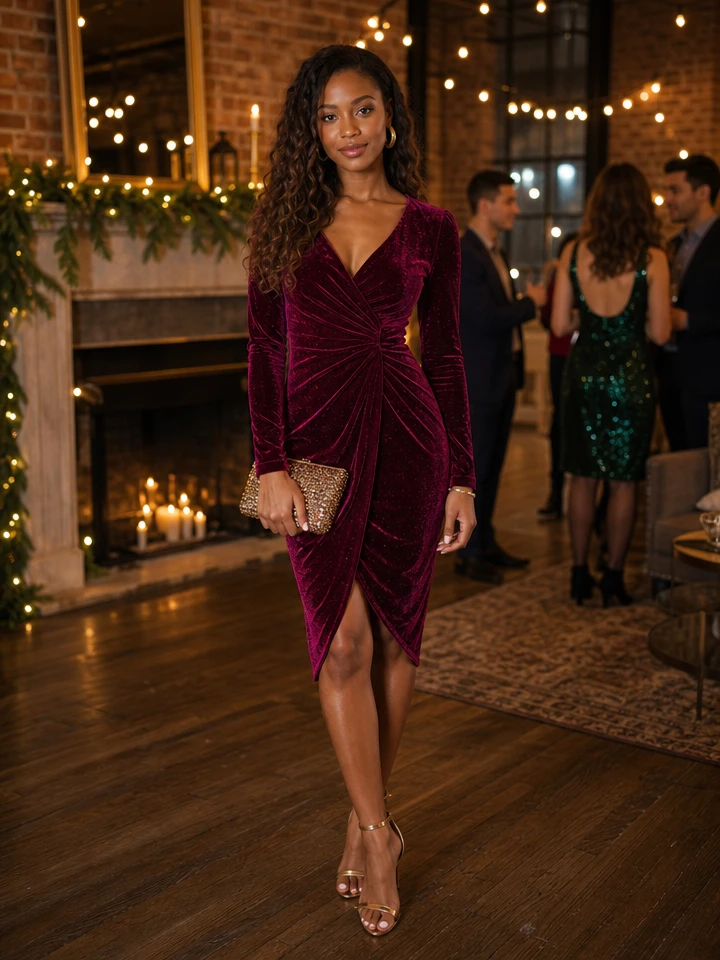
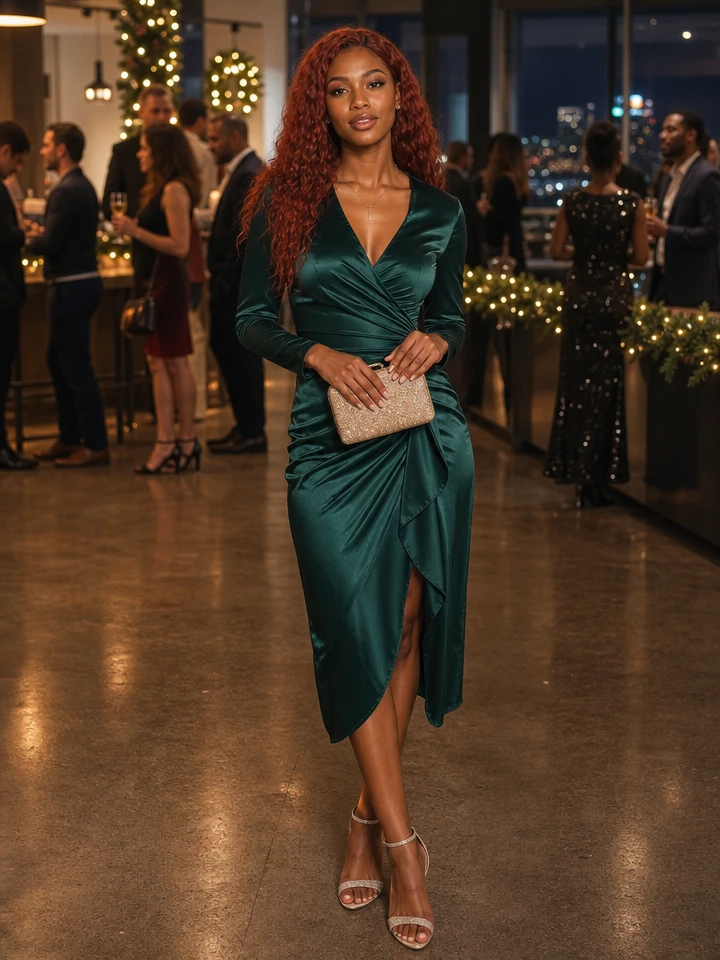
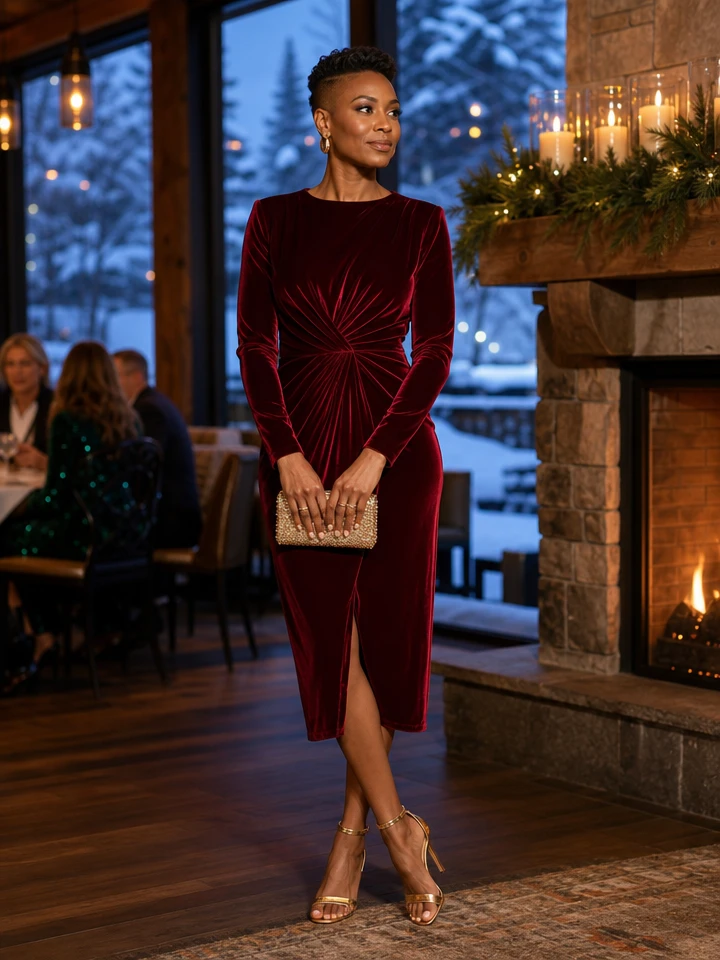
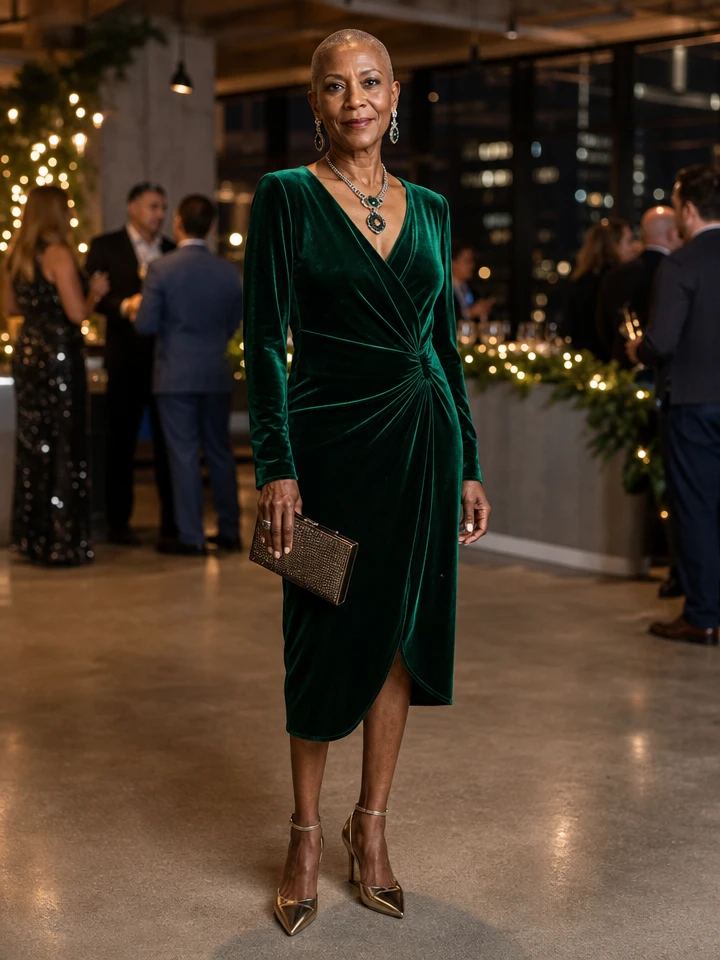
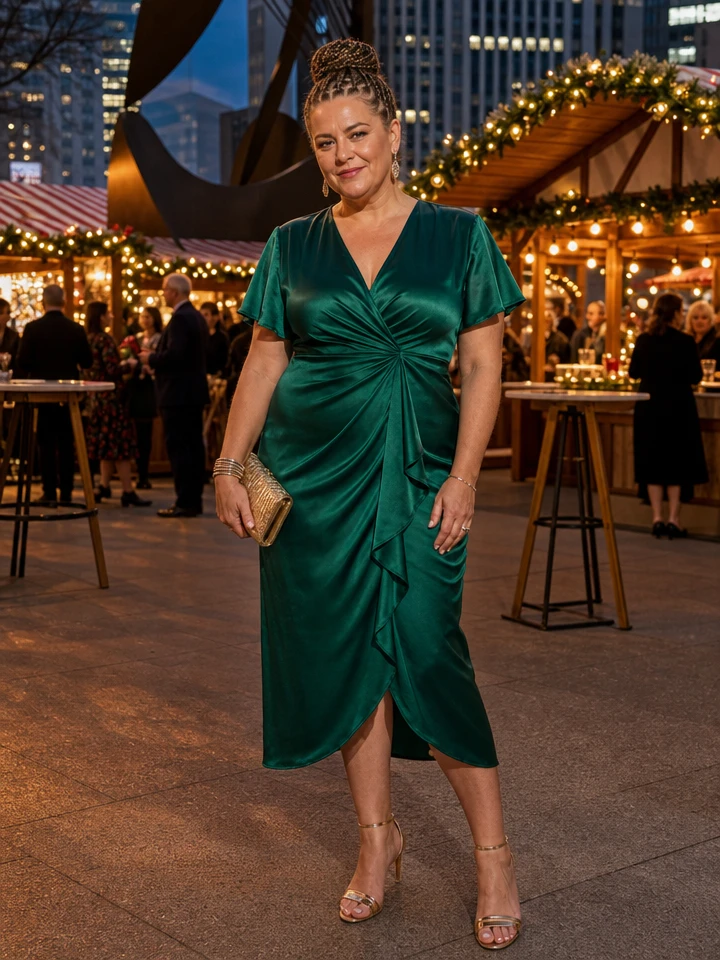
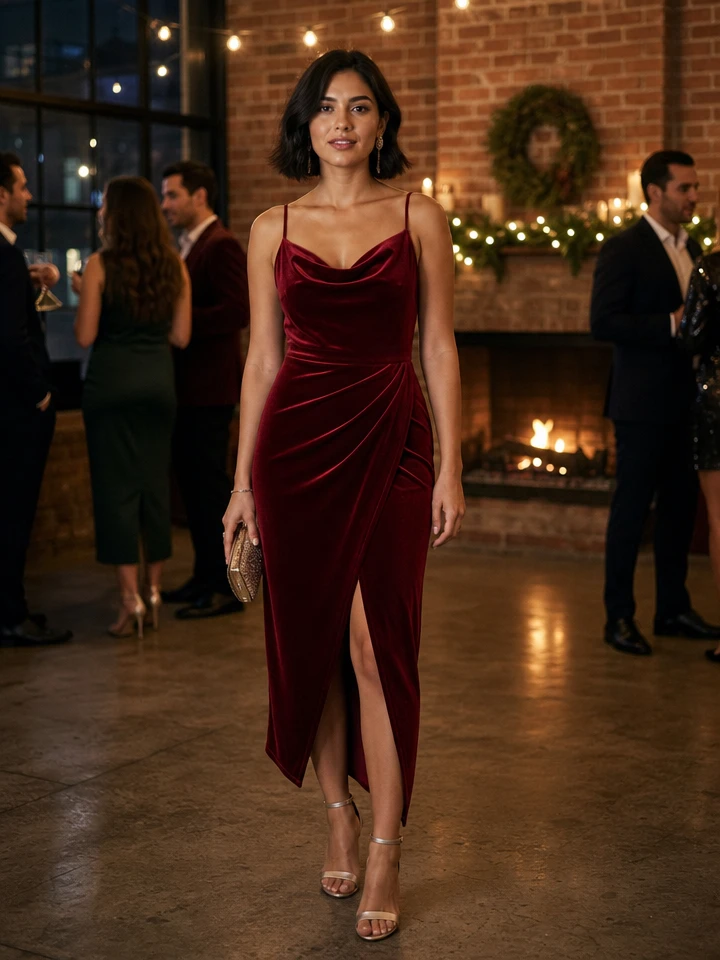
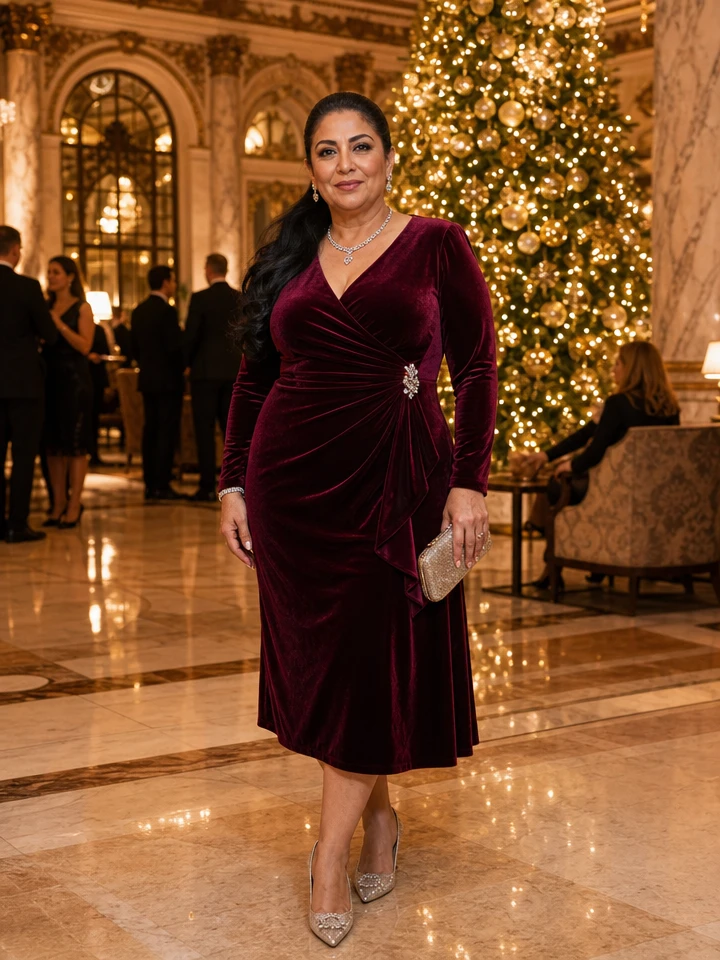
Feminine Presenting
A cocktail length dress, skirt, or pantsuit in a bold color, metallic fabric, or with festive embellishments like sequins or sparkle.
Arrow keys or a swipe
Look plates
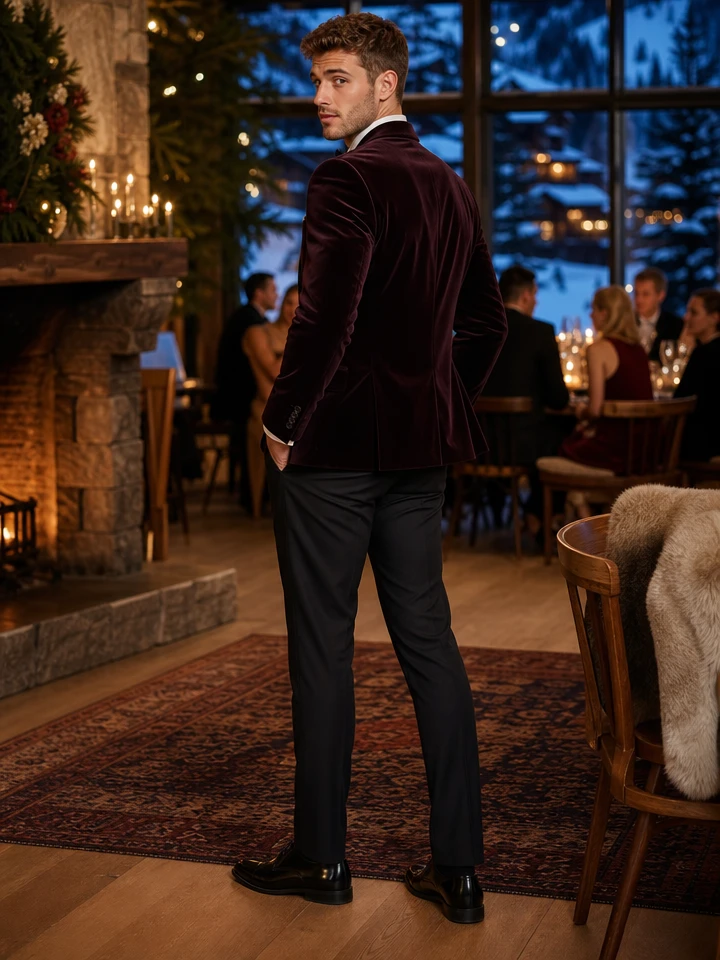
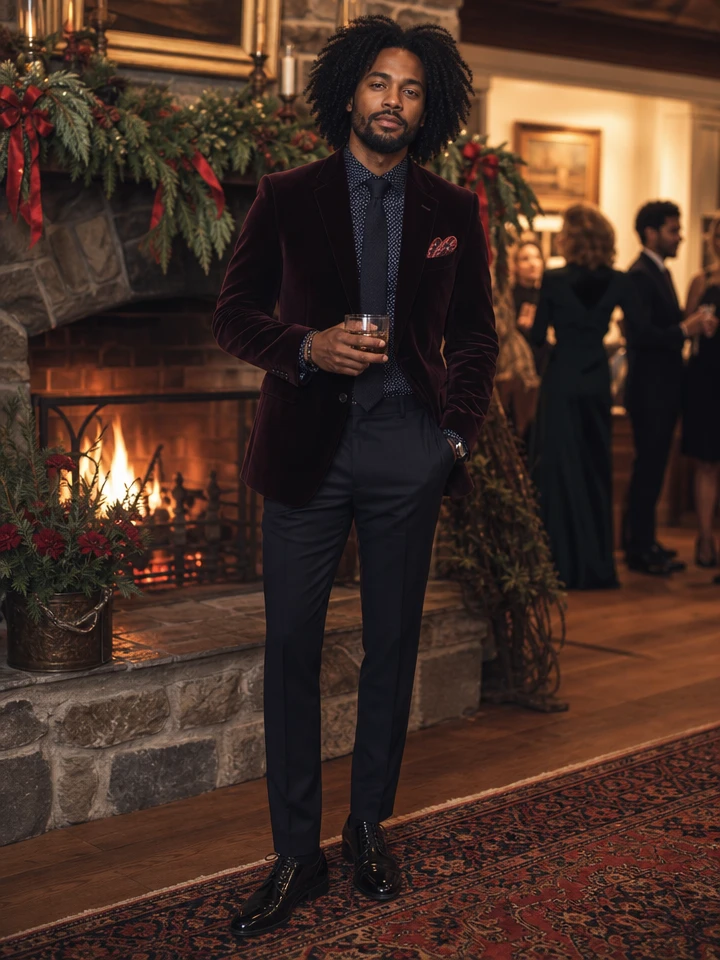
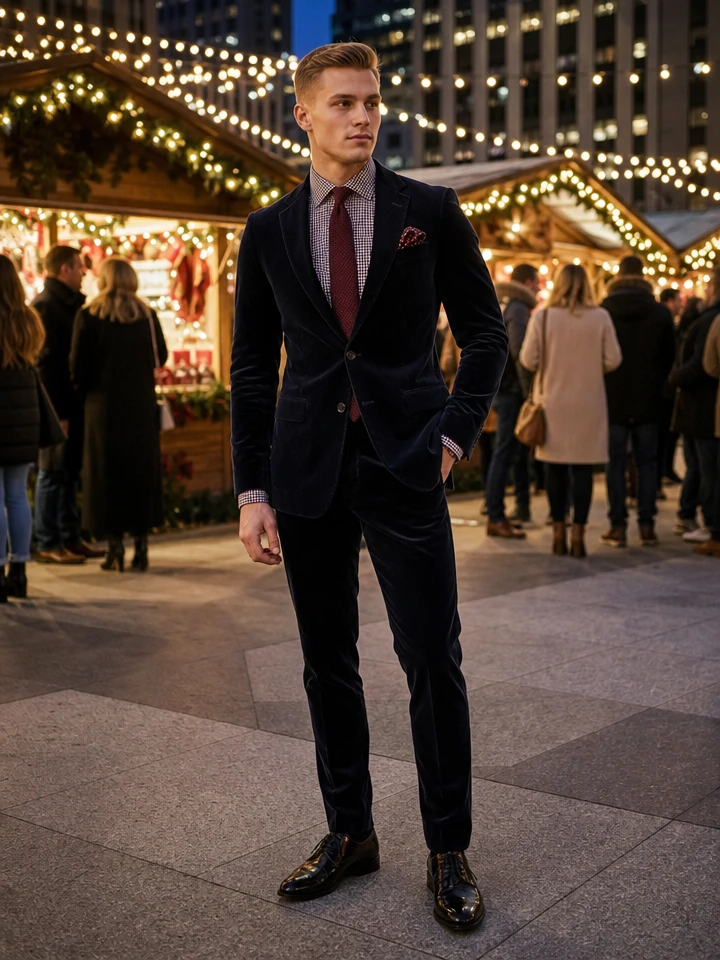
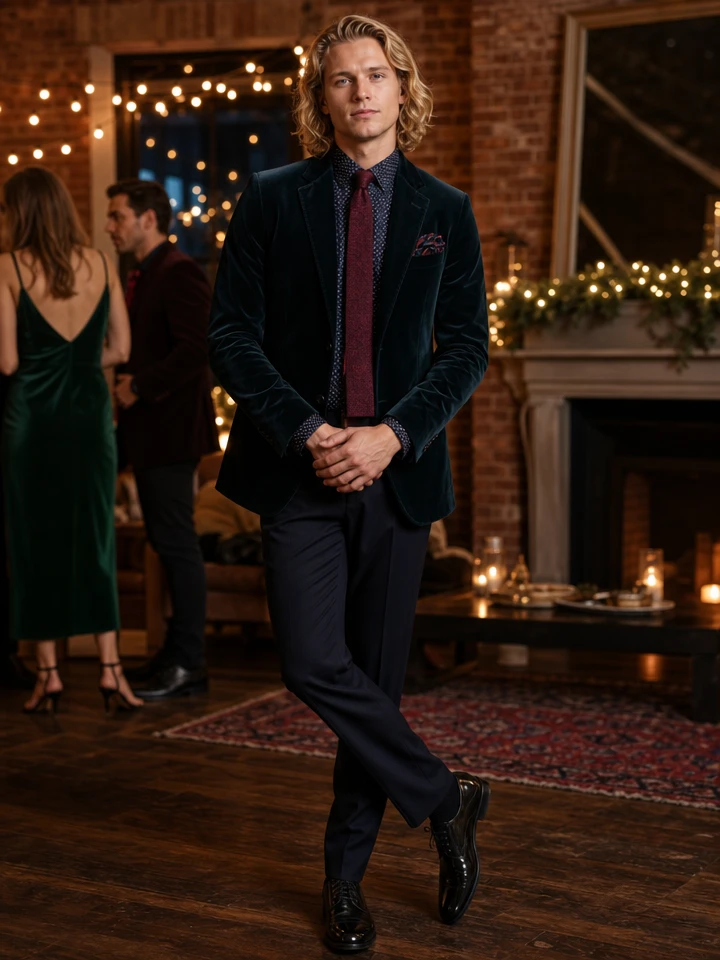
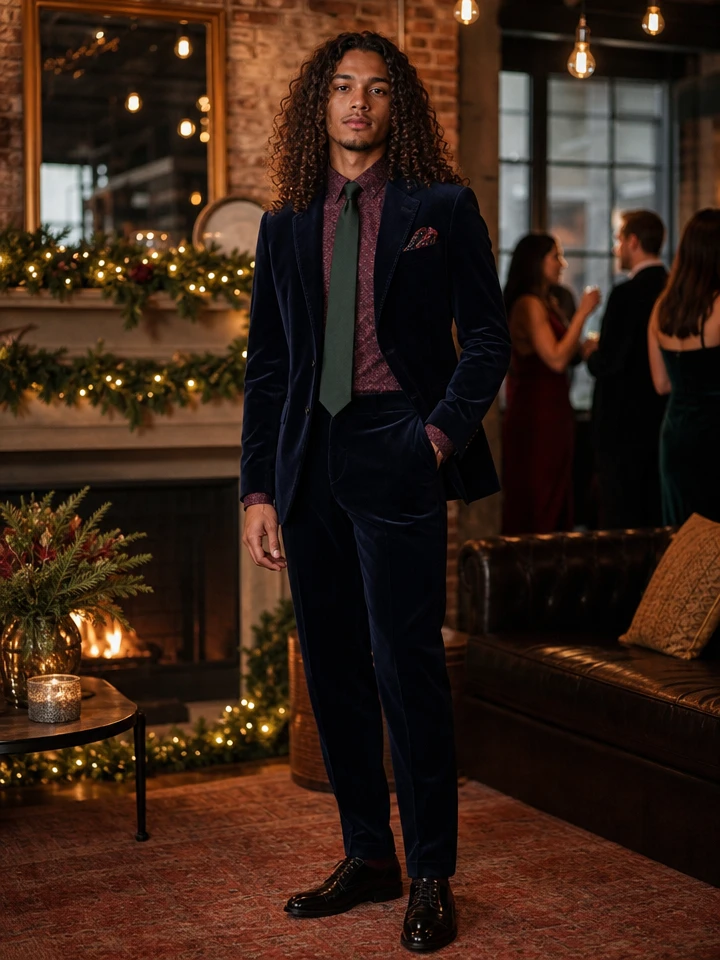
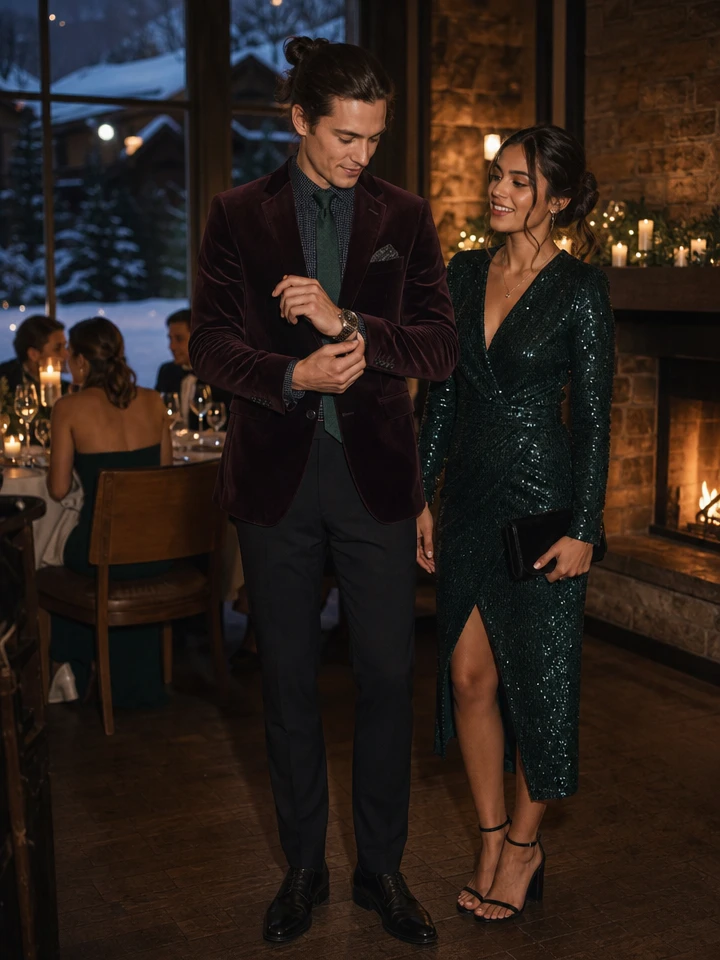
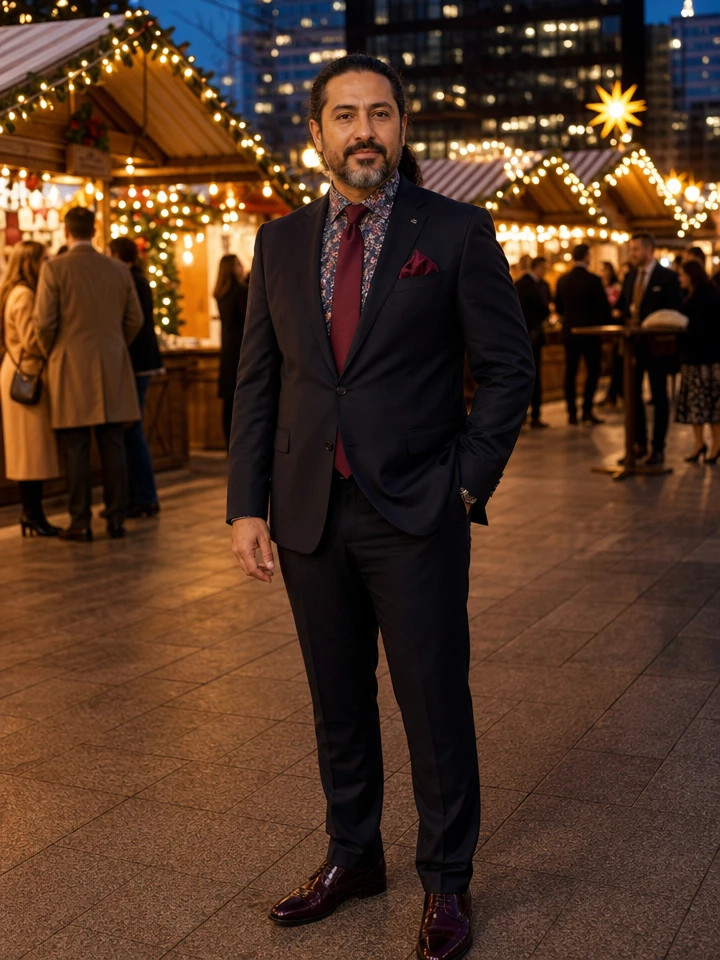
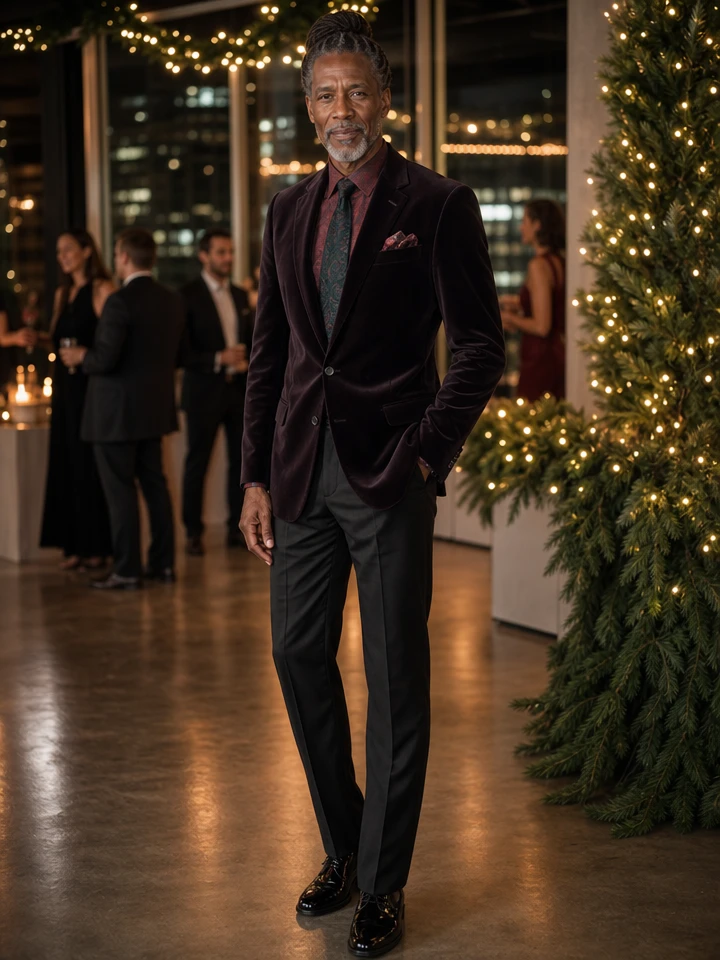
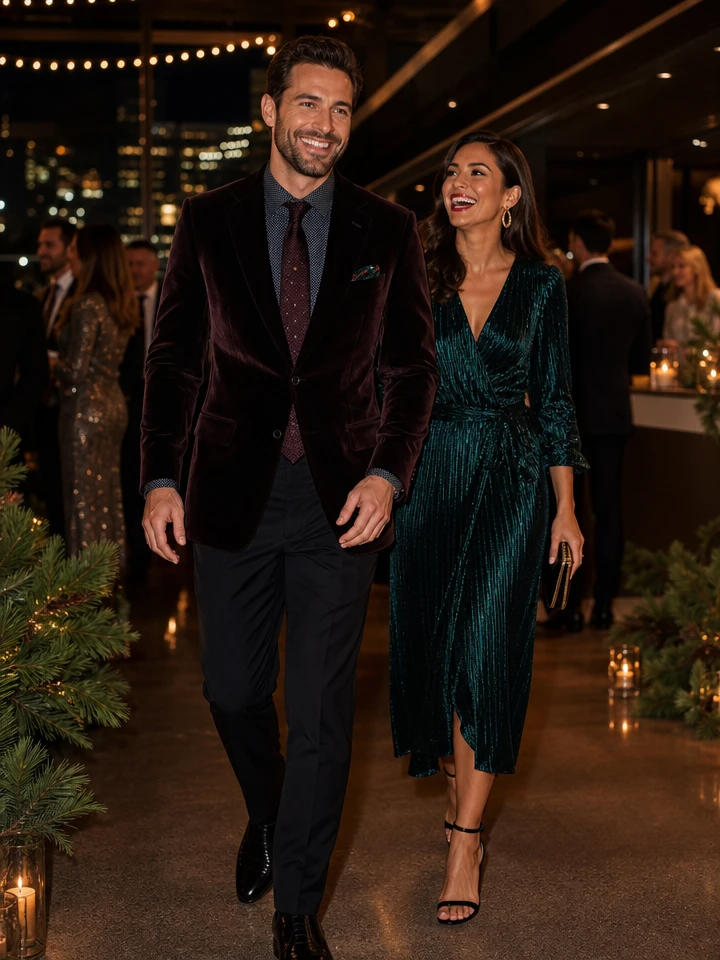
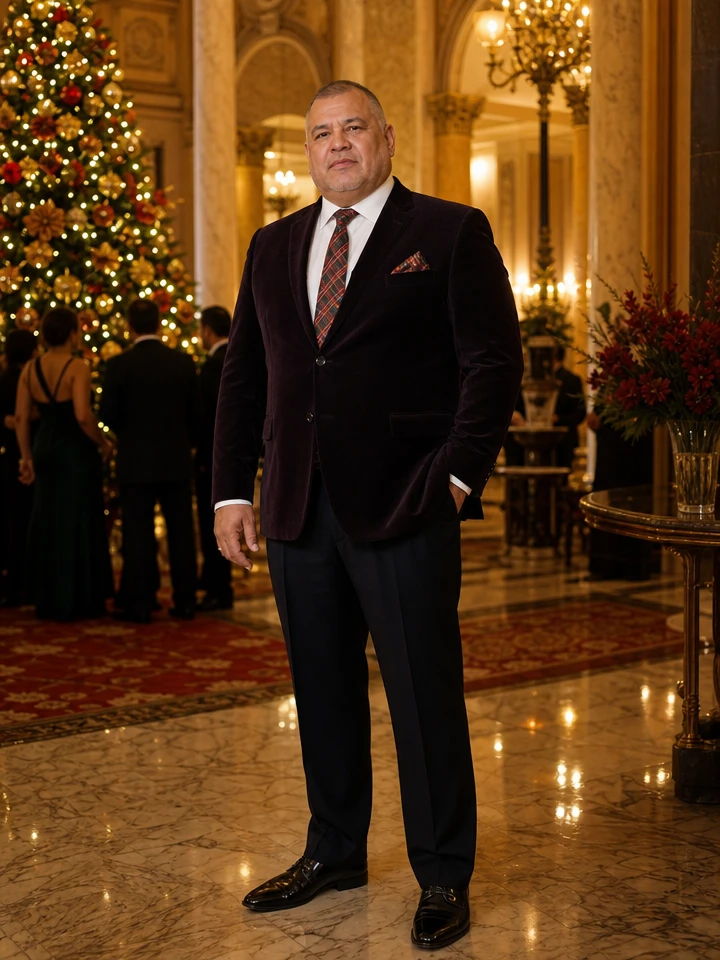
Masculine Presenting
A tailored dark suit with a festive element, whether that is a bold tie in a silk knit, a plaid or a holiday print, a colorful or patterned shirt, or a velvet jacket.
Arrow keys or a swipe
Festive Attire in the US
Festive Attire is an American invention and it exists to solve an American scheduling problem. Between Thanksgiving and New Year, a large share of the country attends a party thrown by an employer, a client, a neighbourhood or a family, and the host needs wording that says dress up and enjoy yourself without implying black tie. That is the whole job of this phrase. The formality it sets is cocktail level, and the difference from cocktail is permission rather than degree. Guests can bring colour, sparkle, texture and seasonal reference in a way a plain cocktail invitation does not invite. Because the American season is a winter one, the fabrics that carry it are winter fabrics. Velvet, heavy silk, sequin, brocade and wool all read correctly, and the classic palettes are jewel tones, metallics and the red and green pairing. Two American cautions are worth knowing. The first is that Festive Attire and an ugly sweater party are different invitations, and a novelty jumper at the former is a misreading. The second is that corporate hosts use this wording most heavily of all, and an office party is still an office, so the sparkle should stop well short of a nightclub outfit.
Wear it differently where you live? Tell us about a local variation.
Festive Attire in Australia
Australian Festive Attire is a summer party code, keeping cocktail level polish while trading velvet and heavy sequin for light, bright, breathable cloth.
The inverted calendar changes this code more than it changes almost any other. Australia's festive season falls in November and December, which is late spring and early summer, so the entire visual language that the northern hemisphere attaches to Christmas dressing is unwearable here. Velvet, heavy brocade, dense sequin work and wool are uncomfortable at an Australian December party and look as out of place as they feel. What Australians do instead is keep the celebration and change the cloth. Light silk, fine crepe, summer weight metallic, cotton sateen and bright colour all carry the festive signal without the heat, and a linen or tropical weight wool suit with a bold tie is the standard masculine answer. Setting matters as much as fabric. A large share of Australian end of year parties happen outdoors, in courtyards, gardens, rooftops and harbourside venues, which makes footwear a practical decision. A block heel or a wedge stays upright on grass and decking where a stiletto does not, and a hat is worth considering for a daytime gathering. One more local note. The end of year work party is the biggest single occasion using this wording, and it is still a work event, so the sparkle should stay short of a nightclub outfit.
Where it comes up
- end of year work parties
- outdoor Christmas gatherings
- New Year celebrations
Asked in Australia
How do I dress for Festive Attire at an Australian summer Christmas?
Keep the celebration and change the fabric. Light silk, fine crepe, cotton sateen and summer weight metallics all carry the festive signal without the heat, and bright colour does more work here than texture does. For masculine looks, a linen or tropical weight wool suit in a lighter shade with a bold tie or a vivid pocket square is the reliable answer, and the jacket can come off outdoors. Expect part of the party to be outside, so choose a block heel or a wedge over a stiletto and think about sun for a daytime start.
Wear it differently in Australia? Tell us about a local variation.
Festive Attire in the United Kingdom
The British festive season runs from late November to New Year's Eve, and this code asks for cocktail level dressing with velvet, tartan and real colour.
Britain has a longer and more institutional Christmas party season than most countries, and this code lives almost entirely inside it. The season begins in late November and finishes on New Year's Eve, and the office Christmas party is its central fixture, often held at a hotel or a hired venue with a seated dinner and a dance floor. That setting explains the level. Cocktail dressing is the standard, and the festive licence is expressed through material and colour rather than through theme. Two British materials do most of the work. Velvet is the first, and it appears everywhere from a burgundy dinner jacket to a bottle green midi dress. Tartan is the second, and it carries a seasonal meaning here that it does not carry in other markets, so a tartan skirt, a tartan blazer or a tartan accessory reads as festive rather than as costume. The jewel tone palette of emerald, burgundy and sapphire is the safe and classic route. Two cautions apply. The Christmas jumper has its own dedicated events and a national fundraising day, so it is a separate tradition rather than a version of this one. And the office party remains an office event, which means the sparkle should stop short of a nightclub outfit.
In London the office Christmas party is usually a hired venue rather than a pub, and it is followed by charity balls, club dinners and private celebrations.
FEMININE
Local notes
Festive Attire in Britain falls squarely in winter, so rich, warm fabrics like velvet, heavy silk and wool are both ideal and practical, and tartan and plaid work beautifully as classically British festive touches.
Where it comes up
- office Christmas parties
- charity Christmas balls
- New Year's Eve dinners
Asked in the United Kingdom
Can I wear tartan for a British Festive Attire event?
FEMININE
Yes. Tartan is a classically British festive choice and works beautifully across the Christmas and winter party season. A tartan midi skirt, a tartan blazer or tartan accessories add a distinctly British seasonal character. Keep the rest of the outfit simple to avoid a busy look.
When does the British festive party season run?
From late November to New Year's Eve, with the heaviest concentration in the first three weeks of December. Office parties dominate the early part of the season, charity balls and club dinners fill the middle, and private gatherings and New Year's Eve events close it. Venues book out early, which is why many British companies hold their party in late November rather than December. If an invitation arrives for a date outside that window and still says Festive Attire, read the occasion for the tone rather than assuming Christmas.
What do I wear to a British office Christmas party?
Cocktail level, with one clear festive element and a deliberate limit on the rest. A dress in velvet, silk or a jewel tone, or a dark suit with a bold silk tie or a velvet jacket, both land correctly. The judgement to make is that this is still a work event and colleagues will remember it, so keep hemlines, necklines and sheer panels closer to what you would wear to a client dinner than to a nightclub. Bring a coat, since British venues in December involve a cold walk at both ends.
Wear it differently in the United Kingdom? Tell us about a local variation.
Festive Attire in Canada
Celebratory and expressive, the Canadian version of this code encourages colour, sparkle and texture at a social level built for deep winter.
Canada gets the most winter appropriate version of this code anywhere in this index, and that is a genuine advantage. Velvet, heavy silk, brocade, wool blends and rich jewel tones are all comfortable at a Canadian December party rather than merely fashionable, so the classic festive material palette works here without compromise. What complicates the outfit is the journey rather than the room. Between late November and January, guests arrive having crossed a car park or a stretch of pavement in cold, snow or slush, wearing a heavy coat and winter boots, which means the outfit is judged only after those come off. That puts a premium on cloth that recovers from being compressed and on carrying evening shoes to change into at the door. Both are ordinary practice here and neither draws comment. The calendar is dense. Corporate holiday parties dominate December in Toronto, Montreal, Vancouver and Calgary, with charity and hospital foundation galas, community celebrations and New Year events filling the rest. Two further notes. Coat check queues at popular venues in December are long enough to plan around. And an outfit built around a bare shoulder needs a wrap that works with a winter coat rather than against it.
The best Canadian version feels dressed up, seasonal and joyful without tipping into costume, and for summer celebrations such as Canada Day parties or warm weather milestone events, lighter fabrics and brighter colour accents can keep the same celebratory spirit.
FEMININE
Local notes
Canadian Festive Attire usually calls for visible effort and a stronger sense of occasion, and emerald, burgundy, sapphire, silver, gold, winter white, black and rich red are especially common during holiday and year end event season.
MASCULINE
Local notes
Canadian Festive Attire usually lands at cocktail level, and it tends to look strongest when one celebratory element such as velvet, tartan detail or jewel tone accessories is balanced by a tailored base.
We have no photographs of Festive Attire in Canada yet. Share a photo or a local variation.
Asked in Canada
How do I dress for Festive Attire in a Canadian winter?
Use the season rather than fighting it. Velvet, heavy silk, brocade and wool blends are comfortable here and read as properly festive, and rich jewel tones suit the light. Plan the arrival separately. Wear a long coat that clears the hem, travel in winter boots, and carry your evening shoes to change into inside. Choose cloth that recovers from being compressed under a coat, and if your outfit leaves shoulders bare, pick a wrap that layers under a coat rather than fighting it. Allow time for the coat check.
Wear it differently in Canada? Tell us about a local variation.
Festive Attire in Singapore
Singapore spreads Festive Attire across a year round multicultural calendar, where the right colour and the right traditional dress matter as much as the level.
Singapore is the one market in this index where this code is not seasonal at all. The city's festive calendar runs through the whole year, taking in Chinese New Year in January or February, Hari Raya Aidilfitri on a moving date, National Day on 9 August, Deepavali in October or November, and Christmas and New Year in December. Because the climate never changes, the dress standard does not change either, and lightweight silk, satin, fine brocade, lace and metallic weaves are the constant materials. What changes instead is the palette, and getting it right is the local skill. Red and gold are the auspicious colours for Chinese New Year, and white and black are best avoided at those gatherings because both carry associations with mourning. Green and jewel tones suit Hari Raya, vibrant colour suits Deepavali, and red and white suit National Day. The second local distinction is that traditional dress is genuinely welcomed rather than tolerated. A cheongsam, a baju kurung, a baju melayu, a kebaya, a sari or a formal batik shirt all sit at the top end of this code, and a guest who dresses in a way that acknowledges the tradition being marked is well received. Ballrooms are heavily air conditioned, so a light wrap is useful.
FEMININE
Local notes
Novelty fancy dress items, overly casual themed outfits, ripped jeans, trainers and tee shirts are best avoided, as is anything that reads as too casual for a Singapore festive event.
We have no photographs of Festive Attire in Singapore yet. Share a photo or a local variation.
Asked in Singapore
Is traditional cultural dress appropriate for Singapore festive events?
Absolutely. Traditional cultural dress is not merely appropriate at Singapore festive occasions, it is warmly welcomed. A cheongsam for Chinese New Year, a baju kurung or baju melayu for Hari Raya, a sari for Deepavali, and a kebaya for broader cultural events are all excellent and respected choices. Guests who dress in a way that acknowledges the tradition being marked are well received.
Are there colours I should avoid at Chinese New Year celebrations in Singapore?
Yes. White and black are traditionally associated with mourning in Chinese culture and are best avoided at Chinese New Year celebrations and banquets. Red, gold and other auspicious bright colours are the preferred palette. Deep jewel tones such as burgundy, emerald and royal blue are also excellent choices. Wearing red, or a colour with positive cultural significance, shows respect and an awareness of the occasion.
How do I dress for a Hari Raya open house in Singapore?
Modestly and in colour. Hari Raya open houses are family occasions, and guests are expected to cover shoulders and knees whether or not they are Muslim. Green and jewel tones are the traditional palette and are always safe, and many families choose a colour for the household that guests are welcome to echo. A baju kurung or a baju melayu is warmly received from any guest, and a modest dress with sleeves or a long sleeved top with tailored trousers works equally well. Shoes come off at the door, so choose a pair that slips off easily.
Wear it differently in Singapore? Tell us about a local variation.
Festive Attire in the United Arab Emirates
In the Emirates, Festive Attire covers Eid gatherings, National Day and seasonal parties, asking for joyful colour held to a covered, polished standard.
The Emirati festive calendar is its own thing, and it is worth knowing before dressing for one of its events. Eid al Fitr and Eid al Adha are the two largest occasions, both moving each year with the lunar calendar, and both marked with family gatherings, hotel celebrations and corporate events. National Day on 2 December is the other major fixture, and it brings a distinct palette of red, green, white and black drawn from the national flag. Around those sit New Year's Eve parties, Diwali celebrations within the large Indian community, and Christmas events at hotels and international schools. The dress standard across all of them is cocktail level with permission for colour and shine, held to a coverage expectation that applies everywhere. Shoulders covered and a hemline at or below the knee is the safe reading, and a sleeved dress, a fine cape or a beautifully cut jacket delivers it without costing any impact. Embellishment, metallic cloth and strong colour are all welcomed, and the local appetite for good finishing is high. Two practical notes. Almost the entire calendar falls between October and April. And during Ramadan itself, dress is noticeably quieter and more covered until the Eid celebrations begin.
FEMININE
Local notes
Many festive UAE events happen during the cooler social season, when richer fabric and evening texture feel especially natural.
MASCULINE
Local notes
Festive UAE events often cluster in the cooler months, but the climate still favours lighter evening tailoring overall.
We have no photographs of Festive Attire in the United Arab Emirates yet. Share a photo or a local variation.
Asked in the United Arab Emirates
How do I dress for an Eid gathering in the UAE?
Colourfully and modestly. Eid is a family celebration and new clothes are traditional, so guests are expected to look freshly and deliberately dressed. Cover shoulders and take the hemline to at least the knee, and choose colour and fine fabric over sparkle. A sleeved dress in silk or a good crepe, an abaya in a rich colour, or a well cut suit with a bright shirt all read correctly. If you are visiting a home, expect to remove your shoes, so wear a pair that slips off easily and keep hosiery in good condition.
Wear it differently in the United Arab Emirates? Tell us about a local variation.
Festive Attire in New Zealand
New Zealand runs two festive seasons, a warm December Christmas and a midwinter Matariki, and each asks for a different fabric and palette.
New Zealand is unusual in having two genuinely distinct festive seasons that use this code, and they pull in opposite directions. The first is the summer holiday season. Christmas, New Year and the end of year corporate party circuit all fall between December and February in warm weather, frequently outdoors on a rooftop, a lawn or a deck. That makes the heavy velvet and wool of a northern hemisphere Christmas visibly wrong, and the local answer is lighter silk, quality crepe, summer weight metallics and bold colour, with a block heel or a wedge for grass and decking. The second season is Matariki, the Māori New Year, marked by the rising of the star cluster of that name in late June or early July and a public holiday since 2022. Matariki is a midwinter occasion with a contemplative, community focused character, and its aesthetic runs to earth tones, night sky blues, dark greens and deep reds in velvet, heavy silk and merino. Dressing for it well means reading the tone as reflective rather than as party. Other occasions fill the rest of the year, including Diwali celebrations in Auckland, Eid gatherings and cultural festivals such as WOMAD in New Plymouth, each with its own colour tradition.
FEMININE
Local notes
New Zealand designers such as Trelise Cooper and Karen Walker offer vibrant festive options.
MASCULINE
Local notes
For Auckland summer Christmas parties, polished leather loafers or quality brogues are practical and appropriate, since they handle outdoor summer settings better than formal Oxford shoes.
We have no photographs of Festive Attire in New Zealand yet. Share a photo or a local variation.
Asked in New Zealand
What are the main Festive Attire seasons in New Zealand?
New Zealand has two main festive seasons for this code. The first is the summer holiday season, running from December to February and covering Christmas, New Year, end of year corporate parties and outdoor celebrations. The second is Matariki, the Māori New Year and a public holiday since 2022, celebrated in June or July with a midwinter, star themed aesthetic. A summer Christmas produces a very different look from a northern hemisphere one, with lighter fabrics, warmer weather and outdoor settings as the norm.
How do I dress for an outdoor New Zealand Christmas party?
Light, bright and practical for a lawn or a deck. A silk or crepe dress in a bold colour or a summer print, or a lightweight suit with a vivid tie or pocket square, both read as properly festive without the heat of velvet. Choose a block heel or a wedge, since a stiletto sinks into grass and catches in decking. Take sun into account for a daytime start, because summer ultraviolet levels here are high. Carry a light wrap for after sunset, as evenings cool quickly even in January.
Do New Zealand workplaces use Festive Attire for end of year functions?
Very commonly, and the end of year function is the biggest single occasion this wording covers here. Most are held in November or December at an Auckland or Wellington venue, often with an outdoor element. Read it as cocktail level with room for colour, and remember that it remains a work event, so keep hemlines and sheer panels closer to a client dinner than to a night out. A dark suit with a festive tie or a bright pocket square is entirely correct on the masculine side, and it survives a warm room better than a jacket in a heavy cloth.
Wear it differently in New Zealand? Tell us about a local variation.
Festive Attire in Ireland
Irish Festive Attire means celebratory dressing with colour, texture and a party ready finish, held at a level that still suits a proper event.
The Irish Christmas season is long, social and heavily booked, running from late November through to the new year, and this code belongs to it almost entirely. The work Christmas party is the central fixture, usually held at a hotel or a hired venue with a meal and music, and around it sit charity dinners, club functions, family gatherings and New Year events. Irish guests dress up readily for all of them, and the room at a Dublin or Cork Christmas party will generally be smarter than the wording strictly requires, so the safer error is to overshoot. The materials that suit the season are the winter ones. Velvet, sequin, satin, brocade and jewel tones all work in the cold and read correctly in the low light of an Irish December evening. What does not work is novelty, and a Christmas jumper belongs at an event that asks for one rather than at this code. Two practical points shape the night as much as the outfit. There is a cold and often wet walk at both ends, so a proper coat, an umbrella and a shoe with a usable sole matter, and delicate fabrics that mark with water are a genuine risk. And an office party remains an office event however festive the room feels.
MASCULINE
Local notes
In Ireland the safest route is a polished dark base with one or two richer seasonal details, and even at New Year's or winter hotel events the outfit should stay polished enough for a smart Irish venue and not drift into themed costume territory.
We have no photographs of Festive Attire in Ireland yet. Share a photo or a local variation.
Asked in Ireland
What does Festive Attire usually mean in Ireland?
It usually means polished party dressing for Christmas events, winter celebrations, and festive evening gatherings, with more colour and texture than standard Cocktail Attire.
Can masculine dressers wear a normal dark suit for Festive Attire?
Yes, but it should have some festive signal such as a textured jacket, richer tie, better shoes, or stronger accessories so it does not feel like ordinary officewear.
When does the Irish festive party season run?
From late November to the new year, with the densest concentration in the first two weeks of December. Work Christmas parties dominate the early season, charity dinners and club functions fill the middle, and family gatherings and New Year events close it. Venues here book out early enough that many Irish companies hold their party in November. If you receive this wording for a date outside that window, read the occasion itself for the tone rather than assuming a Christmas theme.
Wear it differently in Ireland? Tell us about a local variation.
Common mistakes
FEMININE
Novelty items like Santa hats or overly cheesy ugly sweaters (unless the event specifically calls for them). Avoid casual basics, athletic wear, flip flops, or anything too revealing. The look should be celebratory and polished, not theatrical or sloppy.
MASCULINE
Novelty Christmas sweaters or accessories (unless the event specifically calls for them). Avoid ripped jeans, sneakers, casual tee shirts, or anything below Smart Casual. The goal is celebratory polish, not fancy dress.
Fabric and colour
FEMININE
Rich fabrics like velvet, silk, satin, lace, and metallic blends are perfect. Jewel tones (emerald, burgundy, sapphire), classic seasonal colors (red, green, gold, silver), and bold prints all work well. Sequins and sparkle are encouraged.
MASCULINE
Velvet, fine wool, silk, and satin are ideal for the festive element. Jewel tones such as burgundy, emerald, and deep navy add seasonal warmth. A bold tie, patterned shirt, or textured jacket is the easiest way to introduce festive flair.
Footwear and accessories
FEMININE
Dressy heels or flats. Statement jewelry and a sparkly clutch.
MASCULINE
Polished dress shoes or velvet loafers. A festive pocket square or cufflinks.
Seasonal
FEMININE
The holiday season from November through January is the peak time for Festive Attire in the US, and because it coincides with winter, rich fabrics such as velvet and wool are ideal. Strappy heels and bolder colors work at indoor holiday events in cities like New York, Chicago and Los Angeles. For summer festive events such as the Fourth of July or a graduation party, choose lighter fabrics in bright or patriotic colors.
MASCULINE
For winter holiday events (Nov through Jan), heavier wool suits, velvet jackets, and jewel toned accessories are ideal. A rich burgundy velvet blazer or a deep navy suit with a seasonal silk tie makes a strong impression. For summer festive events, a lighter weight suit in a bolder color with a festive pocket square is appropriate.
Frequently asked
What counts as Festive Attire?
Festive Attire means elevated occasion dressing with a celebratory flair. Think jewel tones, velvet, sequins, metallics, and seasonal embellishment. It sits at a cocktail or semi formal level of formality, but gives you license to be more playful and expressive than a standard cocktail event.
Is Festive Attire only for Christmas and holiday events?
Mostly yes. Festive Attire is most common on holiday party invitations from Thanksgiving through New Year's. However, 'festive' can apply to any celebratory occasion such as milestone birthdays or themed galas, so read the context of the event for cues.
Can I wear all black to a festive event?
Yes. A sleek all black outfit with statement accessories such as bold jewelry, a sequin clutch or metallic shoes is always appropriate and chic. Black is universally acceptable, and the accessories provide the festive element.
How formal is Festive Attire compared to Cocktail?
They sit at roughly the same formality level. Festive Attire is essentially cocktail level dressing with a seasonal, celebratory edge. A cocktail dress or a dark suit are both appropriate starting points, and the festive element then comes through fabric, color or accessories.
What fabrics are best for Festive Attire?
Velvet, sequins, satin, lace, and brocade are ideal. Anything that catches the light or feels luxurious is appropriate. Rich jewel tones (emerald, burgundy, sapphire) and metallics (gold, silver, bronze) are classic festive choices.
Can I wear a sparkly or sequin dress to a festive event?
FEMININE
Absolutely. A sequin or metallic dress is one of the most fitting choices for Festive Attire. Keep the silhouette flattering and the accessories refined. Let the sparkle be the statement and avoid overdoing it with heavy jewelry on top.
How do I add a festive touch to a standard dark suit?
MASCULINE
The easiest options are a bold silk tie in a seasonal color, a velvet or textured pocket square, or festive cufflinks. A velvet blazer or a shirt in a rich jewel tone also works well. The goal is one or two celebratory details without looking like a costume.
Which American occasions use Festive Attire?
Corporate holiday parties are by far the largest source, followed by neighbourhood and family gatherings, charity holiday galas, New Year's Eve parties and winter weddings that fall inside the season. The wording also turns up outside December for Fourth of July celebrations, graduation parties and milestone birthdays with a celebratory theme. In every case the level is cocktail and the licence is for colour, texture and seasonal reference. If the invitation names a workplace, keep the sparkle noticeably more restrained.
Is Festive Attire the same as an ugly sweater party?
No, and reading one as the other is the most common mistake this code produces in the United States. An ugly sweater party is a costume request and says so plainly. Festive Attire is a cocktail level dress code with permission to add colour, sparkle and seasonal texture, and a novelty knit arrives at it as a misjudgement rather than as a joke. If an invitation genuinely wants novelty knitwear it will use the phrase, so when it says Festive Attire, choose velvet, sequins or a bold colour instead.
Seen this wording on an invitation? Tell us how it went.
Was this right where you are?
Tell us what the invitation said.
Where this sits
This code sits in the semi formal band.
Hosts also file it under the office hub.
Related dress codes
Know a local variation
Dress codes shift between cities and between crowds. If Festive Attire means something different where you are, tell us and we will look into it. Submit a dress code.
The DressDex letter
One note when a code changes or a country gets new local notes. No more than that.