RACE DAY ATTIRE · UNITED STATES · FORMALITY 7 OF 10
Race Day Attire
Highly specific, formal, and traditional dress required for American horse racing events, with an emphasis on millinery and Southern elegance.
Formality
Sits in the formal band of the scale.
Quick answer
Race Day Attire in the United States is built around three afternoons. The Kentucky Derby at Churchill Downs on the first Saturday in May is the one that defines it, followed by the Preakness Stakes at Pimlico and the Belmont Stakes in June, with Saratoga running through August. Rules come from the ticket rather than the racecourse, so the clubhouse, Millionaires Row and the private suites publish their own requirements while general admission and the infield have none. The American signature is a large, celebratory hat for feminine guests and a suit with real colour for masculine ones, since seersucker, pastel and bold check are Derby tradition and a plain dark business suit reads as underdressed.
Everything below is written for the tab you pick, including the mistakes, the fabrics and the questions.
What to wear
Look plates
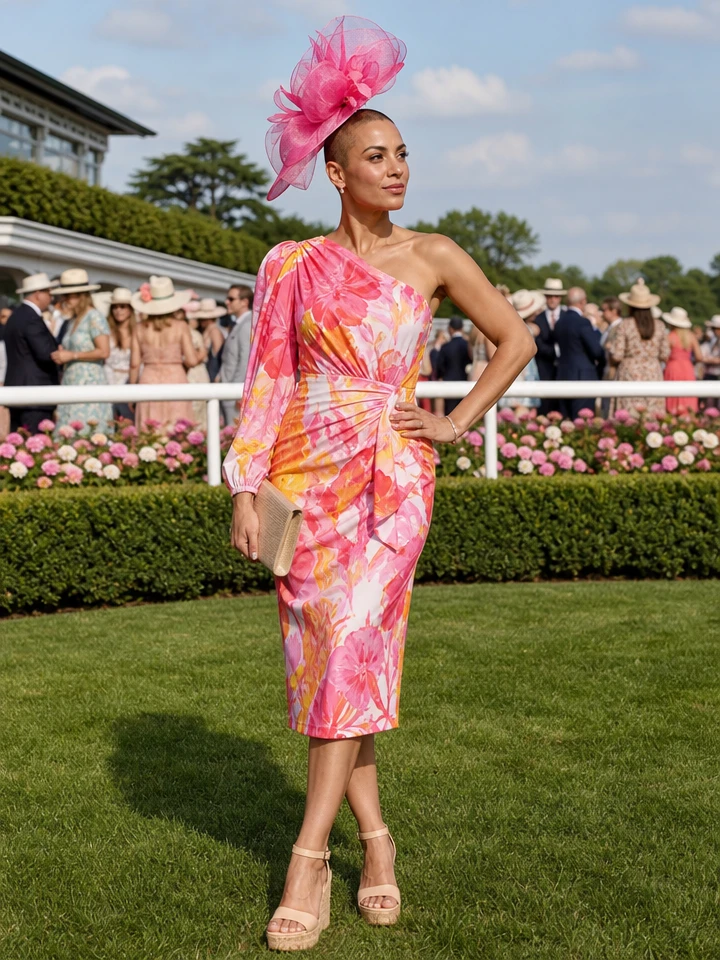
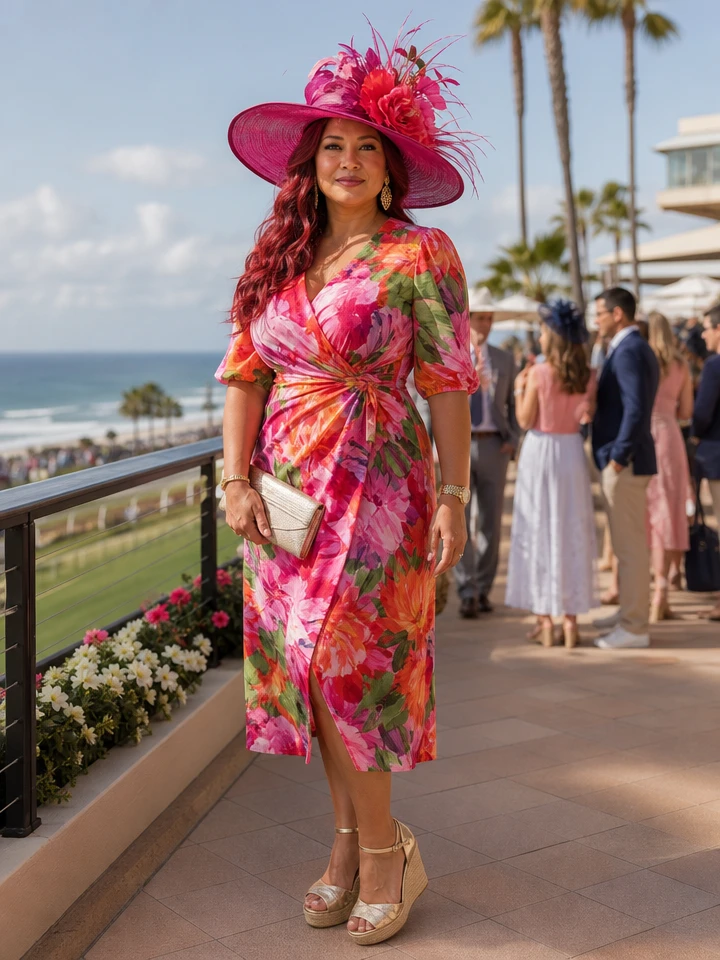
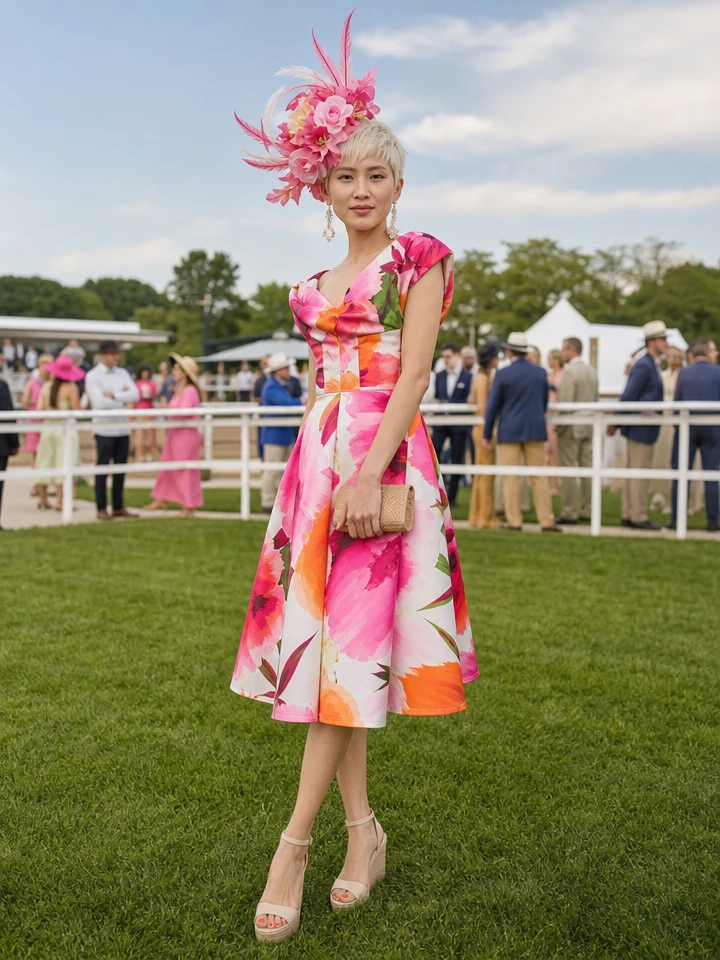
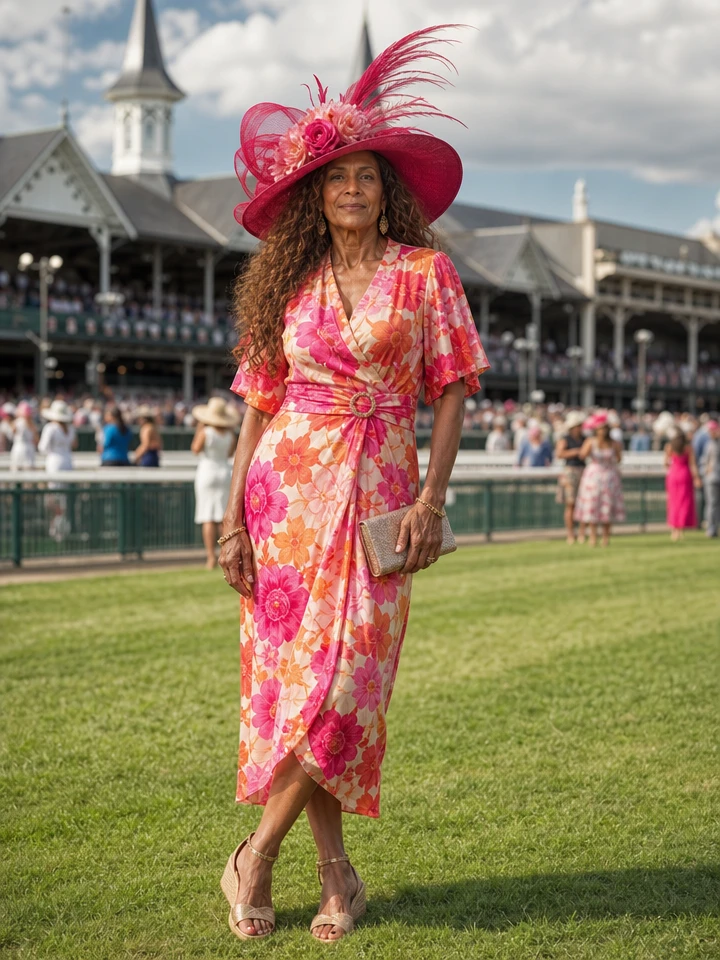
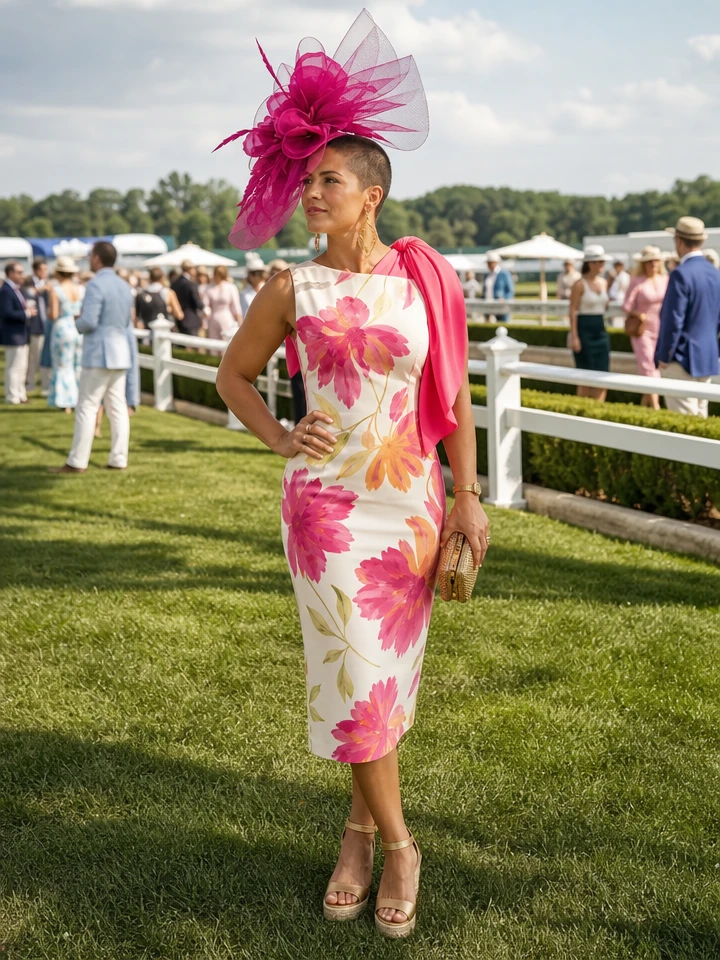
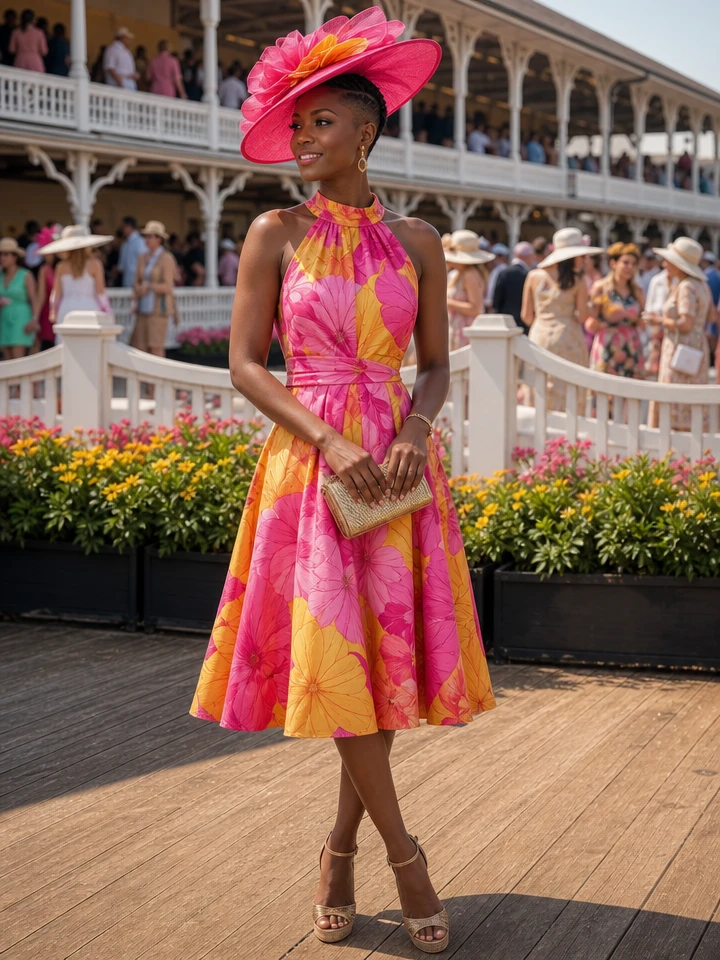
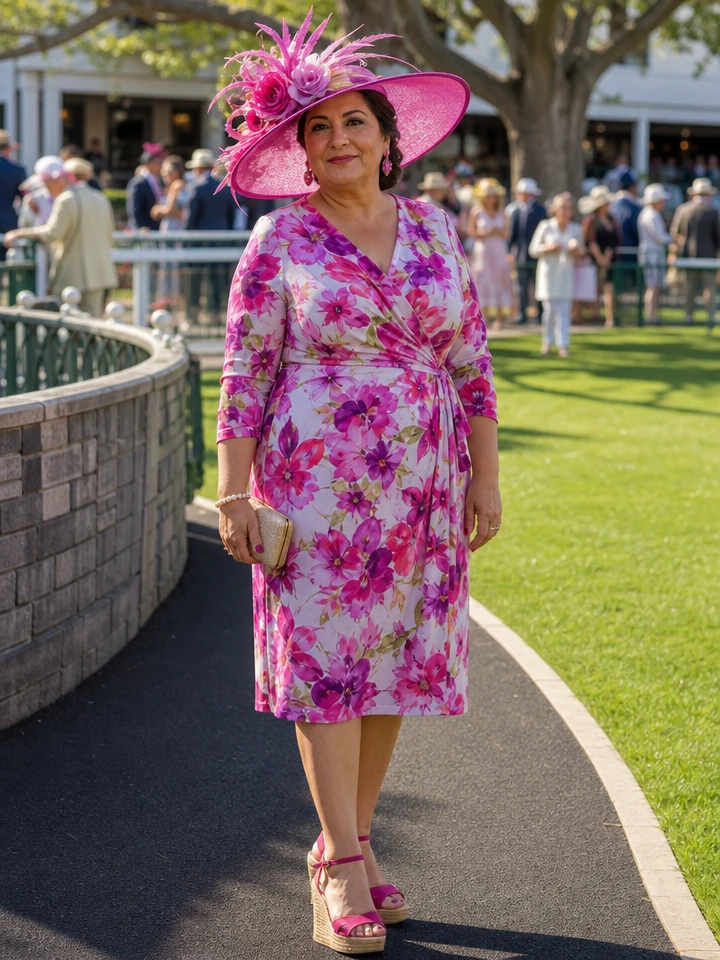
Feminine Presenting
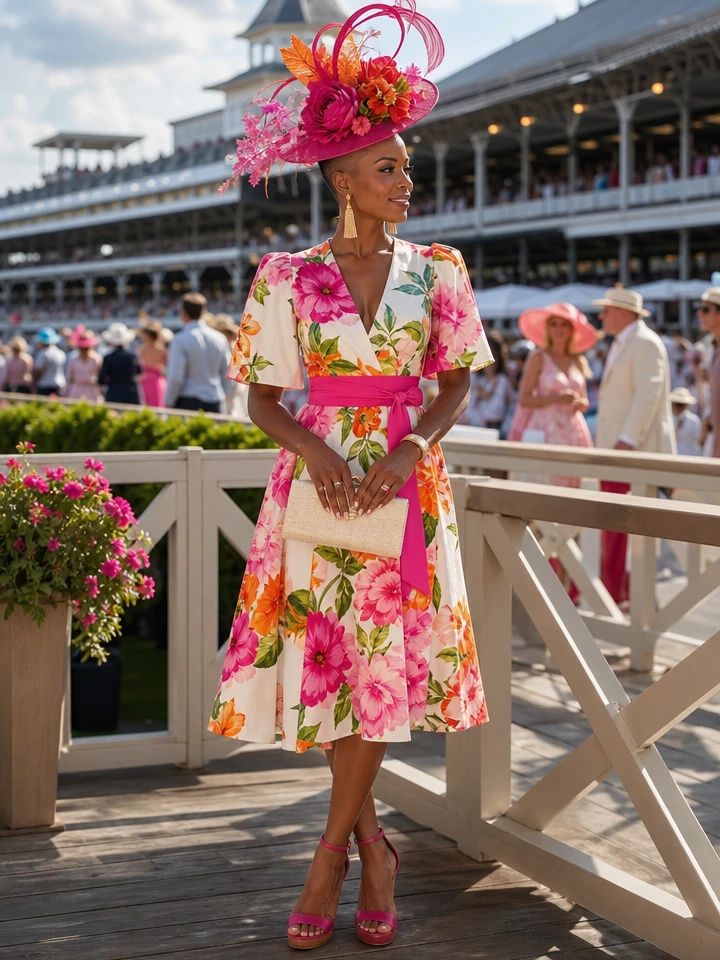
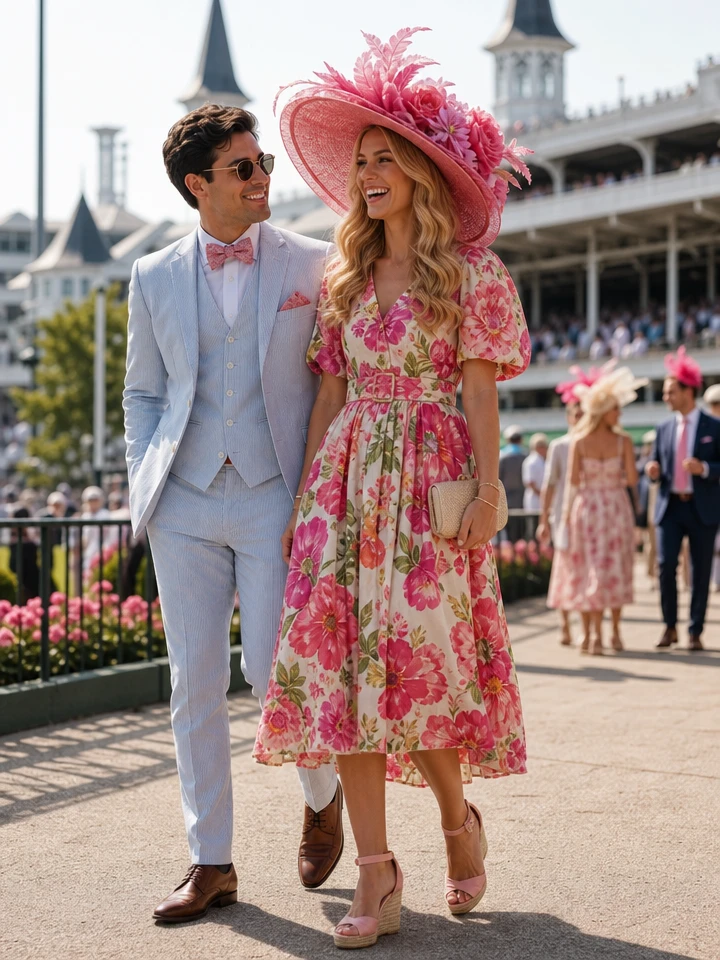
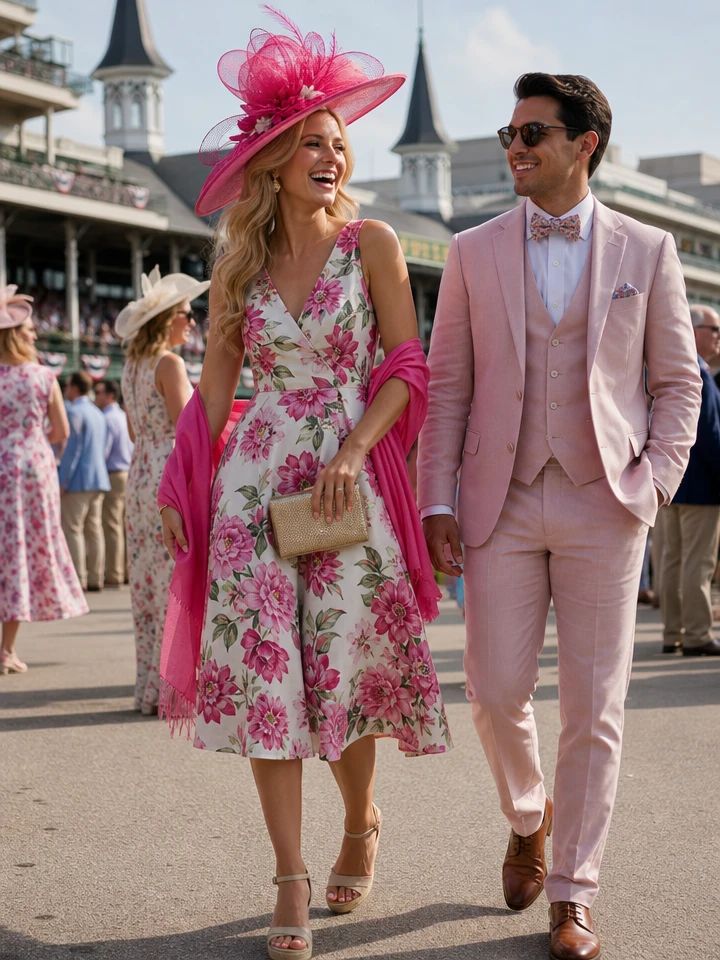
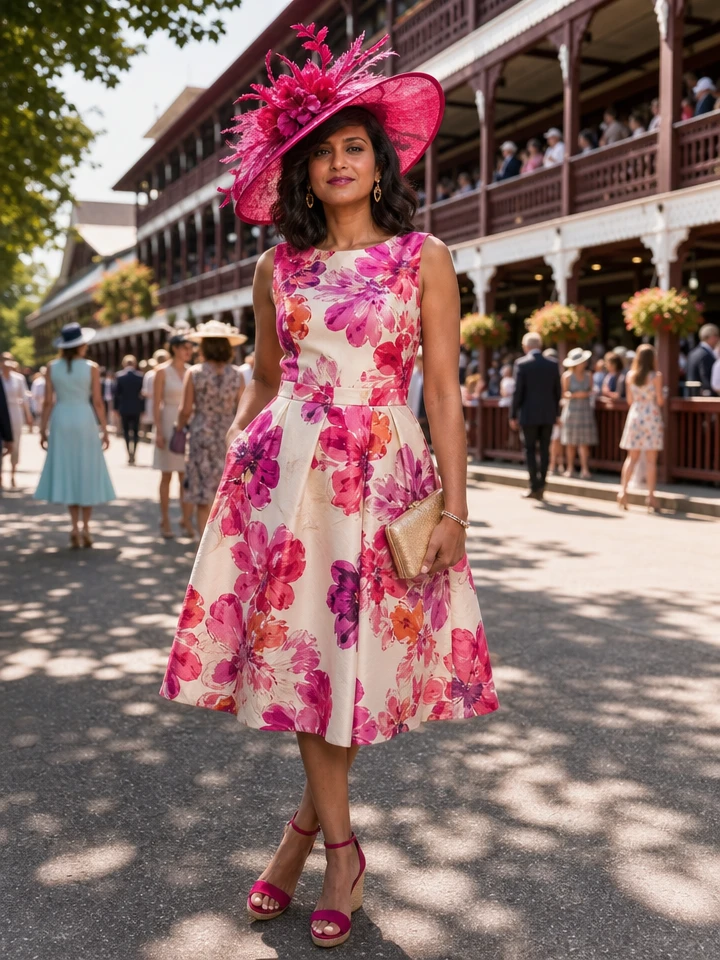
A knee length or midi length dress or a stylish pantsuit. The outfit must be paired with a spectacular hat or fascinator, and at the Kentucky Derby the bigger and bolder the better. Bright colors and prints are strongly encouraged.
Arrow keys or a swipe
Look plates
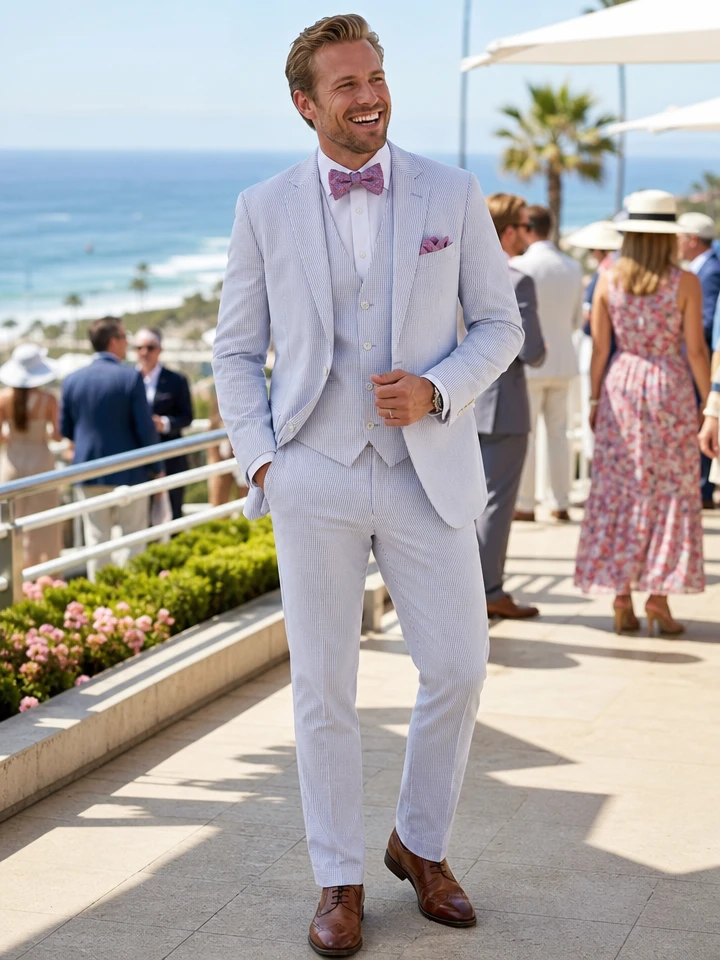
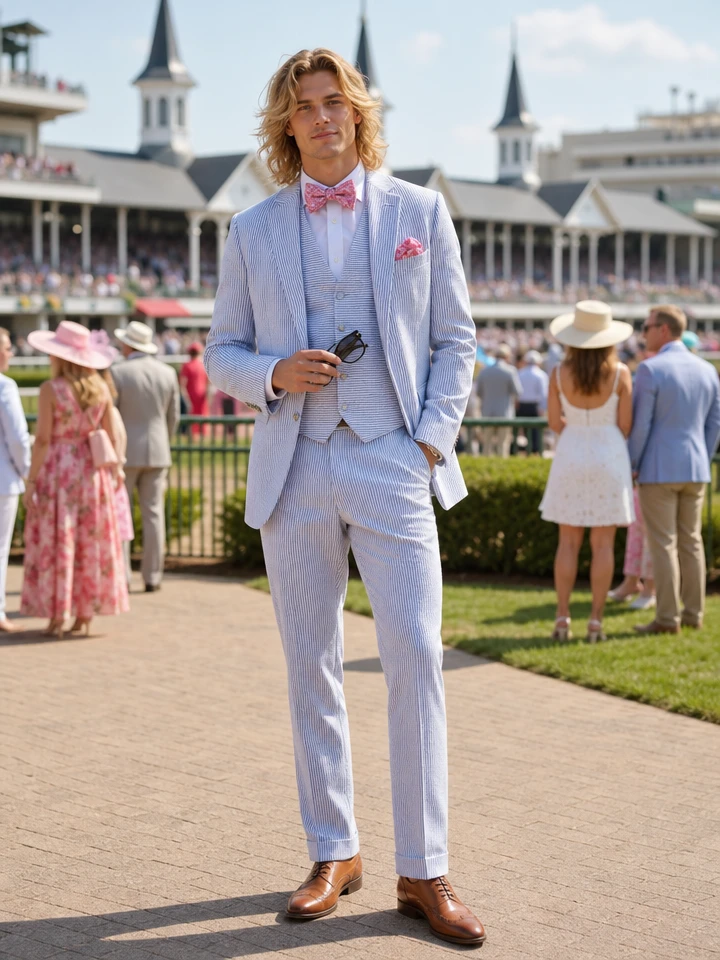
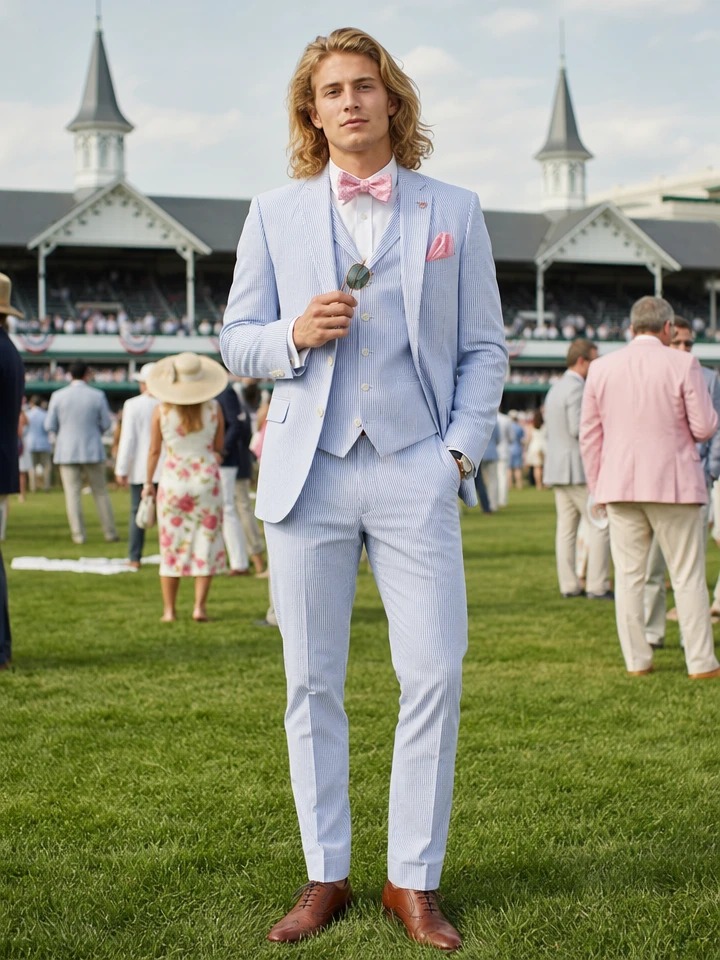
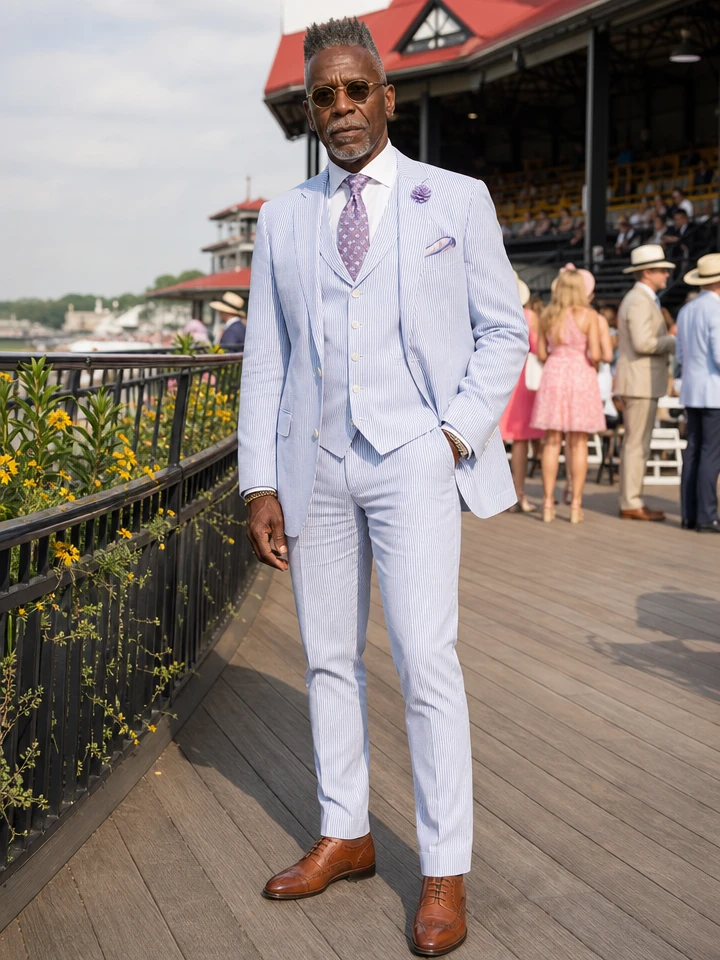
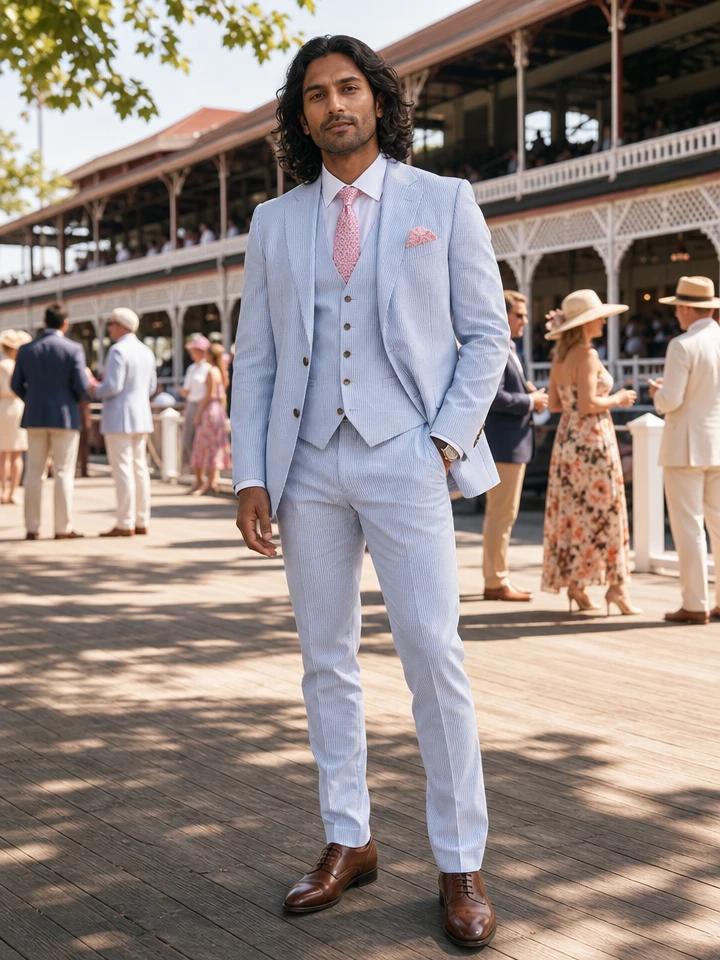
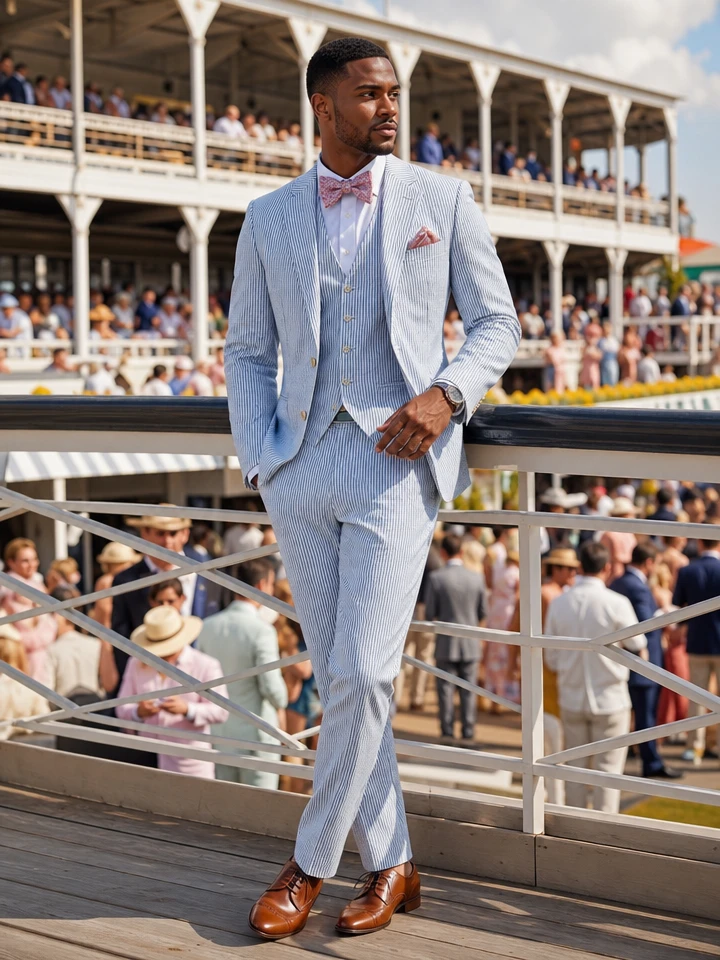
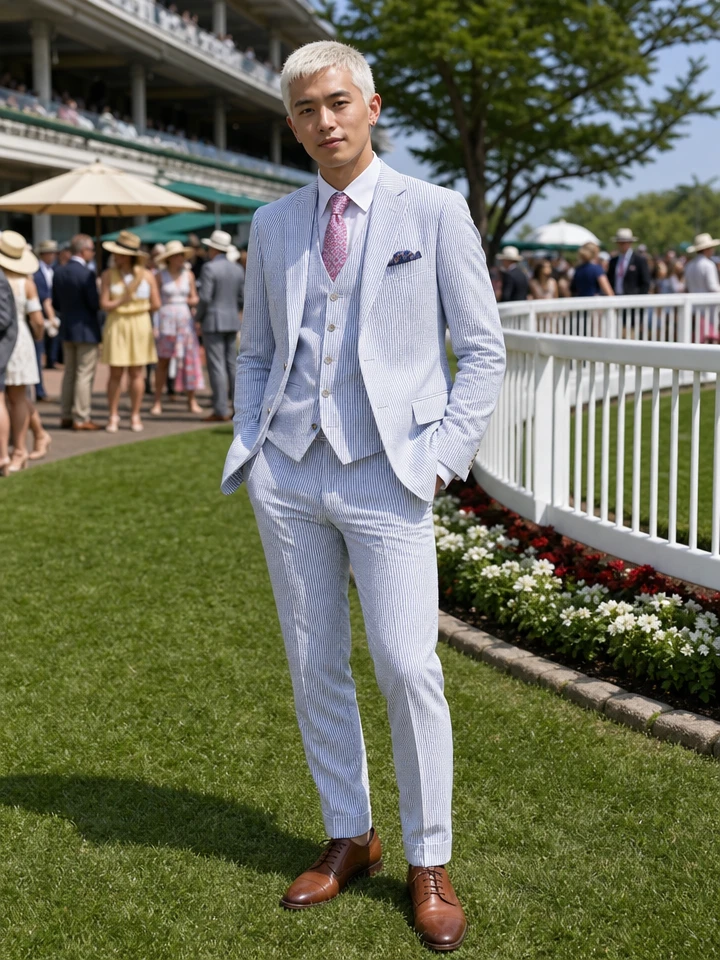
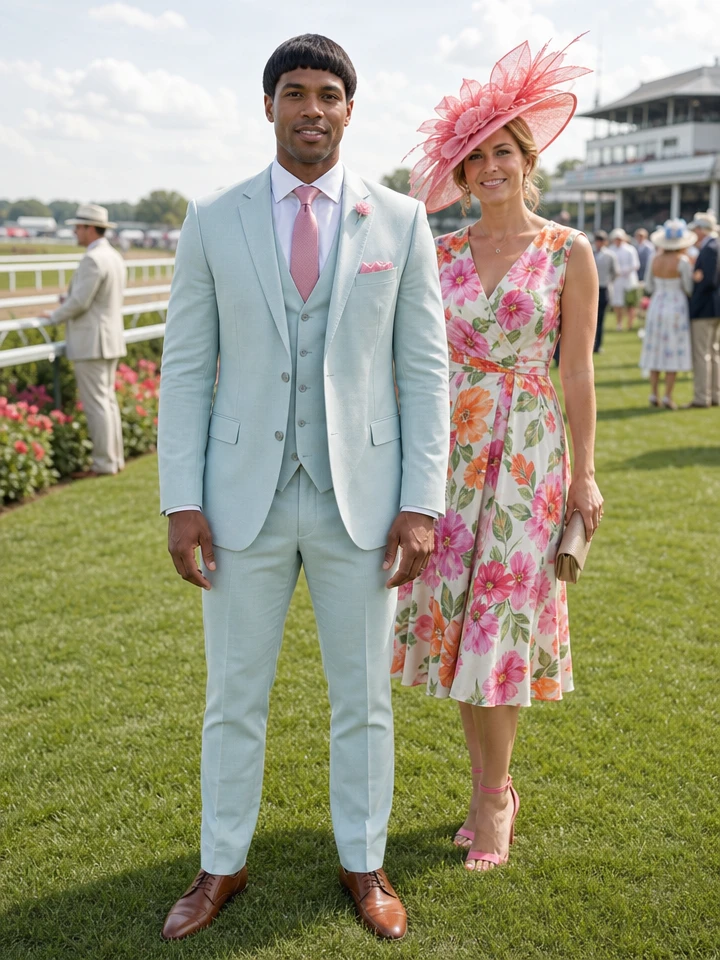
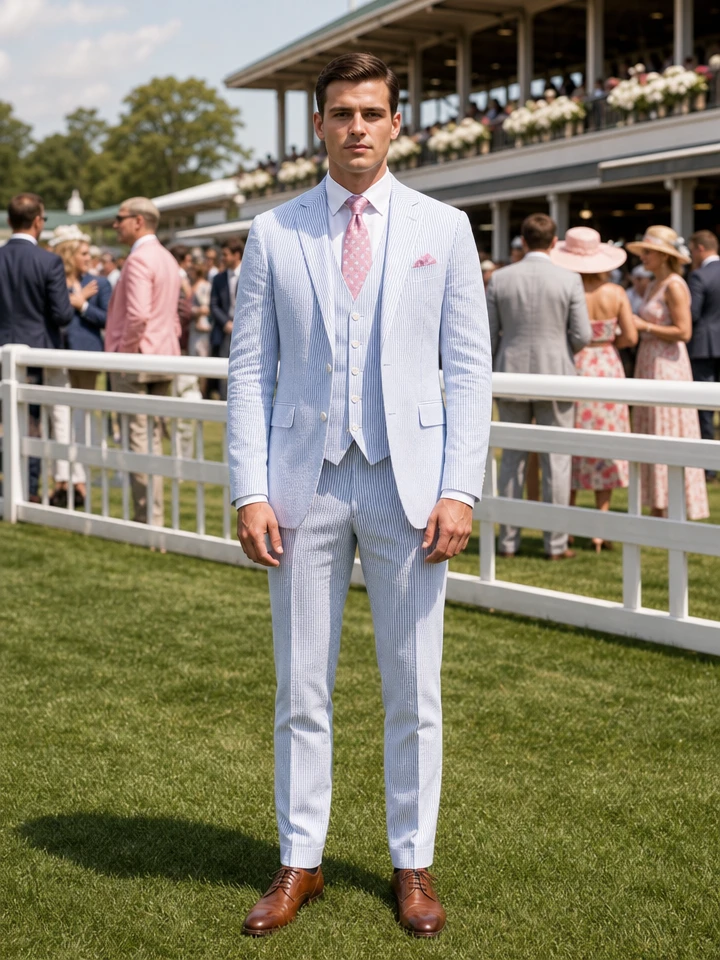
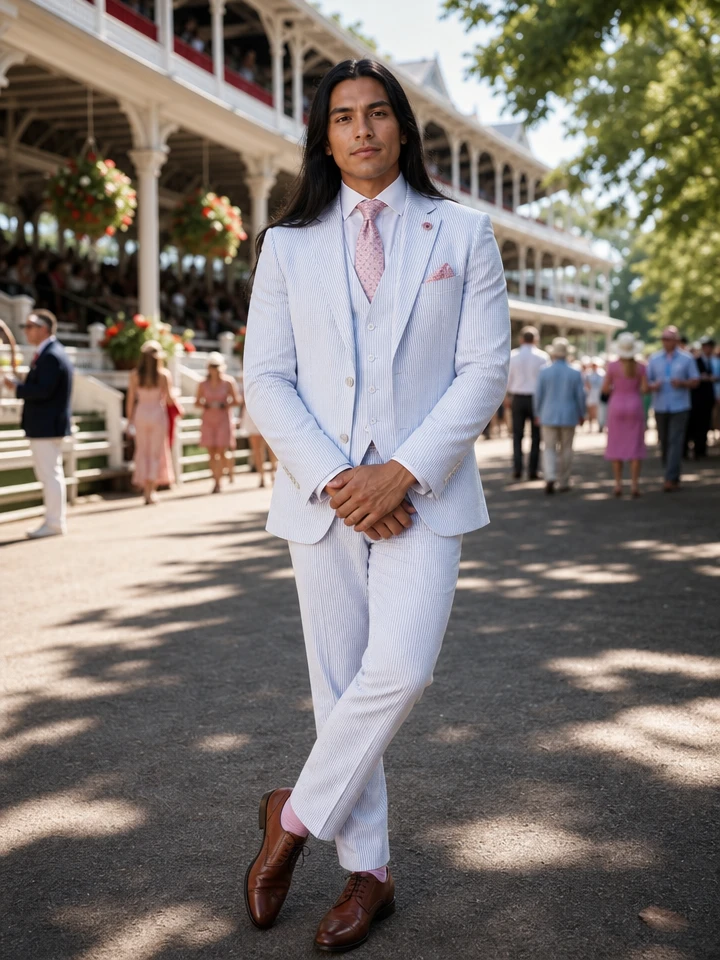
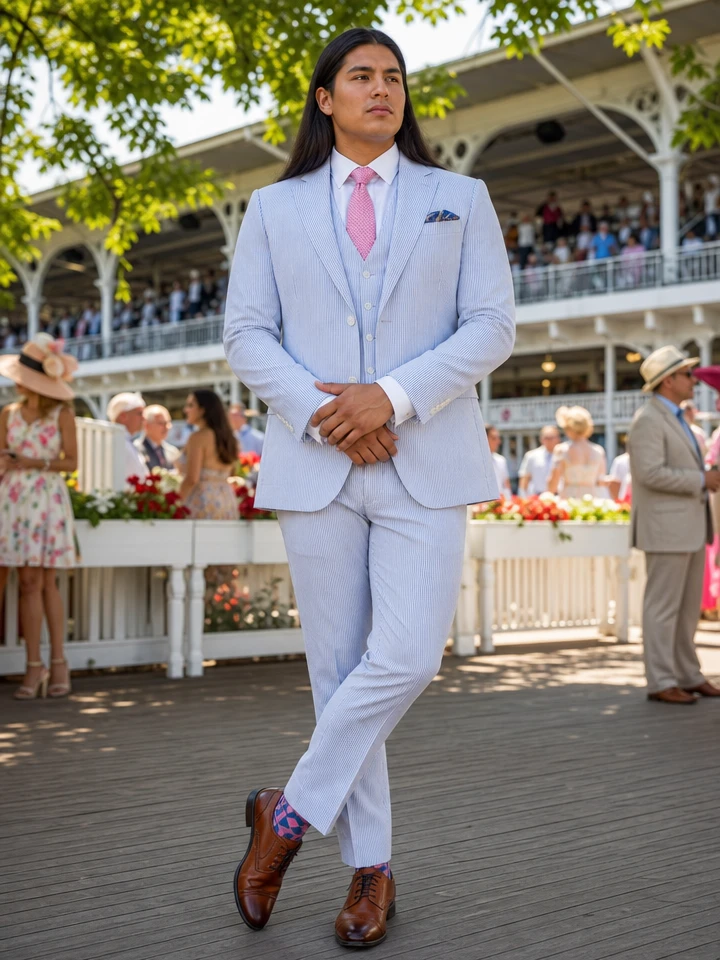
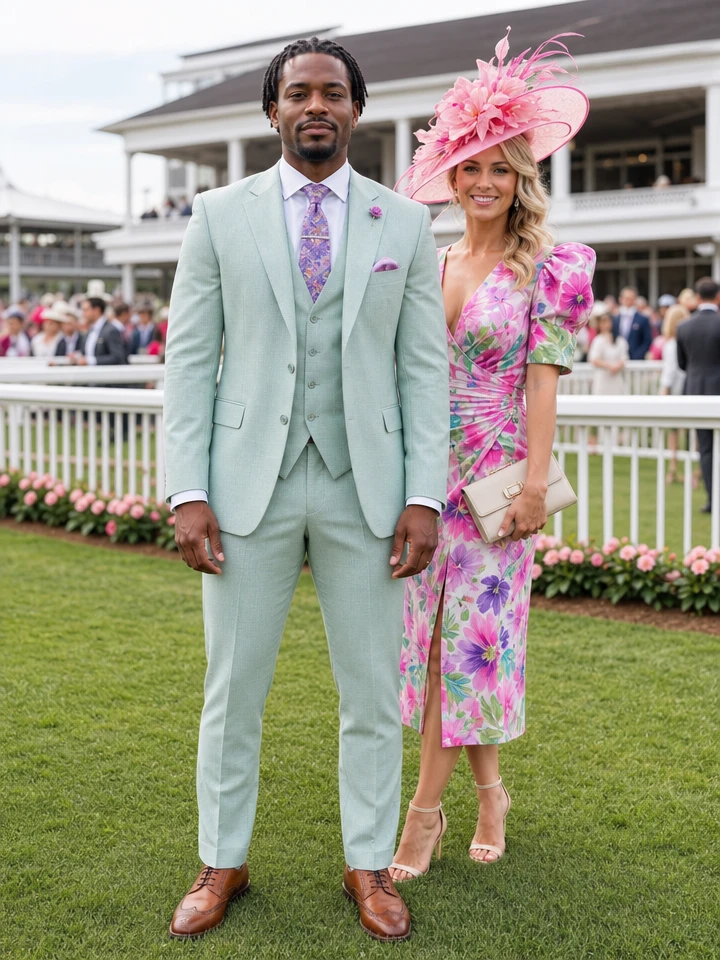
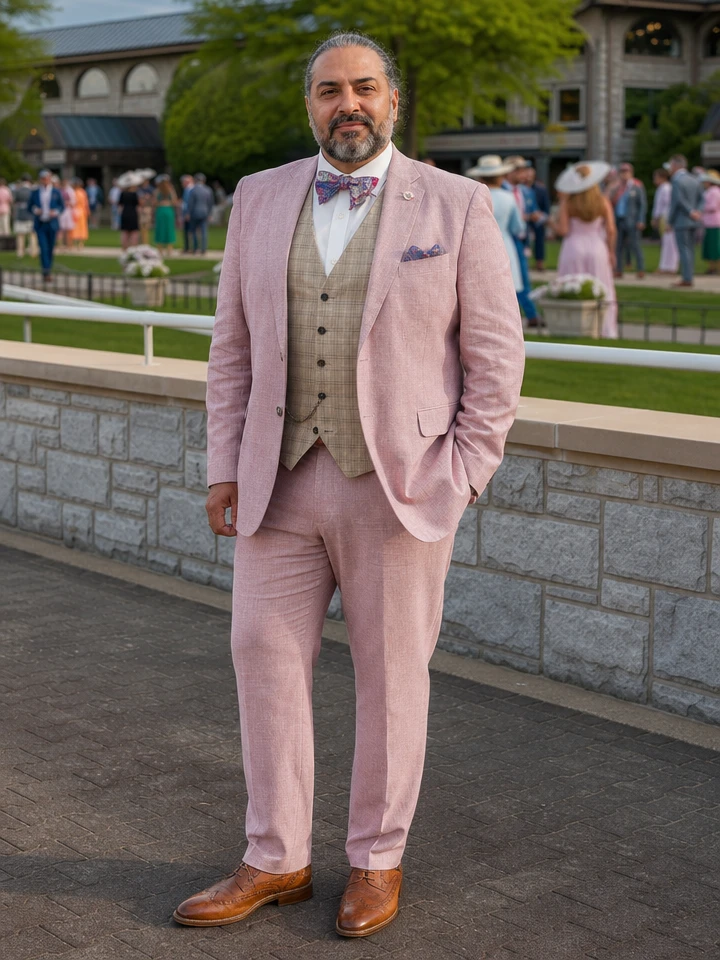
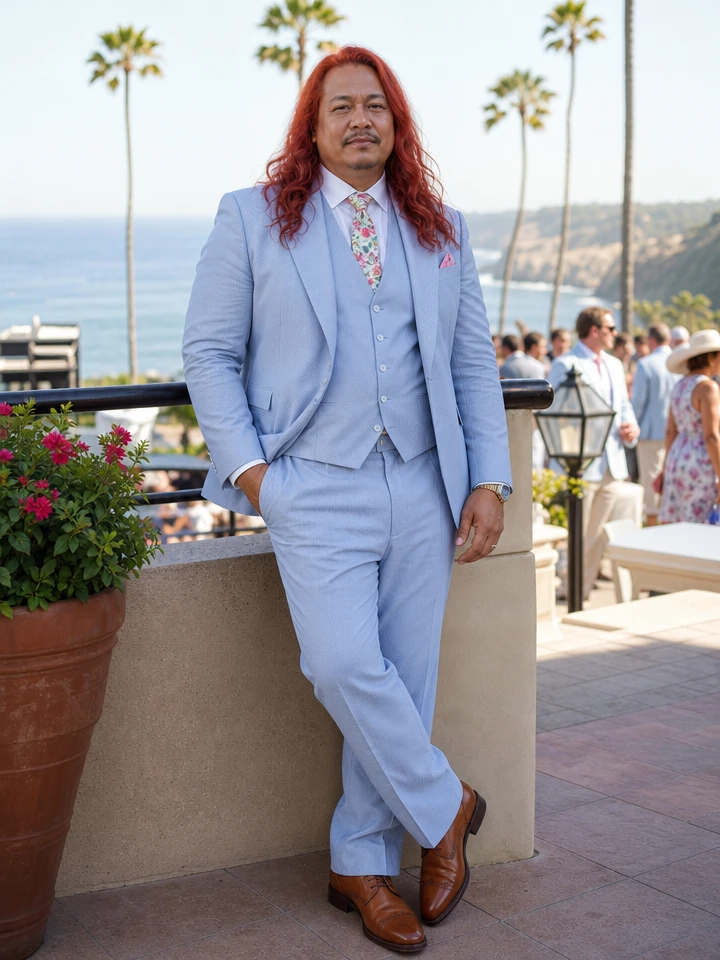
Masculine Presenting
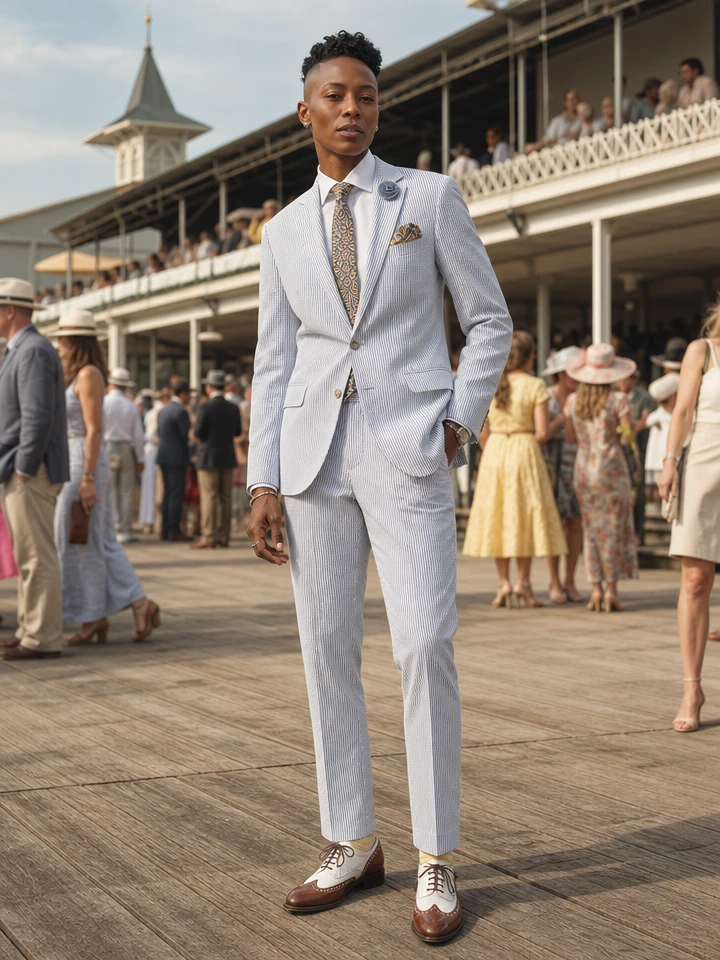
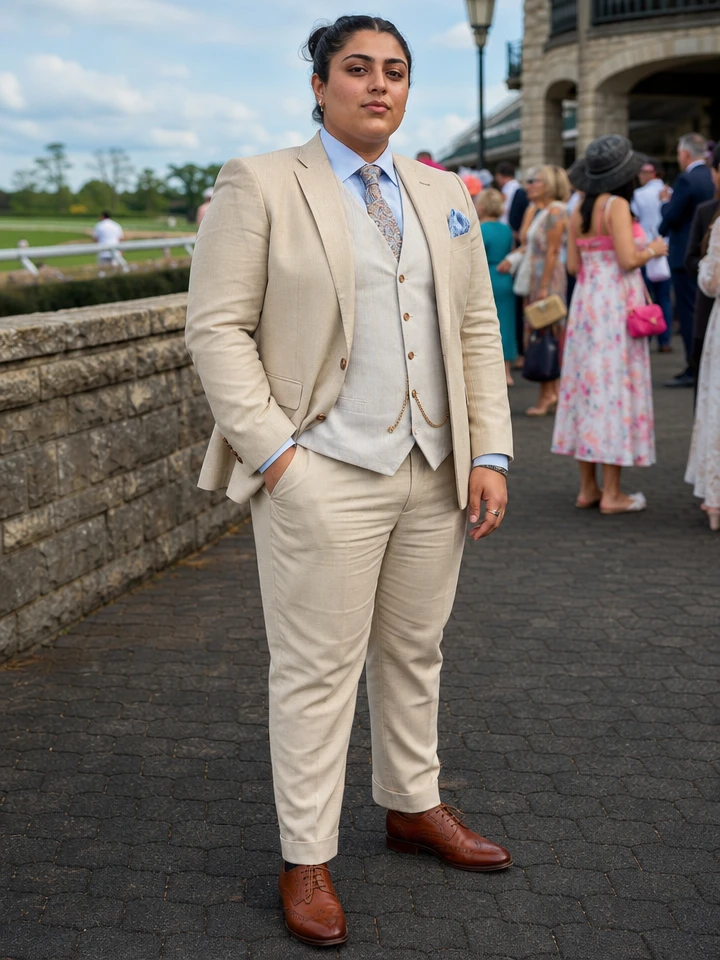
A tailored suit, often in lighter or bolder colors than a standard business suit (seersucker, pastel, or bright patterns are a Derby tradition). A collared shirt and a tie (bow ties are very popular). A dress vest can elevate the look.
Arrow keys or a swipe
Look plates
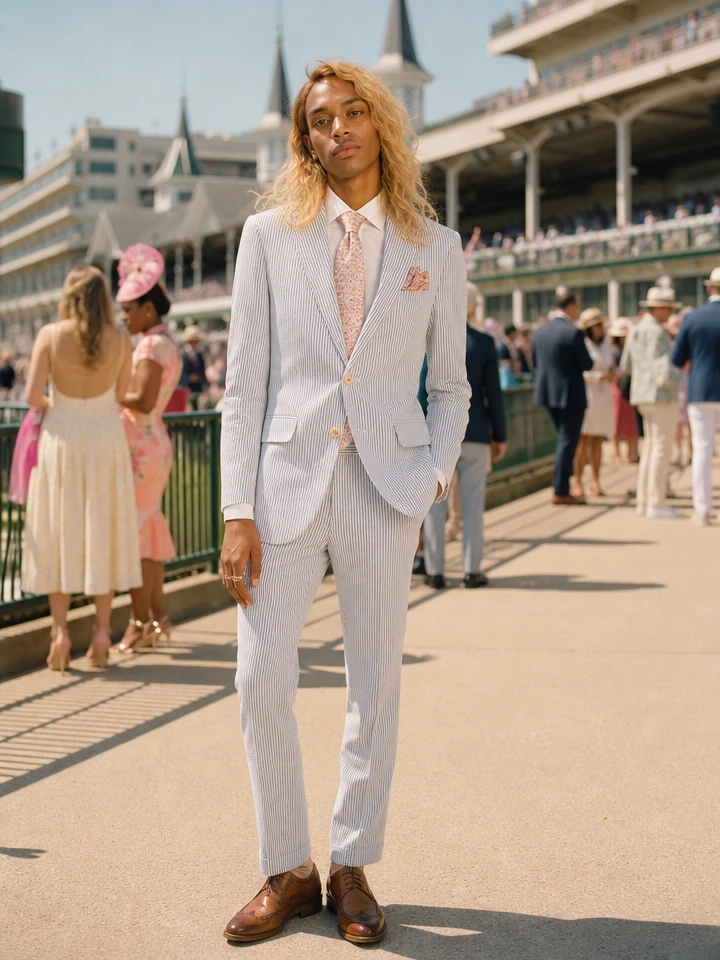
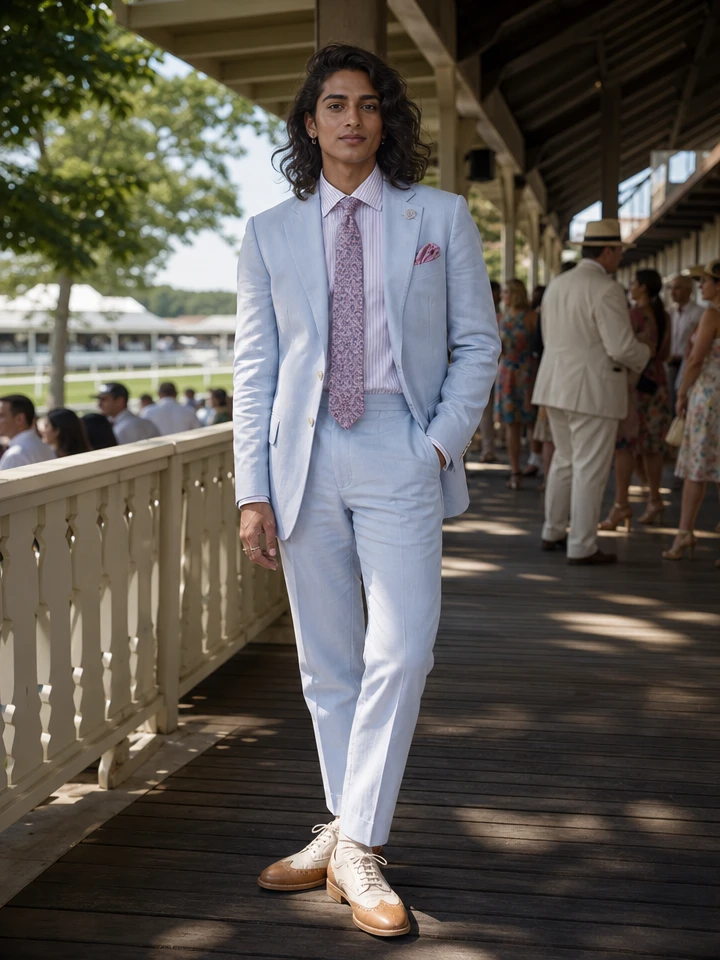
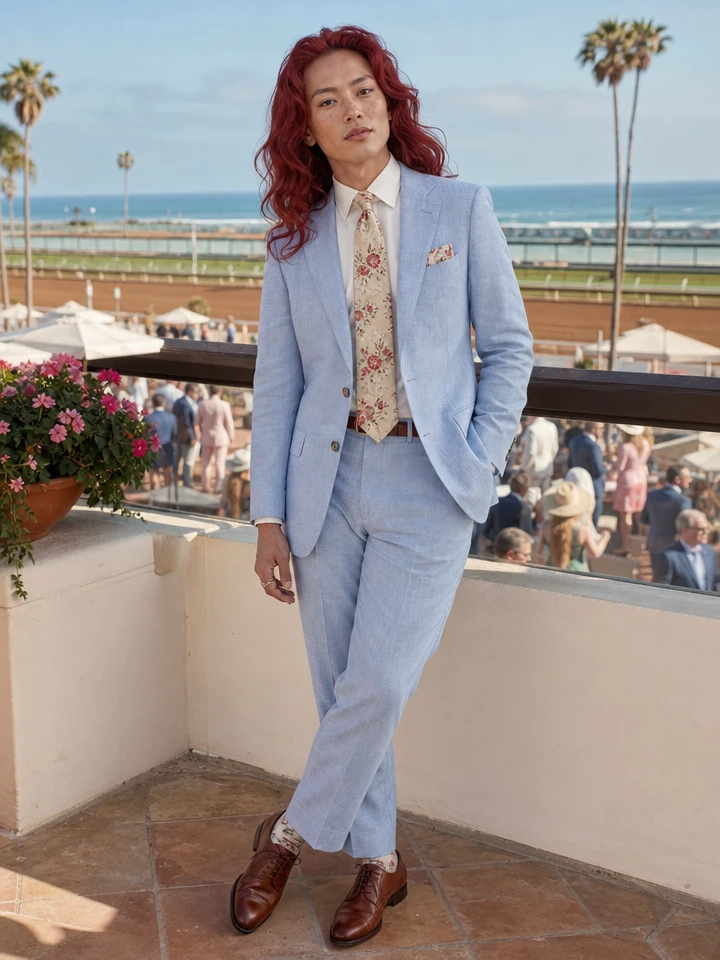
Gender Neutral
A striking and tailored suit ensemble with a coordinated tie or pocket square, or a highly elegant dress or pantsuit with a significant headpiece.
Arrow keys or a swipe
Common mistakes
FEMININE
Miniskirts, casual sundresses, strappy evening dresses, exposed midriffs, stilettos on grass (they sink in), or overly casual footwear. Avoid anything too nightclub oriented or revealing. Many premium enclosures at Churchill Downs and Saratoga have strict rules on hemline length and shoulder coverage.
MASCULINE · GENDER NEUTRAL
Open neck shirts without a tie, jeans, standard dark business suits (too plain for the festive setting), athletic shoes, or casual footwear. Shoes and socks must be appropriate for the venue. The look should be celebratory and well tailored, not corporate or casual.
Fabric and colour
FEMININE
High quality silk, linen, and structured fabrics are ideal. Bright, seasonal colors, bold prints, and floral patterns are encouraged, particularly for Kentucky Derby season in early May. The dress should feel celebratory and fashion forward while remaining polished.
MASCULINE · GENDER NEUTRAL
High quality wool, linen, and structured fabrics. Lighter colors, seasonal patterns, and subtle checks or textures are welcome. Seersucker is a classic American race day fabric, particularly for the Kentucky Derby. Race day is an opportunity to wear bolder suit choices than a standard business setting allows.
Footwear and accessories
FEMININE
Heels (wedges are practical for grass), a clutch bag, and a mandatory or strongly encouraged statement hat.
MASCULINE · GENDER NEUTRAL
Polished leather dress shoes (brogues, Oxfords, or loafers). A pocket square is highly recommended.
Seasonal
FEMININE
The Kentucky Derby on the first Saturday in May and the Preakness Stakes in late May call for spring fabrics, which means lighter colors, silks, linen and bright millinery. The Belmont Stakes (June) is warmer still, so breathable fabrics and sun friendly hats are essential. A light wrap is useful for variable spring weather. Saratoga (August) is full summer, favoring the lightest linens and florals.
MASCULINE · GENDER NEUTRAL
The Triple Crown season (May through June) calls for lightweight wool or linen suits, brighter colors, and seasonal accessories like seersucker and bold ties. Saratoga (August) is the warmest racing destination, requiring the lightest fabrics. Fall and winter racing is less prominent in the US but requires heavier wool and darker suit colors.
In United States
Race Day Attire in the United States
American race dressing is a two week culture rather than a season. The Kentucky Derby at Churchill Downs on the first Saturday in May is the whole tradition compressed into one afternoon, followed by the Preakness Stakes at Pimlico and the Belmont Stakes in June, and then Saratoga through August. Outside those, most American racing has no dress code at all, which is why guidance written for Ascot travels badly here. The American signature is the hat. At the Derby a large, elaborate hat is effectively part of the ticket for feminine guests, and it is celebratory rather than regulated, so height, colour and flowers are all encouraged instead of measured. The masculine equivalent is colour. Seersucker, pastel and bold check suits are Derby tradition, and a plain dark business suit reads as underdressed rather than safe. Where rules do exist they are set by the premium areas rather than by the racecourse as a whole, so Millionaires Row, the clubhouse and private suites publish their own hemline and jacket requirements while general admission does not. Two practical points. The infield is a different event entirely and dresses accordingly. And the ground is turf, so a stiletto will sink.
Frequently asked
What should I wear to a race day event?
Race Day dress codes vary by venue and enclosure, but generally call for smart, festive dressing. Think tailored suits, statement dresses, and eye catching hats or fascinators. Check the specific venue's dress code as premium enclosures at Churchill Downs and Saratoga have stricter rules.
Are hats required for race day?
For women, hats or fascinators are traditional and often required in premium enclosures. At the Kentucky Derby, an elaborate hat is effectively mandatory and part of the cultural event. For men, a hat is optional but can add a dapper touch. Check the specific venue's rules as some enclosures enforce headwear requirements.
Can I wear flat shoes to a race day event?
FEMININE
Yes. In fact, flat shoes or wedges are practical choices given the outdoor grass and turf settings. Elegant flats, wedge heels, or block heels work well. Stilettos can sink into soft ground. Men should wear polished dress shoes.
What type of hat or fascinator works best for race day?
FEMININE
A structured wide brim hat, elegant fascinator, or statement headpiece that complements your outfit is ideal. At the Kentucky Derby bigger and bolder is celebrated, so elaborate floral hats, sculptural millinery and bold colors are all encouraged. Choose a style that frames your face and does not obstruct the view of guests behind you.
Can I wear a patterned or colorful suit to race day?
MASCULINE · GENDER NEUTRAL
Yes. Race day is one of the few formal occasions where bolder suit choices are encouraged. Seersucker, checks, windowpane, and lighter colors all work well, particularly at the Kentucky Derby. Pair with a quality tie, pocket square, and polished shoes. Avoid anything too loud or novelty oriented.
What is the difference between the Kentucky Derby infield and the clubhouse dress code?
They are two different events on one afternoon. The clubhouse, Millionaires Row and the private suites publish their own requirements and expect a suit or a formal day dress with a hat. The infield has no dress code and behaves like a festival, so the crowds there dress accordingly. Buy the ticket first and dress for that area rather than for the Derby in general.
Is a plain dark business suit acceptable at an American race day?
It is acceptable but it reads as underdressed at the Triple Crown meetings. Seersucker, pastel, light grey and bold check suits are Derby tradition, and colour is the masculine equivalent of the hat. Save the plain charcoal suit for a corporate box and pick something with a season to it for the day itself.
Where this sits
This code sits in the formal band.
Related dress codes
Know a local variation
Dress codes shift between cities and between crowds. If Race Day Attire means something different where you are, tell us and we will look into it. Submit a dress code.
The DressDex letter
One note when a code changes or a new edition lands. No more than that.