COUNTRY FORMAL · US / GLOBAL · FORMALITY 7 OF 10
Country Formal
A traditional, tailored, and sophisticated dress code for formal rural or regional events, often incorporating natural textures and a refined countryside aesthetic.
Formality
Sits in the formal band of the scale.
Quick answer
Country Formal in the US applies to events in rural or estate settings, such as barn weddings at upscale venues, equestrian events, country club galas, or formal gatherings in wine country or plantation style estates. It requires a tailored, formal appearance but allows for a softer, more textural look than city formal attire. Think rich natural fabrics, earthy tones, and elegant practicality.
Showing US / Global
What to wear
Look plates
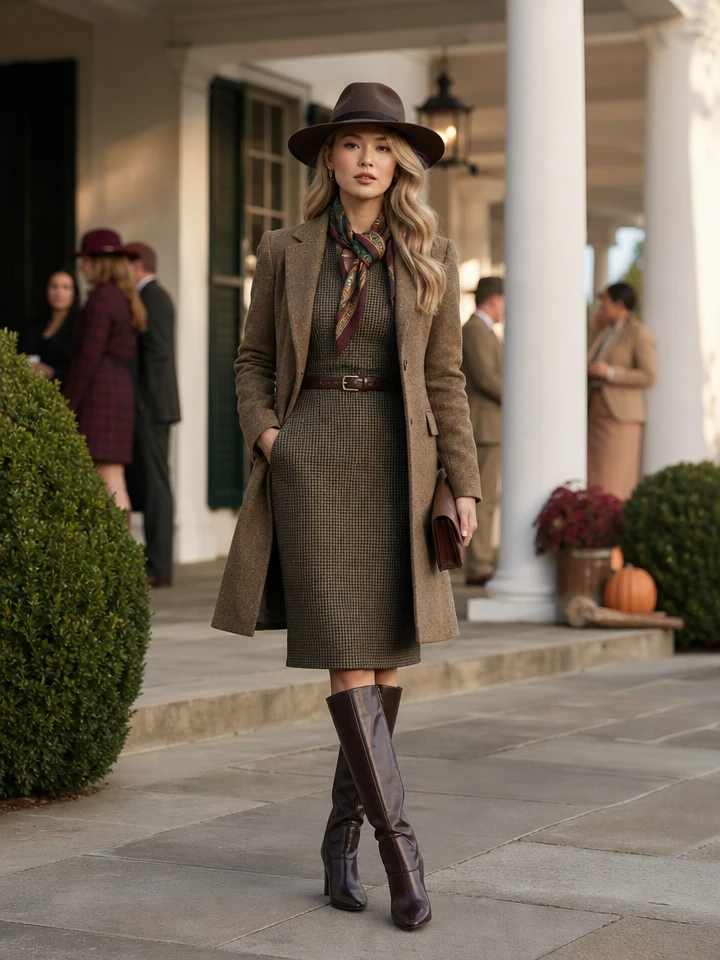
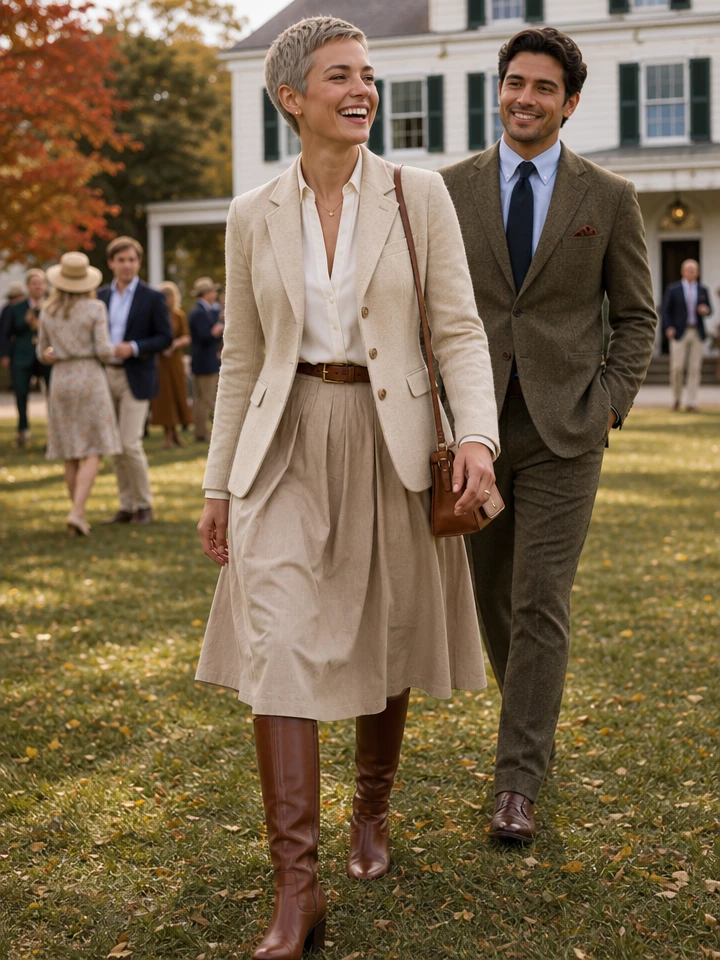
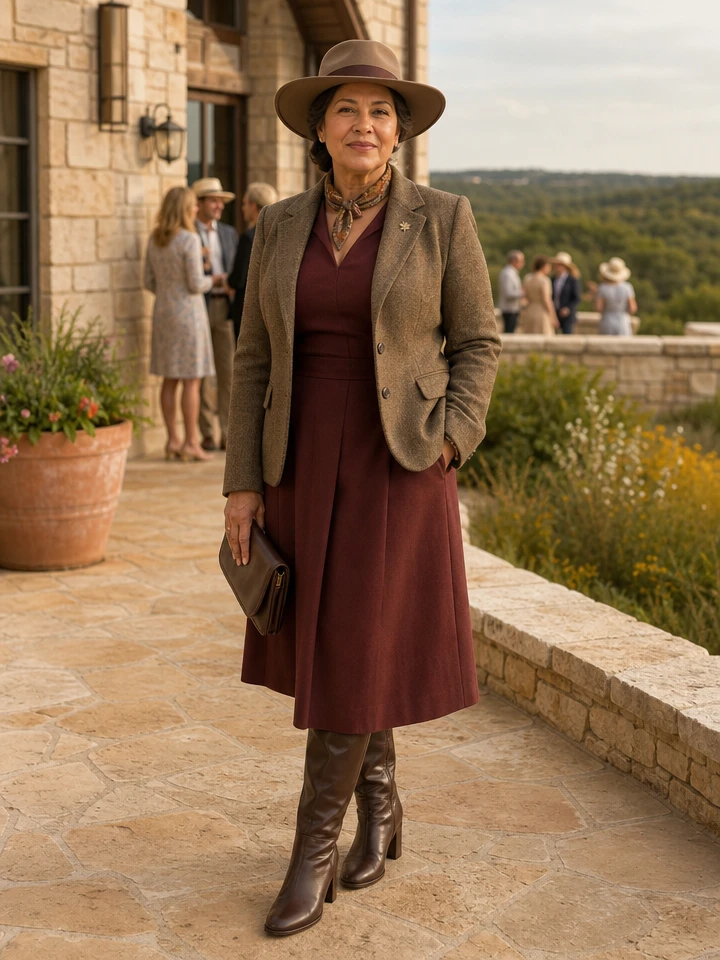
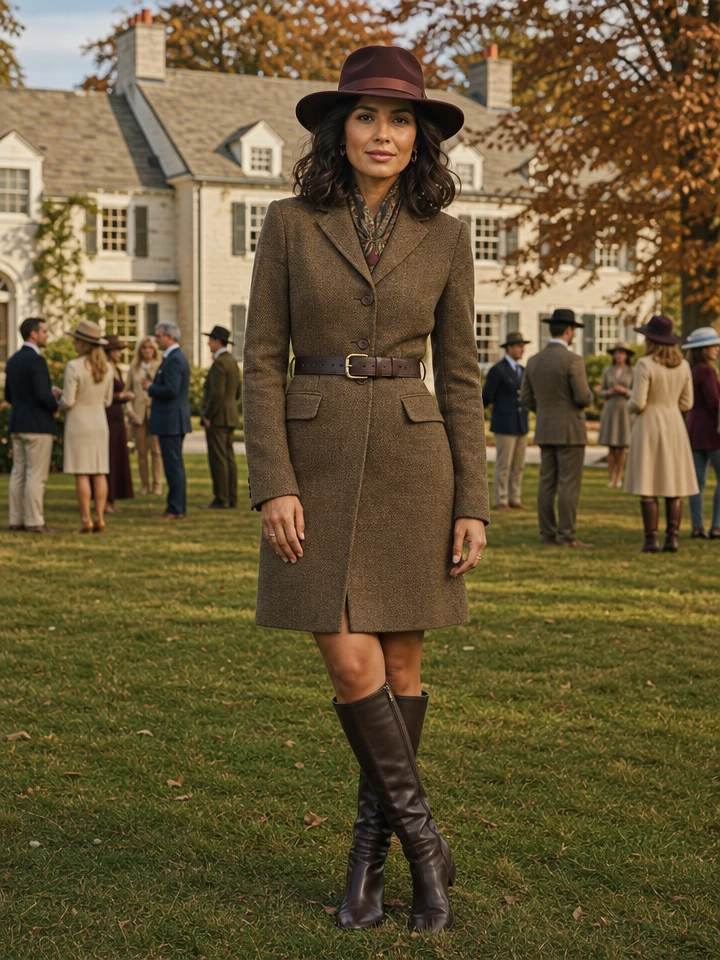
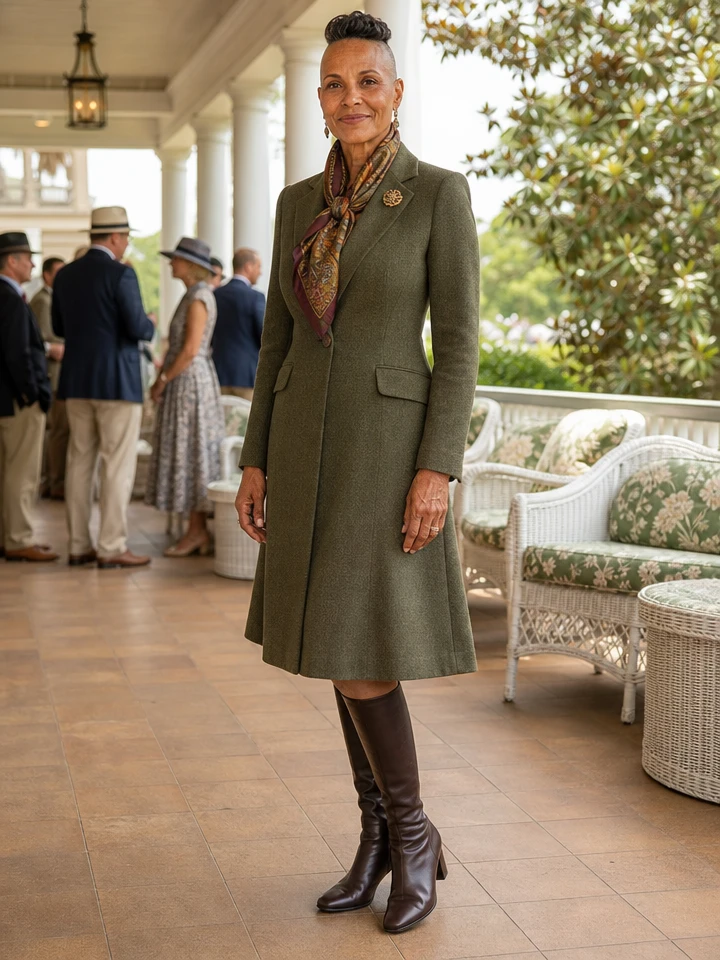
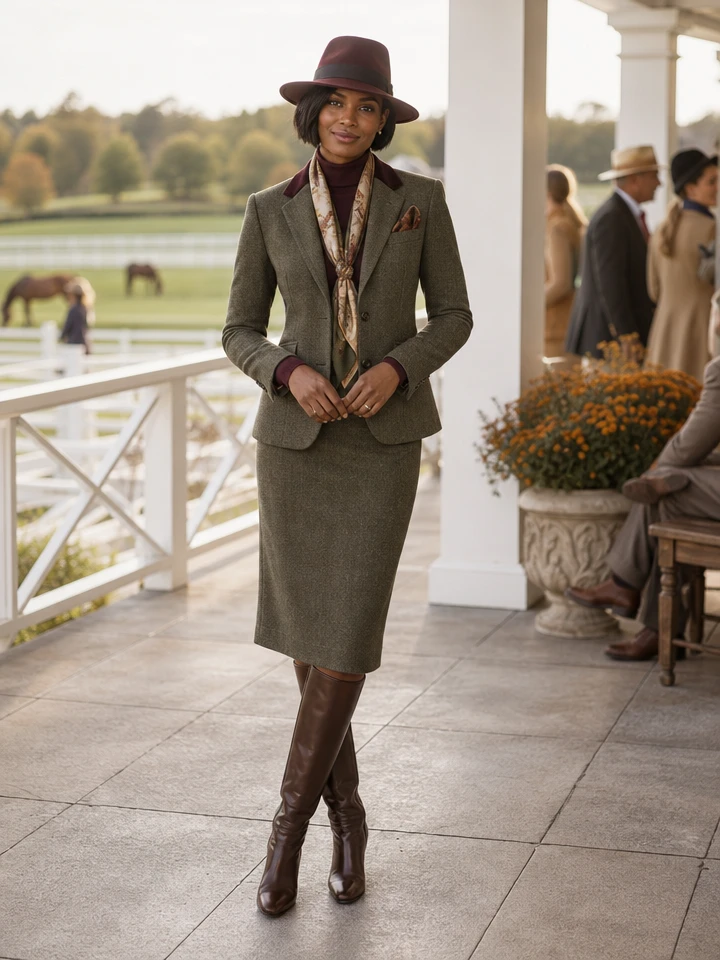
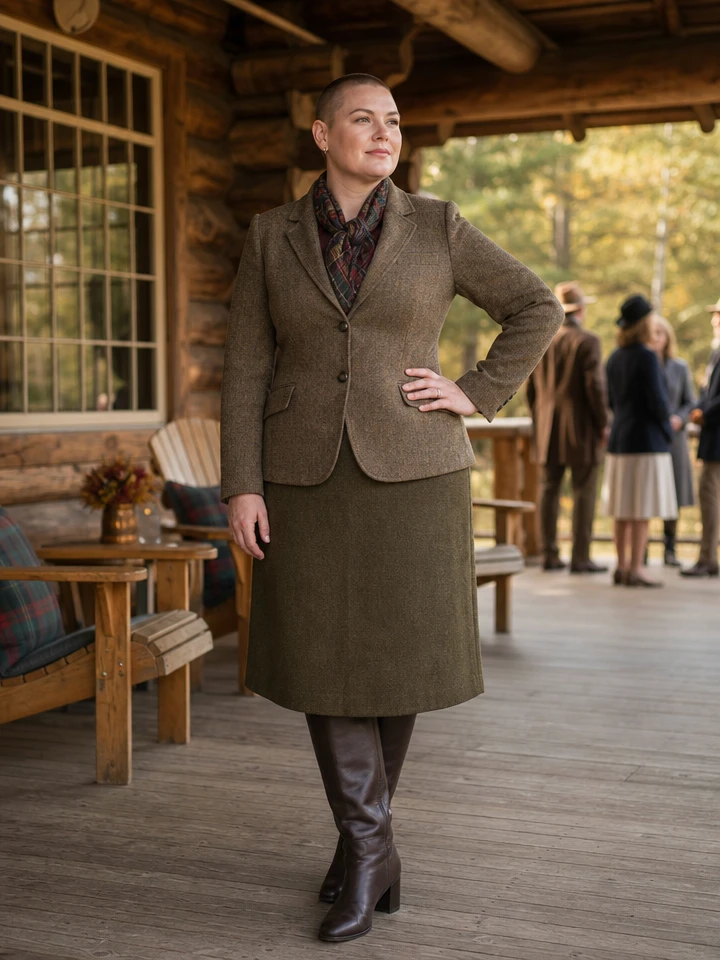
Feminine Presenting
A tailored dress (knee length or midi) in a natural fiber fabric, or a skirt/pants suit. A structured jacket or tailored coat is recommended, often paired with a hat for equestrian events.
Arrow keys or a swipe
Look plates
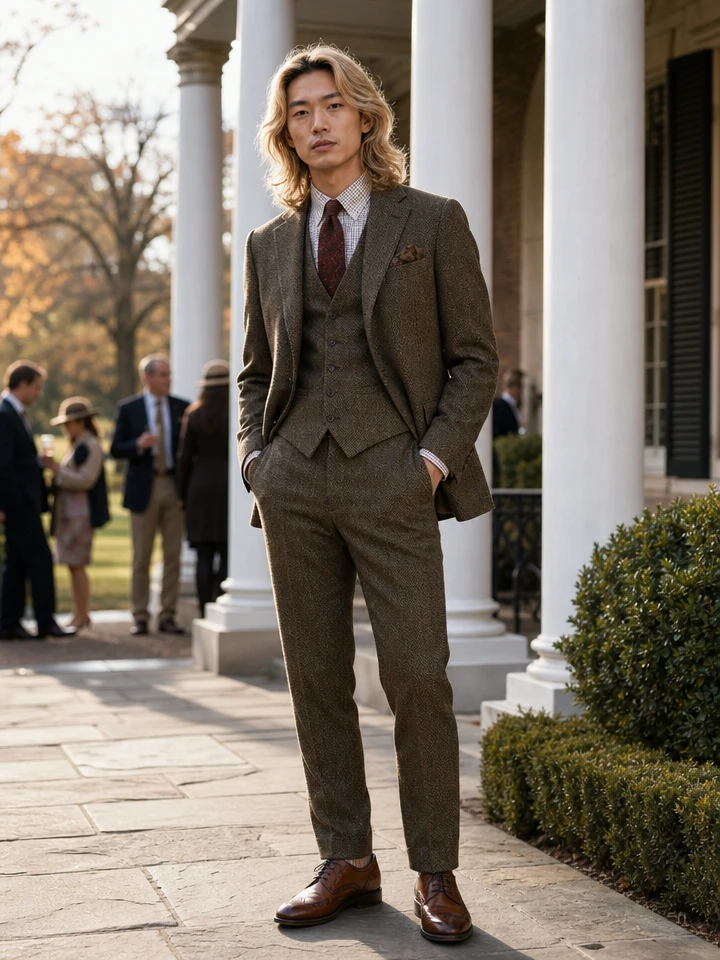
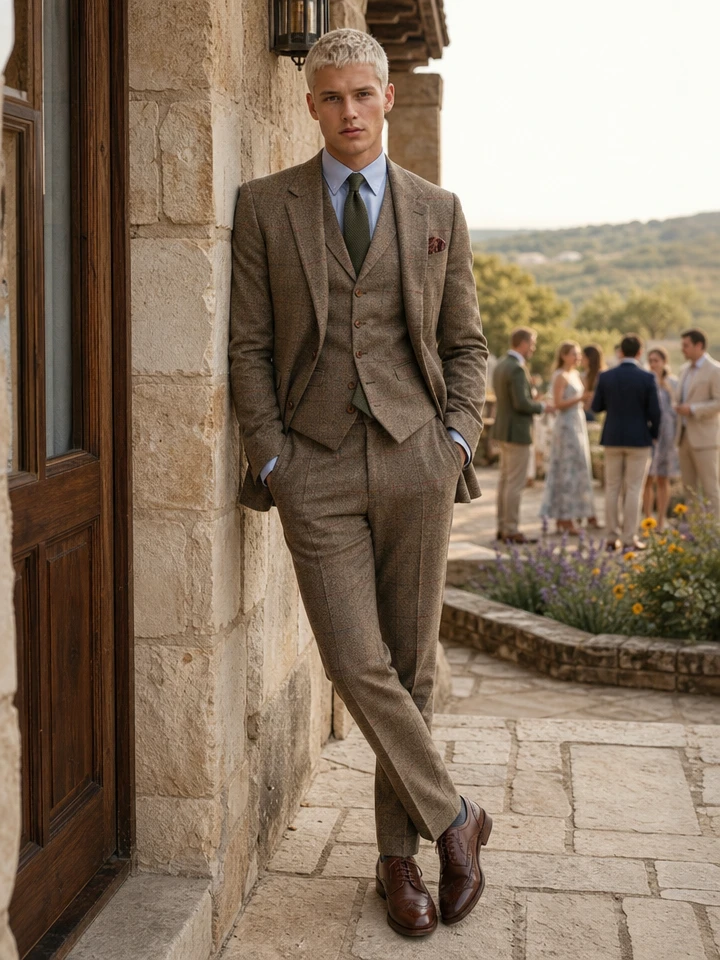
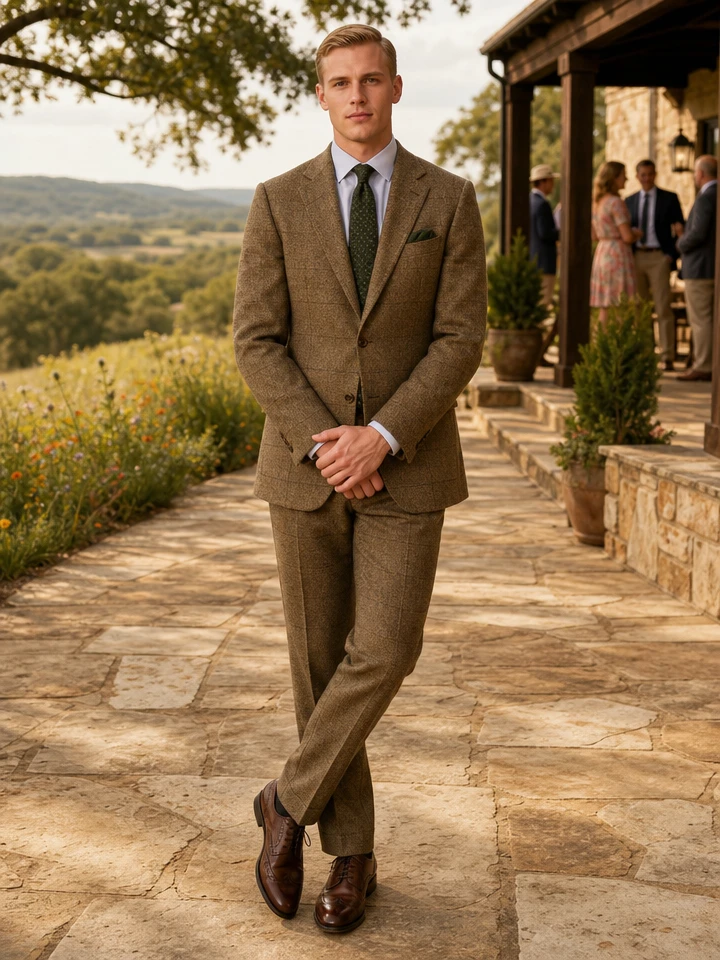
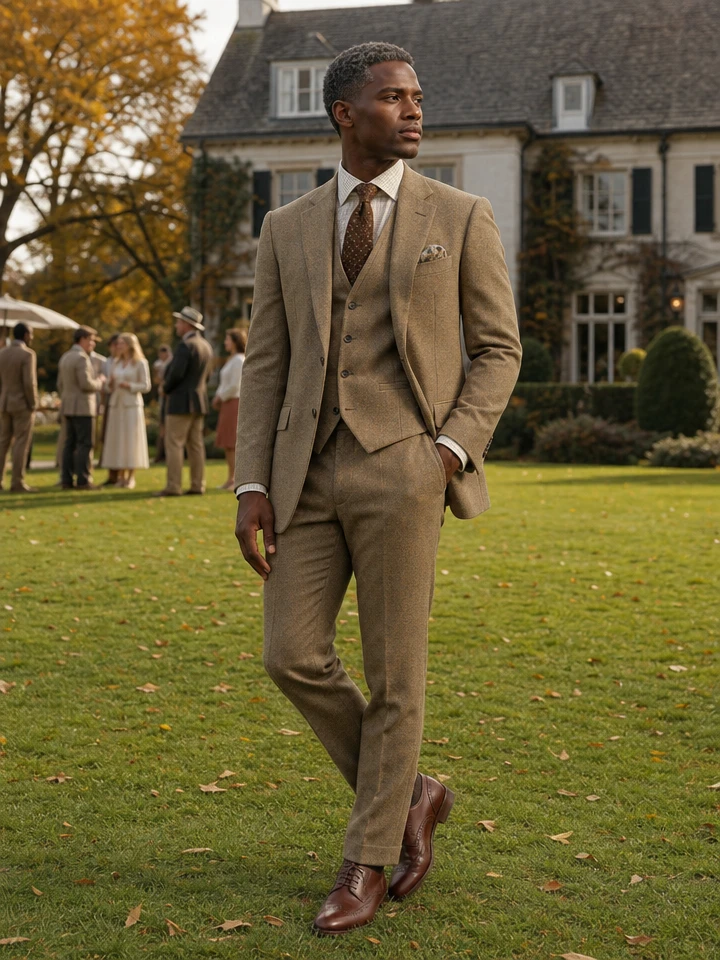
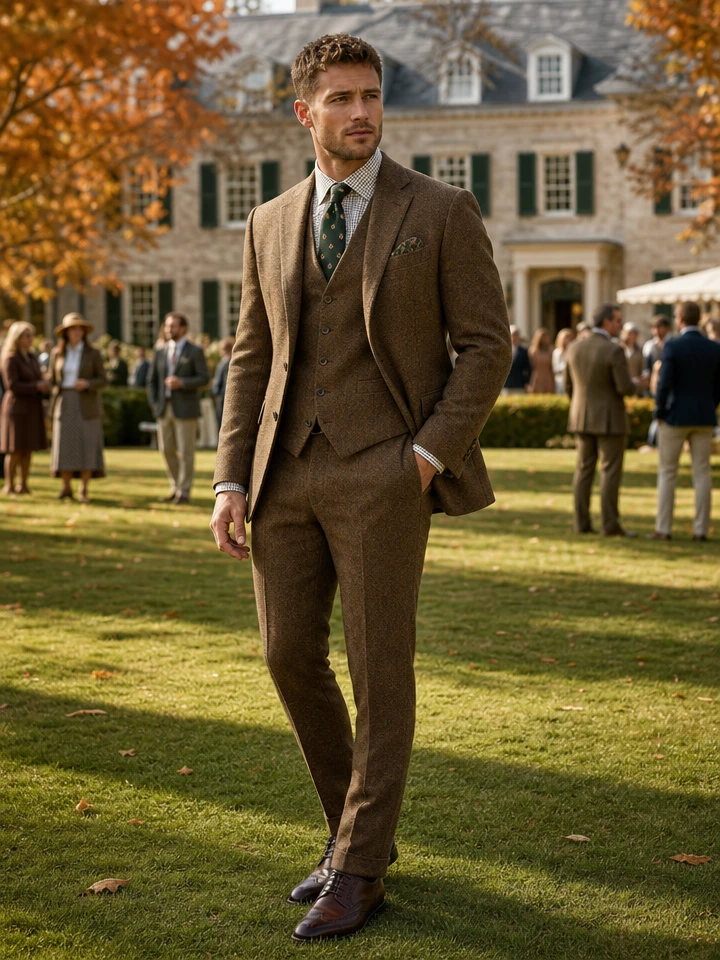
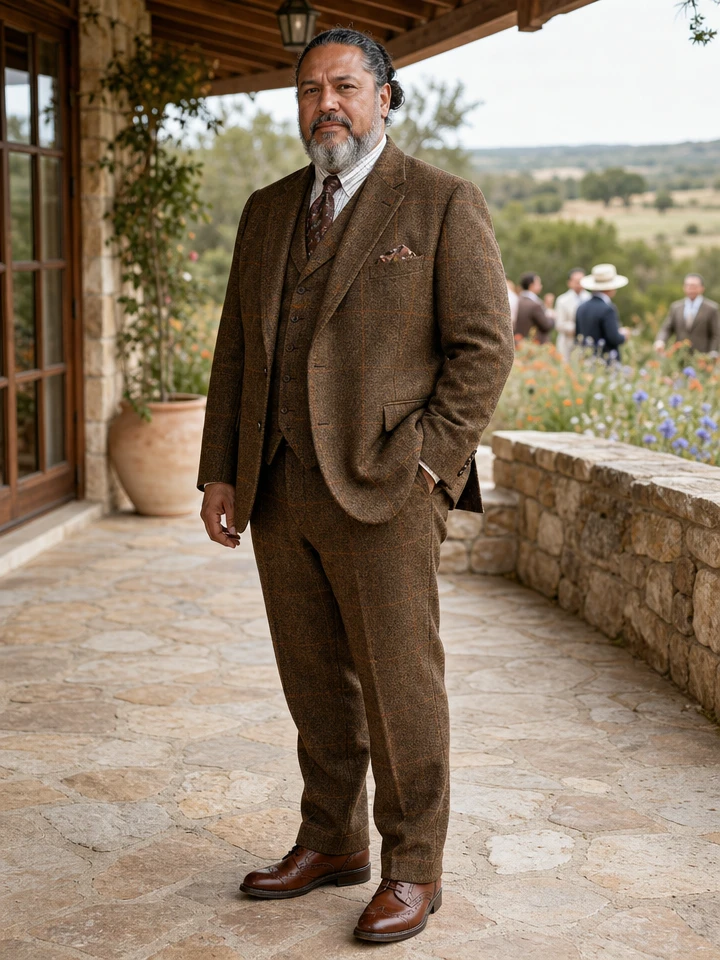
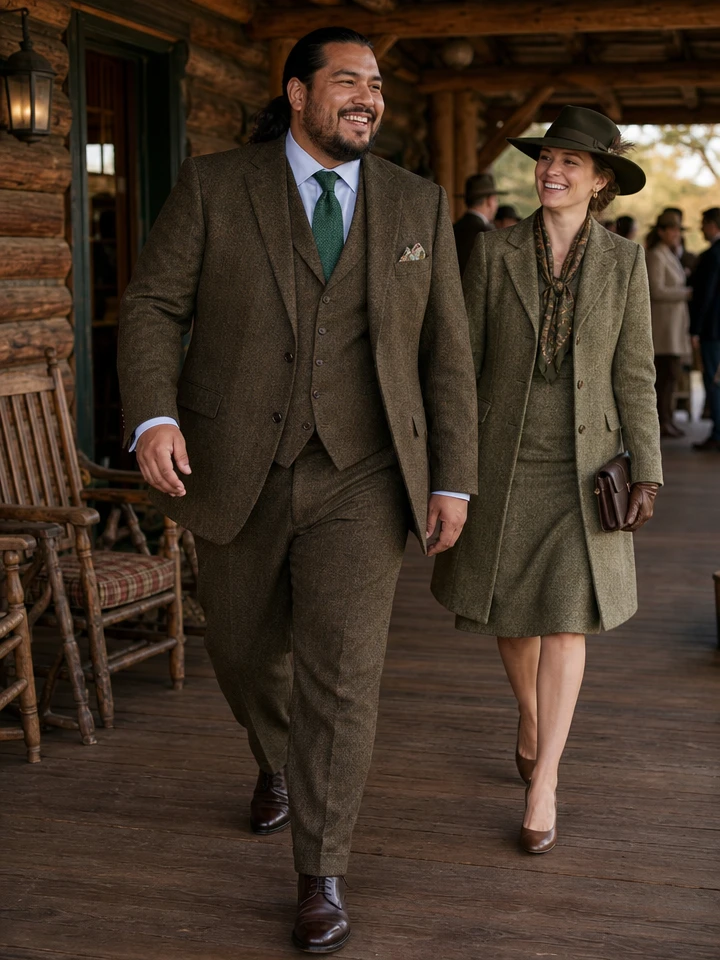
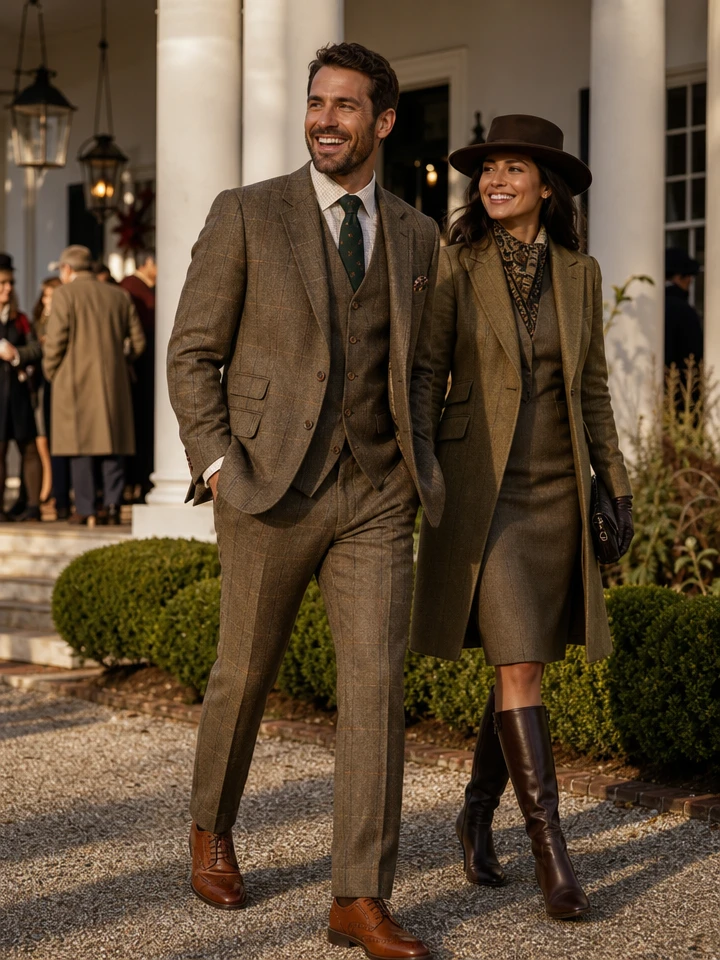
Masculine Presenting
A formal suit in a classic country color (brown, green, tan, or navy) or a tweed/wool blend. Alternatively, a tailored sports coat with wool pants. A collared shirt and tie are mandatory.
Arrow keys or a swipe
Country Formal in the US
American Country Formal is mostly a wedding code, and it exists because a generation of couples started marrying in barns, vineyards and restored farm properties that a city suit does not suit. The settings are recognisable. Upscale barn and estate weddings in the Hudson Valley, Virginia horse country and the Texas Hill Country, winery events in Napa, Sonoma, Willamette and the Finger Lakes, country club galas, and equestrian and hunt season gatherings on the East Coast. The instruction is formality translated into a softer material language, so tailoring stays but the palette moves from charcoal and navy toward brown, olive, tan and warm grey, and the fabric moves from smooth worsted toward tweed, flannel, corduroy and textured wool. Two American mistakes recur. The first is arriving in a sharp dark city suit, which is technically formal and visually wrong against a barn or a vineyard. The second is over correcting into costume, since a full western outfit or a shooting jacket in a Hudson Valley barn reads as a theme rather than as dress. The other practical issue is ground. Grass, gravel and packed earth punish a stiletto, and a block heel or a good boot is the answer.
Wear it differently where you live? Tell us about a local variation.
Country Formal in Australia
An Australian rural formality built on lighter cloth, real sun protection and boots that nobody reads as casual.
Australia has a genuine rural formal tradition, but it runs on different materials from the British one because the climate will not support heavy cloth. The occasions are regional and homestead weddings, country race meetings held outside the capital city carnivals, agricultural field days and show functions, polo and campdrafting events, and formal dinners on stations and at country clubs. The code asks for proper tailoring in a softer register, and the Australian palette is lighter than the British one, running to tan, olive, stone, warm navy and dusty pink in wool and linen blends, fine cotton and lightweight textured wool rather than in tweed and flannel. Two locally made pieces belong here and neither reads as costume. An Akubra is correct at a daytime country event and does real work against sun exposure that a British guest would never need to consider. R M Williams boots are a recognised formal country shoe, and no Australian guest reads them as casual. The ground problem is dust rather than mud, which argues for a mid tone rather than a very dark colour and for a fabric that brushes clean. Heat is the other constant, so an unlined jacket and a lighter shirt matter more than the pattern.
FEMININE
Local notes
In the Australian winter, tweed, heavy wool and cashmere come into their own.
Where it comes up
- country race meetings
- regional weddings
- agricultural field days
We have no photographs of Country Formal in Australia yet. Share a photo or a local variation.
Asked in Australia
Does British tweed work at an Australian Country Formal event?
Rarely, and only in a cold snap in the southern highlands or in Tasmania. Most of the Australian country calendar is too warm for heavy tweed, and a guest wearing it will be uncomfortable within an hour. The local translation keeps the idea and changes the cloth, so a lightweight textured wool, a wool and linen blend or a fine cotton in tan, olive or stone gives the same softer register without the weight.
Are R M Williams boots formal enough for Country Formal in Australia?
Yes. A well polished pair reads as a formal country shoe here, and no Australian guest would mistake them for casual footwear at a regional wedding, a country race meeting or a station event. Keep them clean and in good repair, since scuffed boots undo the effect. They also handle the dust and uneven ground that these venues supply far better than a city Oxford would.
Wear it differently in Australia? Tell us about a local variation.
Country Formal in the United Kingdom
The original version of the code, with an established British vocabulary of tweed, quiet check and boots that guests read fluently.
This code exists because Britain has spent two centuries holding formal events in the countryside, and the result is a vocabulary that British guests read without being told. It applies at country house weddings, at shooting party lunches, at point to point meetings, at estate and agricultural show functions and at hunt balls, though a hunt ball itself will often specify Black Tie separately. The materials do the talking. Tweed, moleskin, corduroy, flannel and a quiet check in brown, green, tan, rust and warm navy is the settled palette, and a suit or a sports coat with contrasting wool trousers both work. Because the alternative is so well understood, a charcoal or navy city suit is a clearer mistake here than in newer markets, and it reads as a guest who did not read the invitation rather than as a safe choice. Two practical British points. Footwear is functional, since these events happen on wet grass, gravel and mud, so a country brogue, a Chelsea boot or a well polished country boot is expected and a stiletto is not. And a hat is a genuine option for feminine guests at daytime country events, particularly at racing, where a structured hat or a formal fascinator is correct and a floppy casual style is not.
Racing sits partly inside the code, though a small country meeting reads closer to it than a major festival such as the Cheltenham Festival does.
FEMININE
Local notes
Autumn and winter are the peak seasons for Country Formal in Britain, when tweed, cashmere and heavy wool are the natural choice, and Harris Tweed or a quality British made tweed adds an authentically British touch.
MASCULINE
Local notes
Point to point season in spring and garden parties in summer call for lighter weight country wool or linen and cotton blends, with a tweed jacket or quality layer for changeable British weather.
Where it comes up
- country house weddings
- point to point meetings
- shooting party lunches
Asked in the United Kingdom
What events typically require Country Formal dress?
Common Country Formal occasions in Britain include country house and marquee weddings, point to point racing, private shooting parties, hunt balls (which may specify Black Tie), formal estate dinners, and some National Hunt race meetings outside of the Royal Enclosure. The code is deeply embedded in traditional British rural life.
What footwear works at a British Country Formal event?
Something that copes with wet grass, gravel and mud, because these events are outdoors and Britain rarely obliges. A country brogue, a Chelsea boot or a well polished leather country boot is the expected answer for both masculine and feminine guests, and a block heel works where a stiletto will sink. Many guests keep wellies in the car for the walk and change at the venue, which is entirely normal here.
Wear it differently in the United Kingdom? Tell us about a local variation.
Country Formal in Canada
A Canadian barn and winery code that has to survive uneven ground and a short warm season, without tipping into western wear.
Canada uses this code mainly for weddings and for the events that cluster around wine and horse country. Upscale barn weddings across southern Ontario and Quebec, winery and orchard events in Niagara, Prince Edward County and the Okanagan, country club celebrations, estate gatherings and equestrian functions all carry it. The instruction is a formal standard expressed in a softer material language, so tailoring stays while the palette moves toward brown, olive, tan and warm grey and the fabric moves toward tweed, flannel, corduroy and textured wool. Two Canadian constraints matter more than the styling. The season is short, since almost every outdoor country event falls between late May and September, and shoulder season dates in May and September cool sharply after sunset, which makes a real layer part of the outfit rather than an option. The ground is the second, because these venues supply grass, gravel and packed earth rather than paving, and a fine heel will sink at most of them. A block heel, a wedge or a good leather boot is the answer. One distinction is worth stating plainly. Western wear around the Calgary Stampede is a separate and more casual tradition, and a Country Formal invitation is not asking for it.
FEMININE
Local notes
Country Formal in Canada often peaks in fall, when winery, estate, and barn settings naturally suit texture, layering, and richer tones.
We have no photographs of Country Formal in Canada yet. Share a photo or a local variation.
Asked in Canada
Is Country Formal the same as Stampede western wear in Canada?
No, and the two should not be mixed. Western wear around the Calgary Stampede is a distinct and much more casual tradition built on jeans, a western shirt, boots and a hat. Country Formal keeps proper tailoring and simply changes the palette and fabric toward brown, olive, tan and textured wool. Turning up to a Niagara winery wedding in full western dress reads as a costume rather than as country formality.
When does the Canadian Country Formal season run?
Almost entirely between late May and September, since the barn, winery and estate venues that use this code are outdoor or partly outdoor and the shoulder seasons are unreliable. May and September dates cool sharply after sunset, so a real layer belongs in the plan rather than in the car. Peak summer dates in Ontario and the Okanagan can be genuinely hot, which argues for a lighter textured wool over a heavy tweed.
What footwear works at a Canadian barn or winery wedding?
Something that copes with grass, gravel and packed earth, because these venues rarely offer paving between the car park, the ceremony and the reception. A block heel, a wedge or a well polished leather boot works for feminine guests, and a country brogue or a leather boot for masculine guests. Carrying a second pair for indoors is normal, and a boot is often the more comfortable choice for a whole evening on uneven ground.
Wear it differently in Canada? Tell us about a local variation.
Country Formal in Singapore
A rare Singapore code that surfaces at heritage and garden venues, and more often prepares guests for a country event abroad.
Singapore has very little countryside, so this code appears here in two quite different ways. The first is domestic and narrow, covering formal events held at heritage and garden venues such as the Singapore Botanic Gardens, the colonial bungalows around Dempsey Hill, the black and white houses in the Holland Road and Nassim area, and estate style properties on Sentosa. The second is preparatory, appearing on invitations that Singaporean guests receive for country events in Britain, Australia or New Zealand, where the code has a much longer history. Both need the same first adjustment. The British material vocabulary of tweed, flannel and moleskin is unwearable in a tropical climate, so the local translation keeps the palette and changes the cloth. Lightweight linen, fine cotton and light wool blends in tan, cream, olive, dusty rose and warm navy carry the softer register without the heat, and a quiet check or a herringbone in a light cloth signals the same intent as a heavy tweed would. Footwear is the second adjustment, since these venues supply grass, gravel and uneven garden paths rather than lobby marble, so a block heel or a smart leather flat replaces the stiletto. If you are travelling to a country event overseas, buy for the destination climate rather than packing your Singapore wardrobe.
We have no photographs of Country Formal in Singapore yet. Share a photo or a local variation.
Asked in Singapore
Where does Country Formal apply in Singapore?
Country Formal in Singapore most commonly applies to formal events at garden or heritage settings. Those include the Singapore Botanic Gardens, Dempsey Hill colonial bungalows, estate properties on Sentosa Island, Black and White colonial houses in areas like Holland Road or Nassim, and nature adjacent private venues. It may also appear on invitations from international organisations or foreign embassies hosting country style events.
How do I translate the tweed and flannel vocabulary for Singapore?
Keep the palette and change the cloth. Lightweight linen, fine cotton and light wool blends in tan, cream, olive, dusty rose and warm navy give the same softer register as tweed without the heat, and a quiet check or a herringbone woven in a light cloth signals the same intent. Avoid anything heavy or lined, since a garden or bungalow event in Singapore humidity will defeat it within the first half hour.
How do I keep a garden event outfit intact in Singapore humidity?
Choose fabrics with body that recover rather than wilt, so a fine cotton, a structured linen blend or a light wool blend rather than anything soft and unlined. Carry the jacket for the walk in and put it on at the venue. Keep the palette light, since sweat marks show far more on a dark cloth, and allow for grass and garden paths underfoot by wearing a block heel or a leather flat rather than a fine heel.
Wear it differently in Singapore? Tell us about a local variation.
Country Formal in the United Arab Emirates
A desert and heritage reading of rural formality, held away from the hotel circuit and shaped by sand, sun and modesty.
The Emirati version of this code is a desert and heritage one rather than a pastoral one. It appears at heritage inspired gatherings and majlis style hospitality events, at desert camp celebrations and private ranch functions, at equestrian and endurance riding events, and at luxury outdoor functions held away from the city hotel circuit around Dubai and Abu Dhabi. The instruction is formality in a softer material language, which translates locally into sand, camel, stone, olive and warm neutral tones in linen, fine cotton and lightweight wool, rather than the dark smooth worsted of a city suit. Three local realities shape the outfit. The season is narrow, running from roughly October to April, since a desert or outdoor event through a Gulf summer is impossible for guests. Sand is the second, and it is a different problem from mud, since it gets into everything, defeats a fine heel completely and shows on dark fabric, all of which argue for a lighter colour, a flat or wedge shoe and a fabric that brushes clean. Coverage is the third and it works with the code rather than against it, because long sleeves and a longer hemline are also the sensible answer to sun exposure and blown sand.
FEMININE
Local notes
Desert inspired tones such as sand, cream, olive, soft blue, terracotta and muted gold work especially well in the UAE, and while lightweight formal fabric is still important, an elegant extra layer can be useful for cooler desert evenings and breezy open air venues.
MASCULINE
Local notes
Lightweight fabric remains the most practical choice, but a textured jacket or additional layer can help once the sun goes down in open desert or equestrian settings. For some occasions, formal Emirati dress is appropriate too.
We have no photographs of Country Formal in the United Arab Emirates yet. Share a photo or a local variation.
Asked in the United Arab Emirates
When can a Country Formal event be held outdoors in the UAE?
Roughly October to April. Through the Gulf summer a desert or outdoor event is impossible for guests, so hosts either move indoors or wait for the cooler months. Within the season, evenings in the desert cool sharply after sunset, which surprises visitors, so a real layer belongs in the plan even when the afternoon has been warm. December to February gives the most comfortable conditions.
How does sand change what I should wear to a desert event?
It rules out a fine heel entirely and it favours lighter colour. Sand defeats a stiletto within a few steps, so a flat, a wedge or a low block heel is the practical answer, and many guests wear a shoe they are willing to have ruined. It also shows on dark fabric, which is another reason the sand, camel and stone palette works here. Choose a cloth that brushes clean rather than one that traps grit.
Does the coverage expectation conflict with Country Formal in the UAE?
No, and the two work together well. Long sleeves and a hemline at or below the knee satisfy the local expectation and are also the sensible answer to strong sun and blown sand at an outdoor event. A long sleeved linen dress, a longer skirt with a light jacket, or tailored trousers with a covered top all read as correct. A light scarf is useful for both sun and wind.
Wear it differently in the United Arab Emirates? Tell us about a local variation.
Country Formal in New Zealand
A code that fits New Zealand's pastoral character closely, running from vineyard weddings to A and P show functions.
Few imported codes fit New Zealand as well as this one, because the country's formal social calendar genuinely runs through rural settings. Vineyard and estate weddings in Hawke's Bay, the Wairarapa, Marlborough and Central Otago, barn and marquee celebrations on rural properties, A and P show functions, polo events, high country station gatherings and formal race days at Ellerslie and Trentham all use it. The instruction is proper tailoring with the dark urban palette replaced by natural texture and earthy tone, so tweed, merino, textured wool and moleskin in brown, forest green, tan, rust and warm navy. Merino in a sport coat weight is the obvious local cloth and it earns its place here rather than being a national talking point, because it gives the required texture at a weight that suits New Zealand country temperatures. Autumn from March to May is the peak season and the most visually appropriate, with tweed and rich autumnal colour at their best. The practical constant across every season is that country New Zealand cools sharply in the mornings and evenings, even in summer and particularly in the Wairarapa and Central Otago, so a structured jacket or coat is part of the outfit rather than an optional layer. Vineyard lawns will also swallow a stiletto.
FEMININE
Local notes
A hat or substantial headpiece is appropriate, and sometimes expected, at formal race meetings such as Ellerslie or Trentham, and New Zealand designers such as Trelise Cooper and Kate Sylvester offer excellent Country Formal pieces.
We have no photographs of Country Formal in New Zealand yet. Share a photo or a local variation.
Asked in New Zealand
What is Country Formal in a New Zealand context?
Country Formal in New Zealand combines traditional formal wear with a countryside or estate setting. Think tweed sport coats, structured dresses in earthy tones, quality leather brogues, and accessories suited to outdoor venues. It is formal enough for a sit down dinner but adapted for New Zealand's pastoral settings, meaning vineyard weddings in Martinborough or Gibbston Valley, A&P show functions in Hawke's Bay, polo events at Clevedon, and formal race days at Ellerslie or Trentham.
Is NZ merino wool appropriate for Country Formal?
Yes. New Zealand merino wool is an excellent Country Formal fabric and is particularly well suited to rural settings. A merino wool sport coat or suit in a country colour (warm brown, soft navy, forest green) is warm enough for NZ's cool country mornings and evenings, maintains a sharp tailored silhouette, and is made from a fabric that is internationally recognised as world class. Fine NZ merino knitwear as a layering piece under a Country Formal jacket is also a practical and well judged choice.
What shoes work on a New Zealand vineyard lawn?
Not a stiletto, which will sink at Martinborough, Gibbston Valley and every other vineyard venue in the country. A block heel, a wedge or a well polished leather boot works for feminine guests, and a country brogue or a leather boot for masculine guests. Many guests keep a second pair in the car for the reception. Grass, gravel and uneven ground are the standard between the car park and the marquee here.
Wear it differently in New Zealand? Tell us about a local variation.
Country Formal in Ireland
A code with deep Irish roots in racing and country house life, where tweed is local industry rather than borrowed style.
Ireland has as strong a claim on this code as Britain does, and the reason is partly industrial. Irish tweed is a living trade rather than a heritage reference, and a Donegal tweed jacket worn at a country house wedding or a race meeting reads as native dress rather than as a stylistic borrowing. The occasions are well defined. Country house and estate weddings, hunt balls, equestrian and point to point gatherings, and above all racing, since the Curragh, Punchestown, the Galway Races and the Dublin Horse Show each bring their own version of country dressing into the year, with Ladies Day at several meetings adding a stronger millinery element. The palette is brown, green, rust, warm navy and heather in tweed, flannel, moleskin and textured wool. Two Irish realities shape the outfit more than the cloth does. Weather is the first, because an Irish country event will involve rain at some point, so a proper wool coat, a hat that will stay on in wind and a willingness to be photographed damp are all part of the plan. Ground is the second, since grass, mud and gravel are guaranteed, and a country brogue, a Chelsea boot or a block heel is the only sensible footwear.
FEMININE
Local notes
Irish Country Formal should feel elegant, grounded and able to cope with the venue, and wool crepe, tweed accents, structured cotton, cashmere layers and heavier silks all work well. At race meetings, estate receptions and country house weddings, hats or substantial headpieces make sense too, especially when the event is daytime and traditional.
MASCULINE
Local notes
Irish Country Formal often embraces heritage fabrics and muted colours, and olive, brown, tan, navy, moss and restrained checks all suit it without looking costume like, but the overall look still needs the polish of a genuinely formal invitation.
We have no photographs of Country Formal in Ireland yet. Share a photo or a local variation.
Asked in Ireland
Can masculine dressers wear a normal navy business suit?
They can, but it may look too urban if the invitation clearly suggests a country setting. A textured jacket, tweed suit, or a richer rural palette often fits Irish Country Formal more naturally.
Is Irish tweed the right choice for Country Formal in Ireland?
Yes, and it is the most natural one available to you. Irish tweed is a working industry rather than a heritage reference, and a Donegal tweed jacket at a country house wedding or a race meeting reads as native dress. Choose a jacket in brown, green, rust or heather with a quiet check or herringbone, pair it with wool trousers or a wool skirt, and let the cloth carry the texture rather than adding more pattern elsewhere.
How do I plan for Irish weather at a country event?
Assume rain at some point in the day. A proper wool coat that sits over the jacket, a hat with enough structure to stay on in wind, and footwear that copes with wet grass, mud and gravel are all part of the plan rather than contingencies. A country brogue, a Chelsea boot or a block heel is the sensible choice, and many guests keep wellies in the car for the walk in and change at the venue.
Wear it differently in Ireland? Tell us about a local variation.
Common mistakes
FEMININE
Stilettos (impractical for terrain), floor length evening gowns, sequins, overly bright or flashy colors, or anything too urban or nightclub oriented. Avoid sheer fabrics and heavy costume jewelry. The look should feel elegant and countryside appropriate.
MASCULINE
Dark city business suits in standard navy or charcoal (too urban), athletic shoes, jeans, or anything too casual. Avoid overly trendy or fashion forward styling that feels out of place in a rural setting. The look should be traditional, textured, and suited to the outdoors.
Fabric and colour
FEMININE
Natural, textured fabrics such as wool, tweed, cashmere, and fine cotton. Earthy and muted colors like olive, burgundy, tan, cream, and soft checks work beautifully. A silk scarf or structured hat adds a polished finishing touch.
MASCULINE
Natural, textured fabrics such as tweed, corduroy, cashmere, and fine wool. Earthy and muted colors are the standard, so browns, greens, deep reds, navy and subtle checks or herringbone patterns. Avoid slick city fabrics and bold patterns.
Footwear and accessories
FEMININE
Elegant dress boots (knee or ankle height), polished loafers, or block heeled shoes. A formal hat is appropriate for equestrian events.
MASCULINE
Polished leather country brogues or Derbies. A substantial wool or silk tie.
Seasonal
FEMININE
Fall (Sep to Nov) is the peak season for Country Formal events in the US, so think harvest celebrations, wine country weddings and hunt season gatherings. Tweed, wool, and rich autumnal colors are ideal. In spring and summer, lighter weight wool, linen and cotton blends in earthy tones, and a wide brim hat for sun protection keep the look appropriate.
MASCULINE
Fall (Sep to Nov) is the peak season for Country Formal events in the US. Tweed and heavy wool fabrics come into their own alongside rich autumnal tones. Layer with a quality overcoat or vest for outdoor ceremonies. In spring and summer, lightweight wool or linen and cotton country suits with light layers are comfortable and appropriate.
Frequently asked
What is Country Formal?
Country Formal combines traditional formal wear with a countryside setting. Think tweed suits, structured dresses in earthy tones, polished boots, and accessories suited to outdoor venues. It is formal enough for a sit down dinner but adapted for a rural or estate setting.
Can I wear a city suit to a Country Formal event?
MASCULINE
A dark city suit can work but may feel out of place. Tweed, herringbone, or textured fabrics in earth tones blend better with the countryside setting. The key is looking polished while respecting the venue's character.
What shoes are best for Country Formal?
Polished brogues or Chelsea boots are ideal. They are formal enough for the dress code but practical for potentially uneven outdoor ground. Avoid stilettos and sneakers. Sturdy heeled boots or elegant flats work well for women.
Should I wear a hat to a Country Formal event?
FEMININE
A hat is highly encouraged and often expected at equestrian events or formal outdoor gatherings. A structured wide brim hat, felt fedora, or elegant fascinator suits the country setting and adds a traditional finishing touch. Choose a style that complements your outfit without being overly theatrical.
Is a tie required for Country Formal?
MASCULINE
Yes, in most cases. Country Formal is a structured dress code and a tie is expected. Choose a wool, silk, or knit tie in an earthy tone or subtle pattern that complements the country aesthetic. Novelty or overly bright ties are not appropriate.
Which American settings actually use Country Formal?
Upscale barn and estate weddings in the Hudson Valley, Virginia horse country and the Texas Hill Country, winery events in Napa, Sonoma, Willamette and the Finger Lakes, country club galas, and equestrian and hunt season gatherings on the East Coast. The common thread is a formal event held somewhere a dark city suit would look out of place, which is exactly the problem the code exists to solve.
How do I avoid looking like I am in costume at an American Country Formal event?
Change the palette and the fabric, not the shape. Keep proper tailoring and move the colour toward brown, olive, tan or warm grey, and the cloth toward tweed, flannel, corduroy or a textured wool. What tips into costume is adding signifiers, so a full western outfit at a Hudson Valley barn or a shooting jacket at a vineyard reads as a theme. One textured jacket in the right colour does the whole job.
Seen this wording on an invitation? Tell us how it went.
Was this right where you are?
Tell us what the invitation said.
Where this sits
This code sits in the formal band.
Hosts also file it under the wedding hub.
Related dress codes
Know a local variation
Dress codes shift between cities and between crowds. If Country Formal means something different where you are, tell us and we will look into it. Submit a dress code.
The DressDex letter
One note when a code changes or a country gets new local notes. No more than that.