SUMMER FORMAL · UNITED KINGDOM · FORMALITY 8 OF 10
Summer Formal
Formal dressing adapted to a British June, which means light cloth, brighter colour and a wrap in hand for an evening that will cool.
Formality
Sits in the formal band of the scale.
Quick answer
Summer Formal covers the British formal calendar between June and August, which means marquee and country house weddings, outdoor charity galas, college summer balls at Oxford and Cambridge, and the opera at Glyndebourne. It keeps the standard of Formal and adjusts the cloth. Lightweight wool or wool mohair for a dinner jacket, linen or light wool for a daytime suit, and silk, silk crepe, chiffon or fine cotton voile for a dress. Colours can lift into pastels and soft jewel tones. The uniquely British complication is that a summer evening outdoors will turn cold, so an elegant wrap or a fine stole is a working part of the outfit rather than an accessory, and the ground at a marquee reception is usually grass.
Everything below is written for the tab you pick, including the mistakes, the fabrics and the questions.
What to wear
Look plates
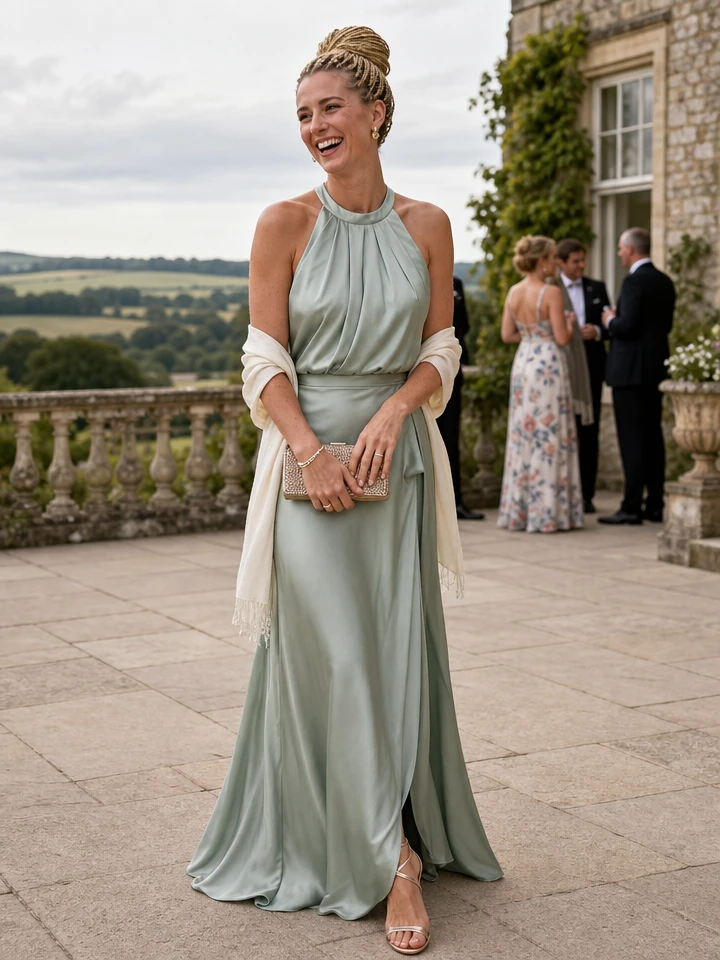
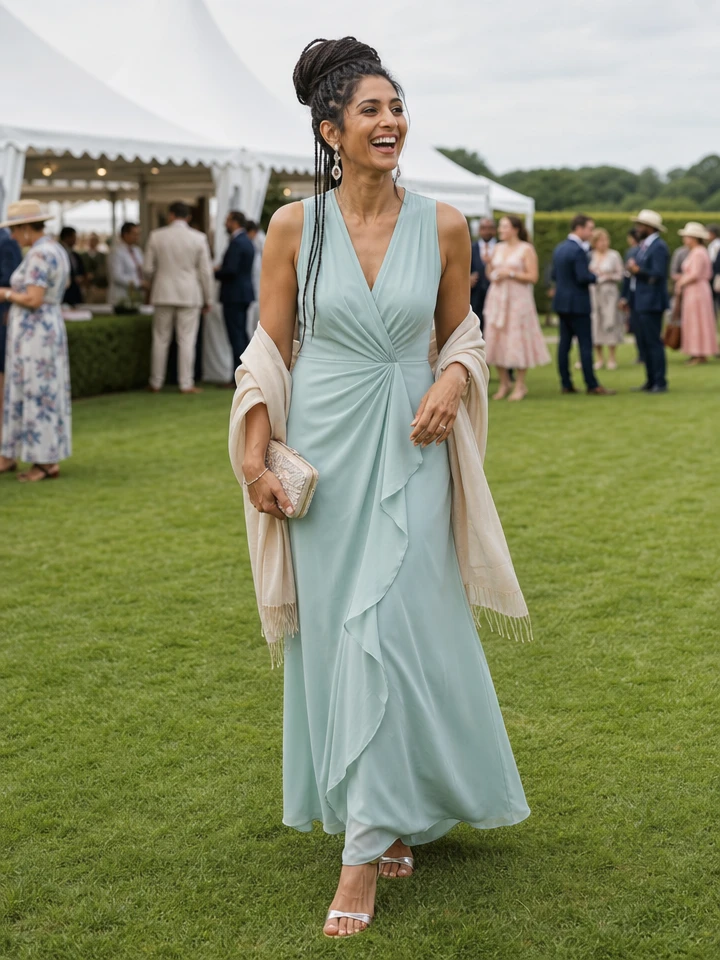
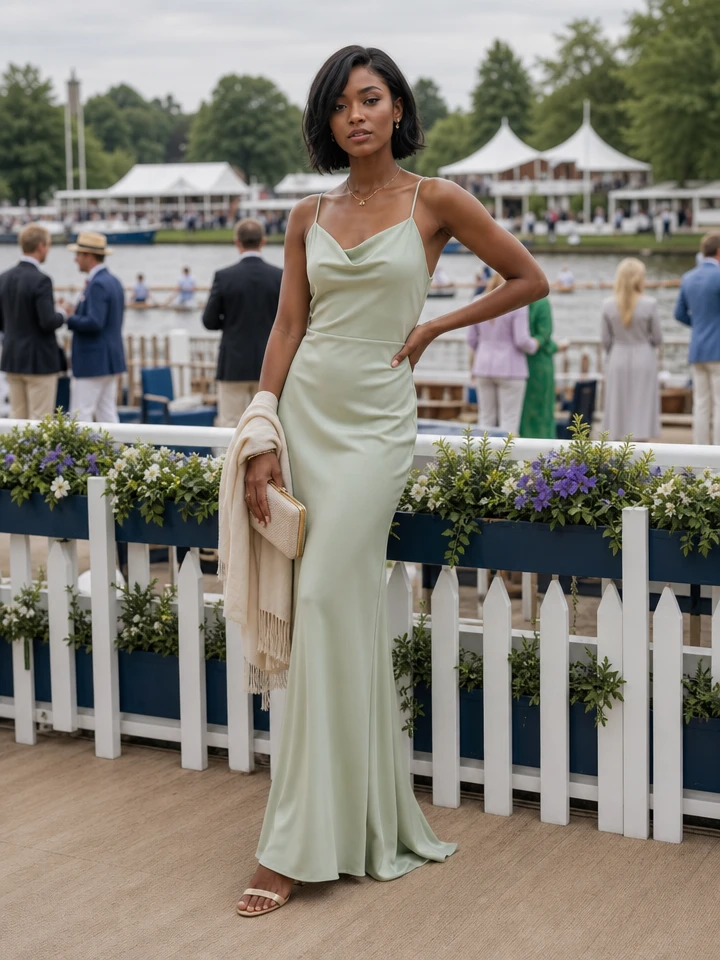
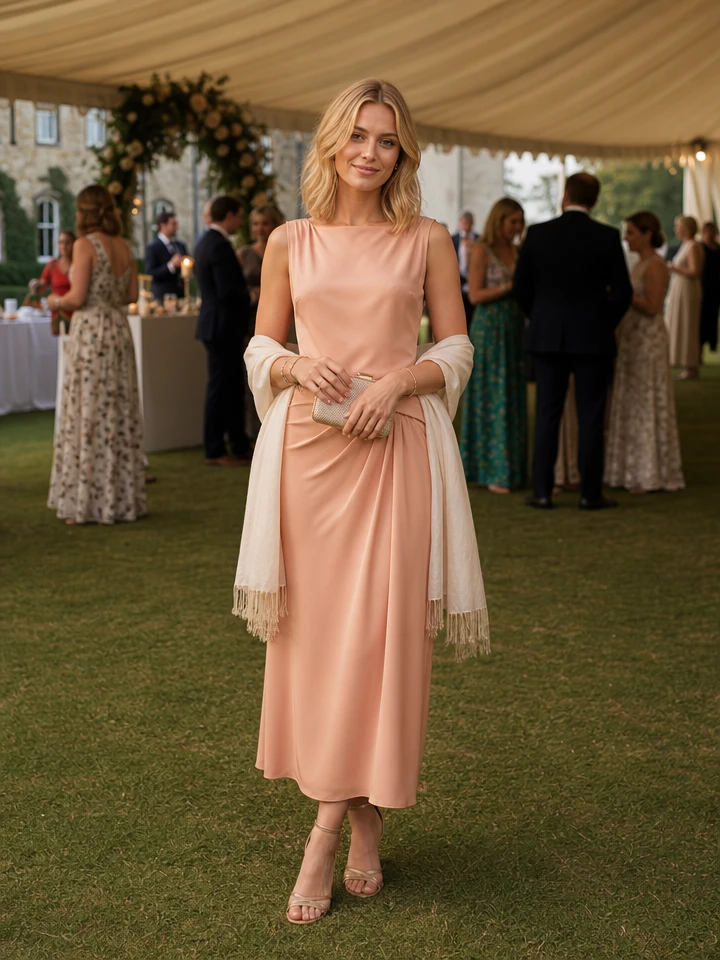
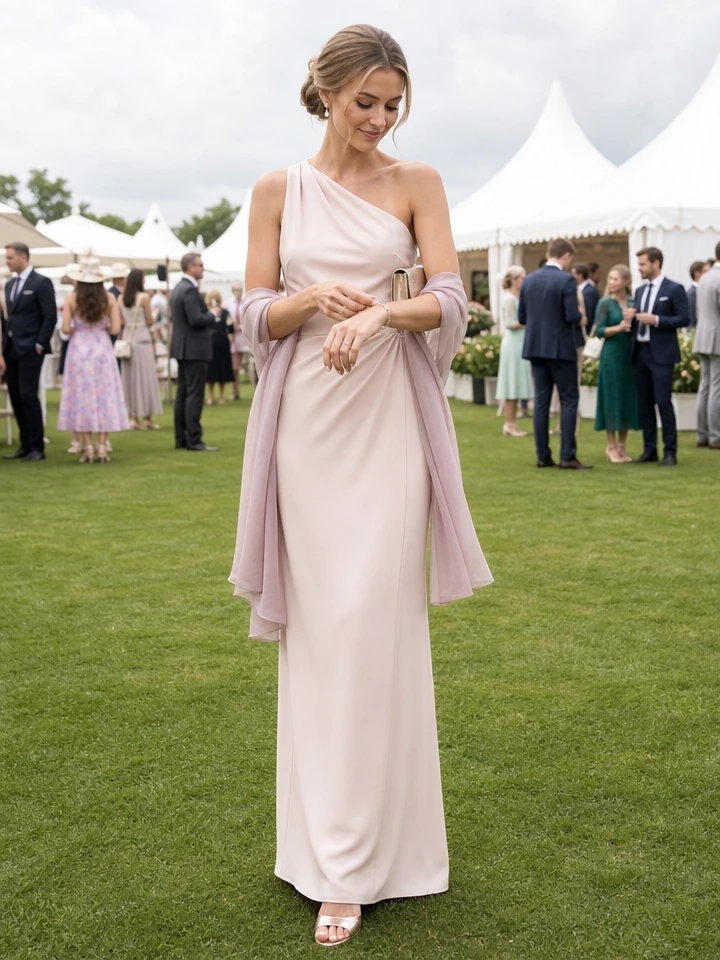
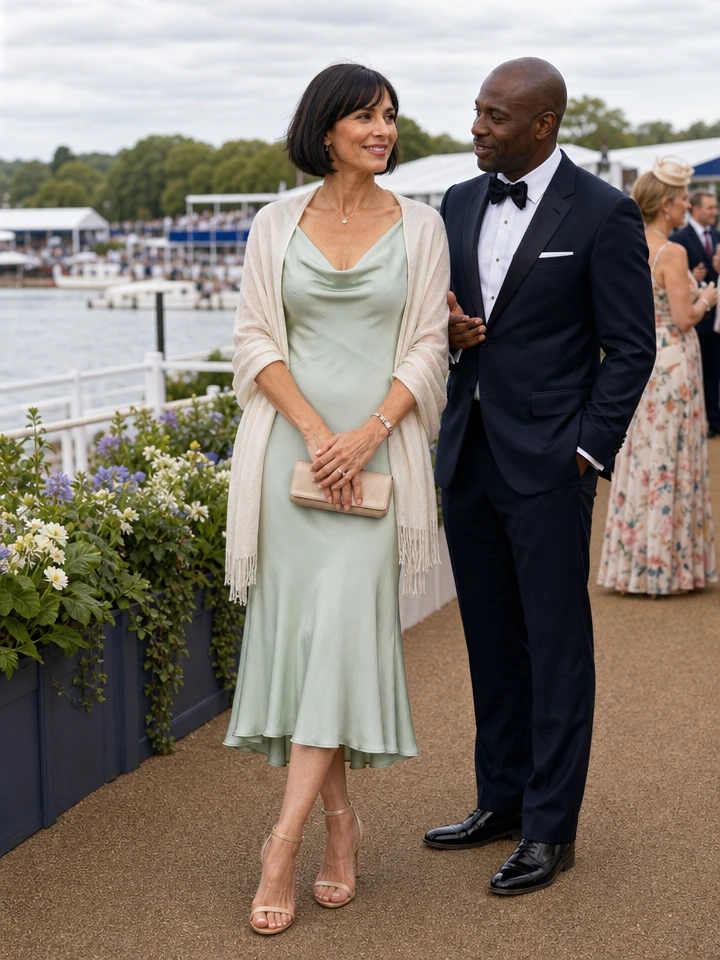
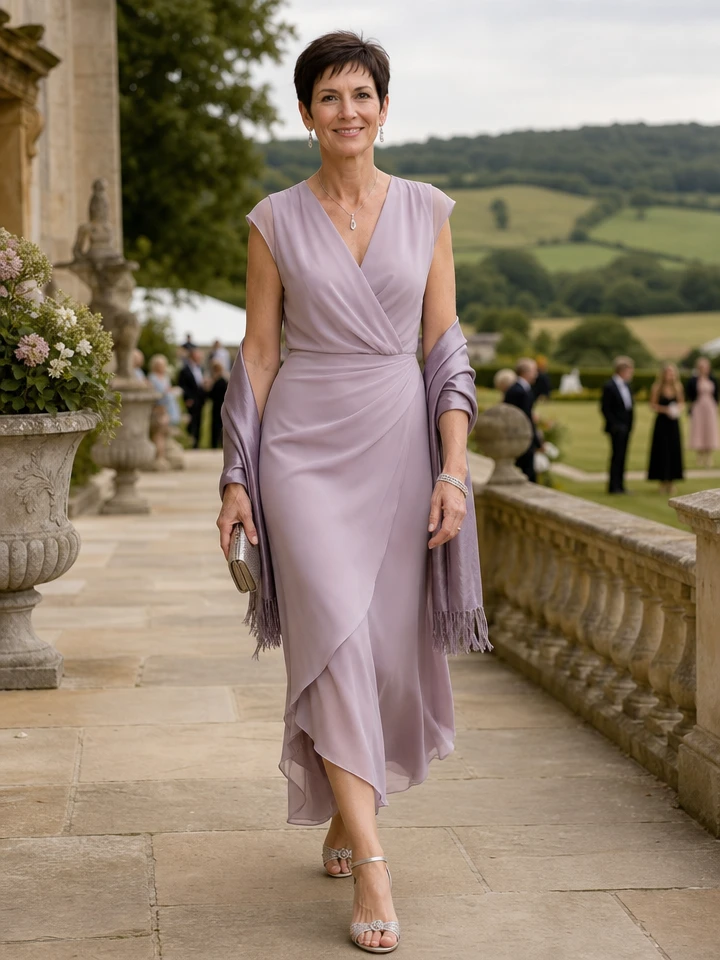
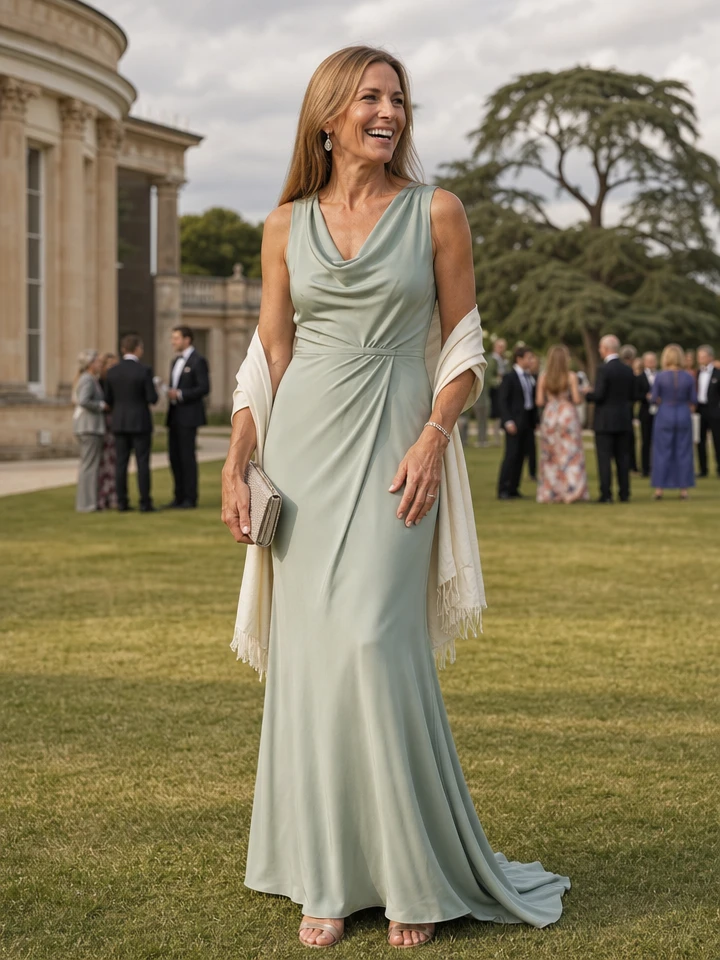
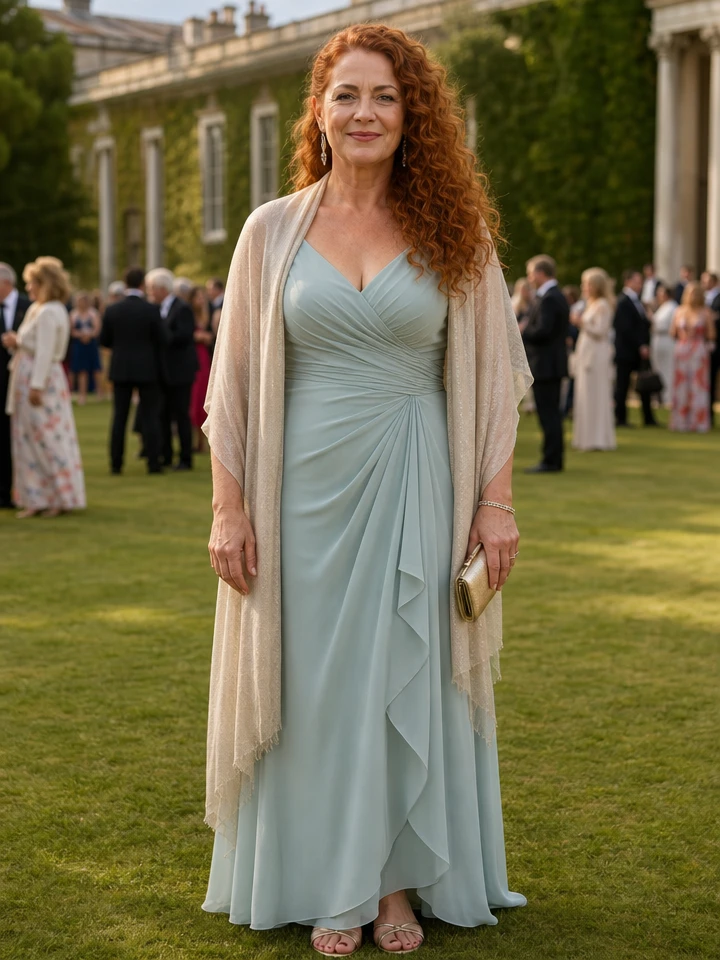
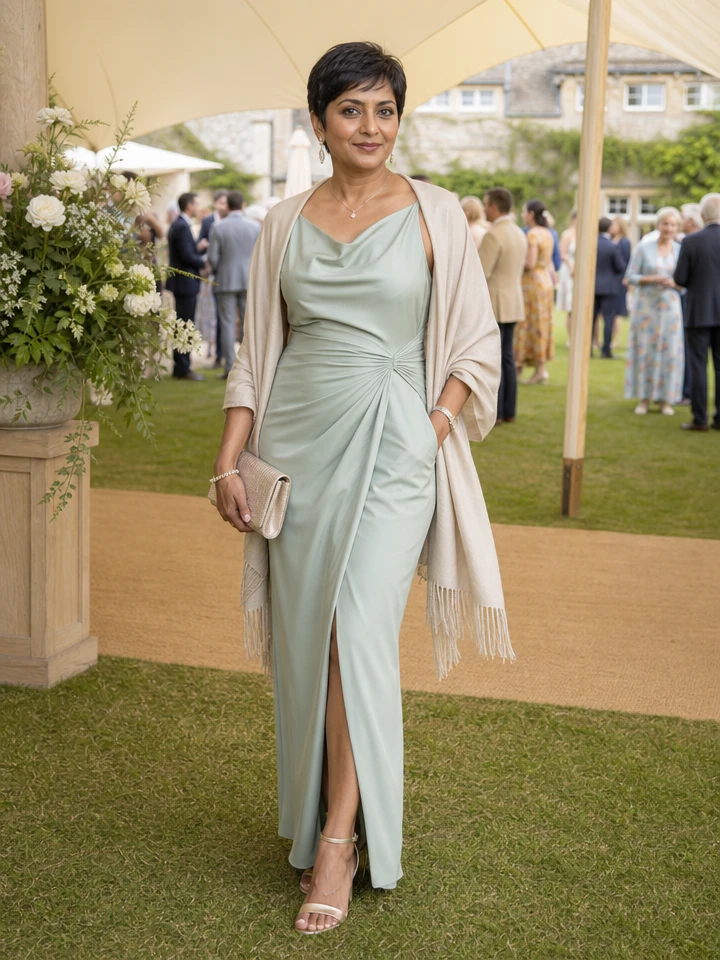
Feminine Presenting
A formal, floor length evening gown or an elegant, high end midi length cocktail dress. Fabrics should be breathable, such as silk crepe or chiffon.
Arrow keys or a swipe
Look plates
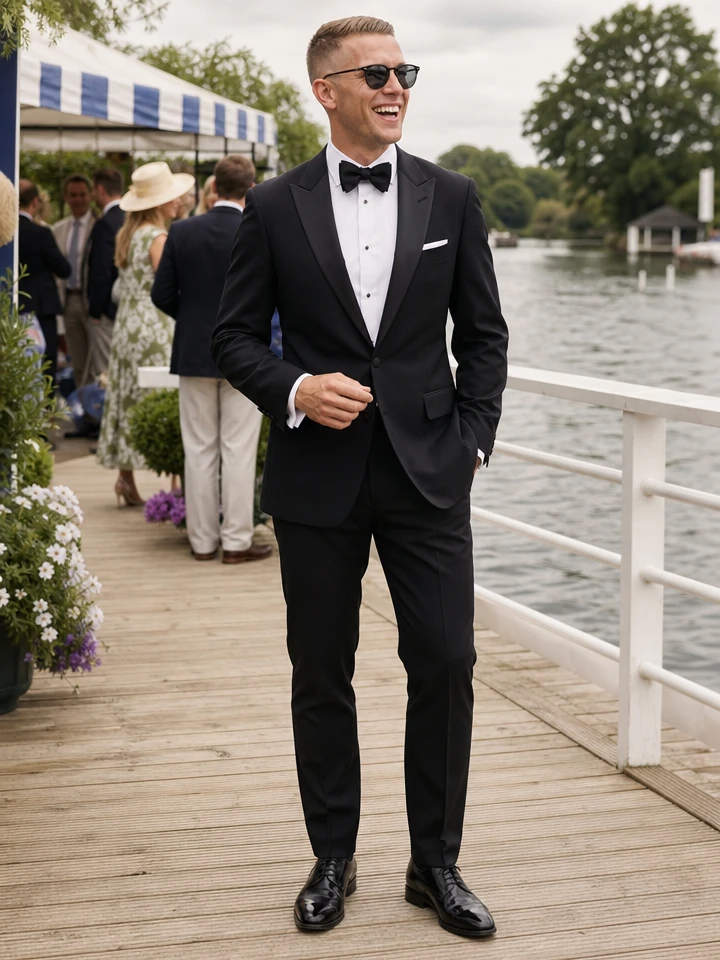
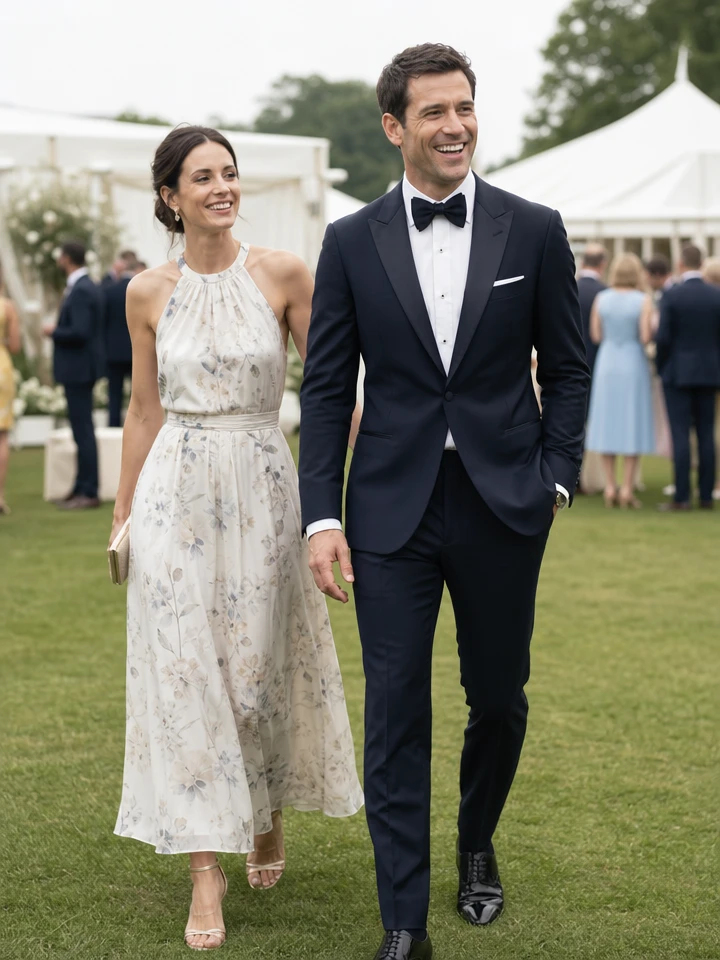
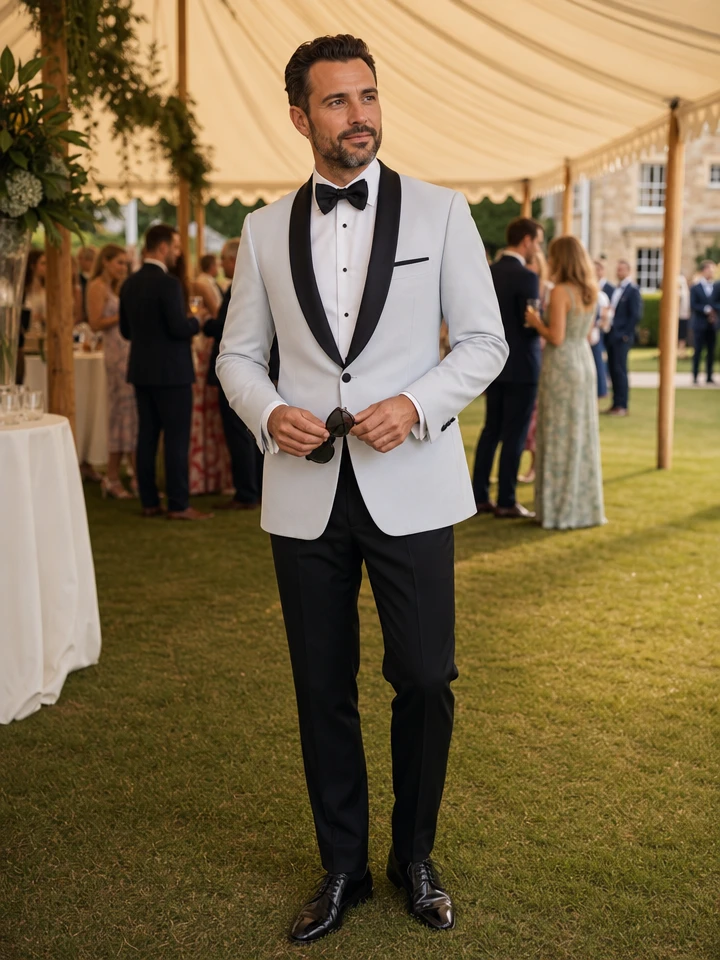
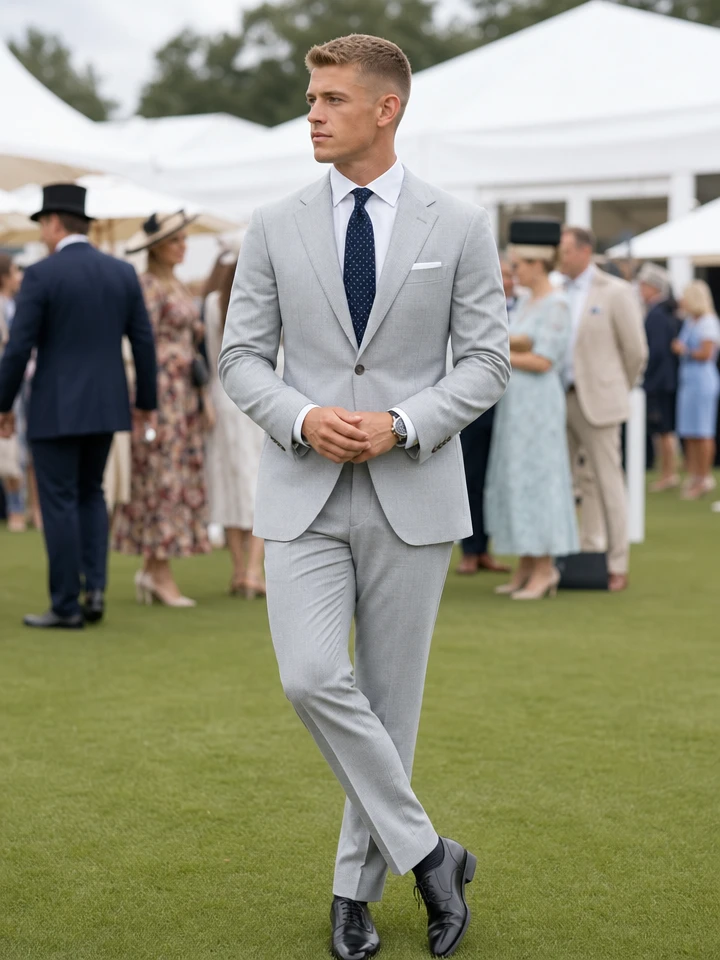
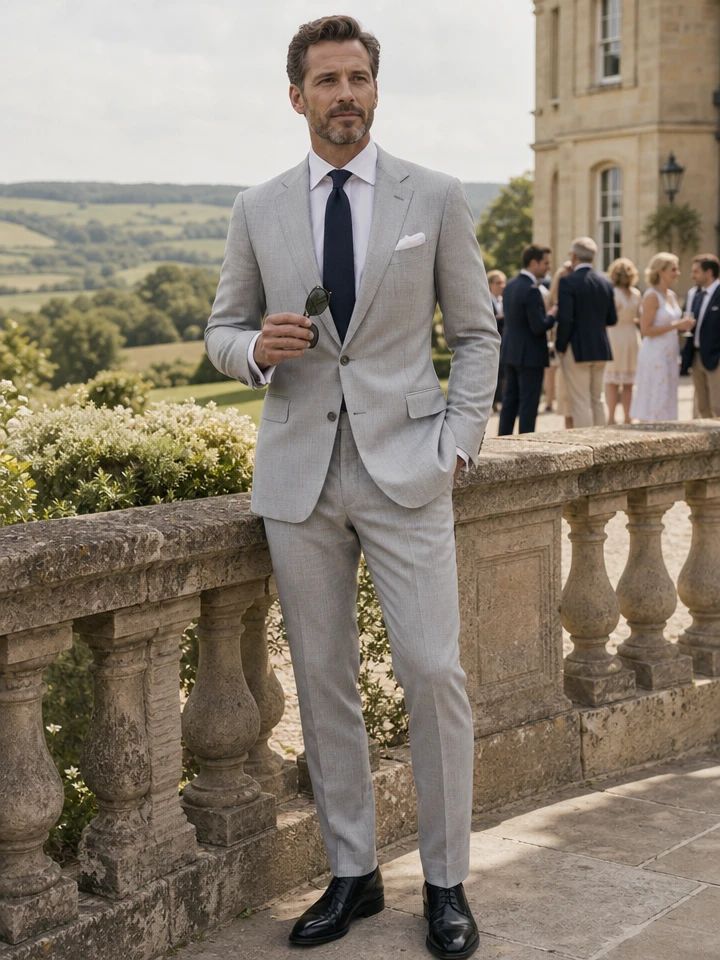
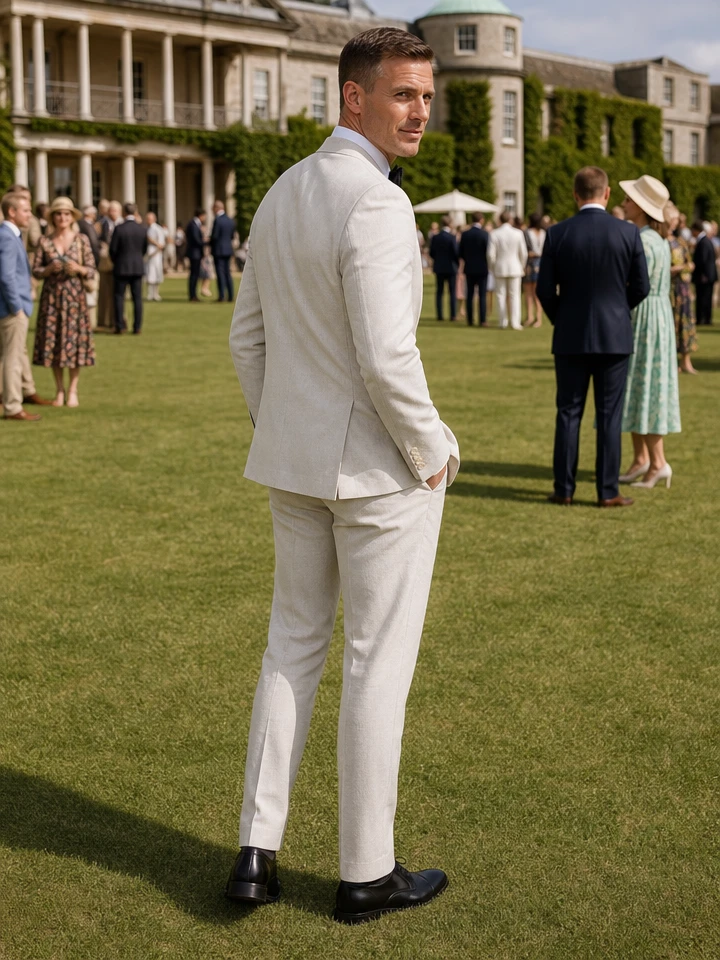
Masculine Presenting
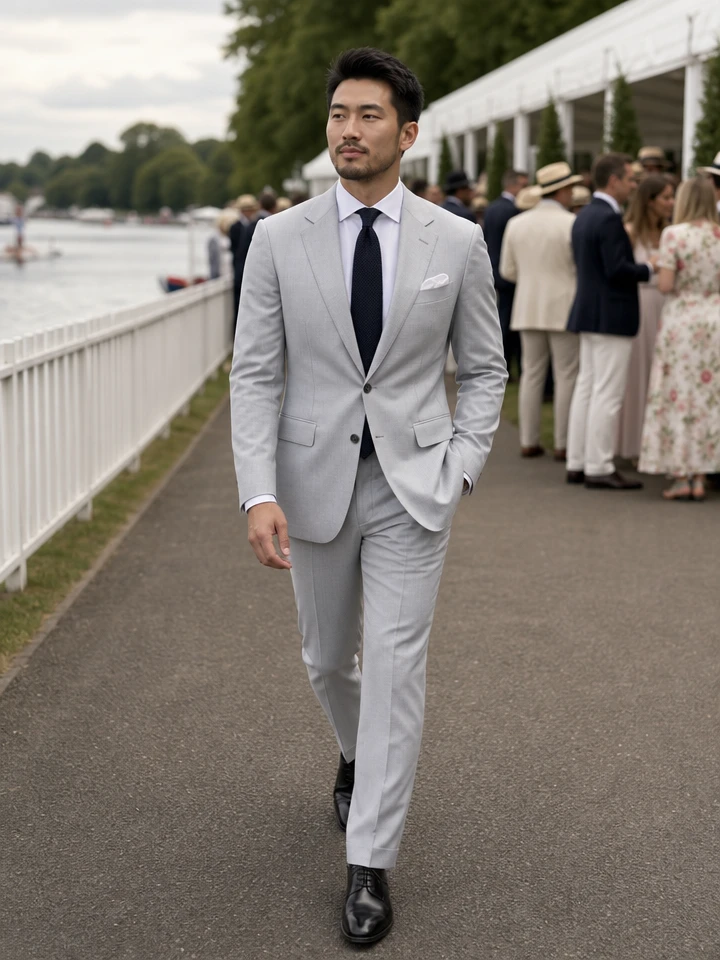
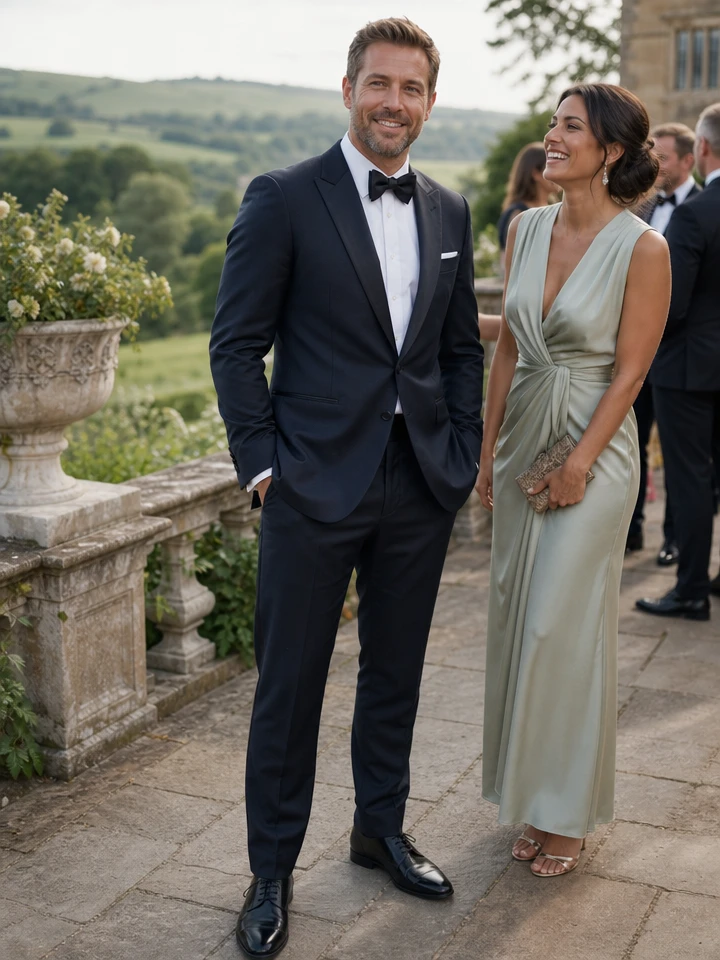
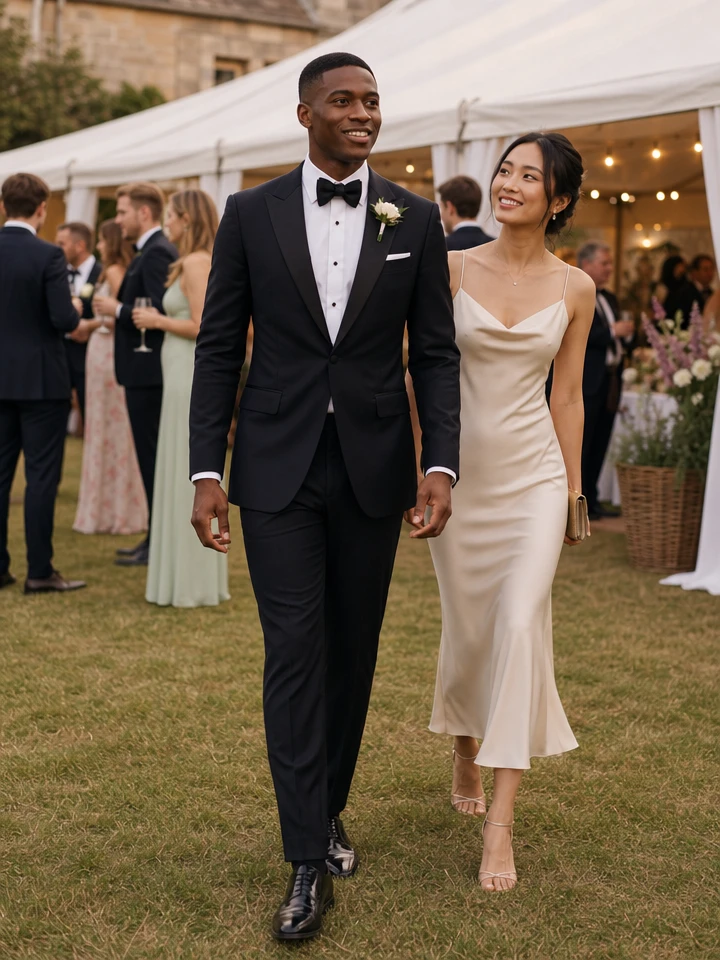
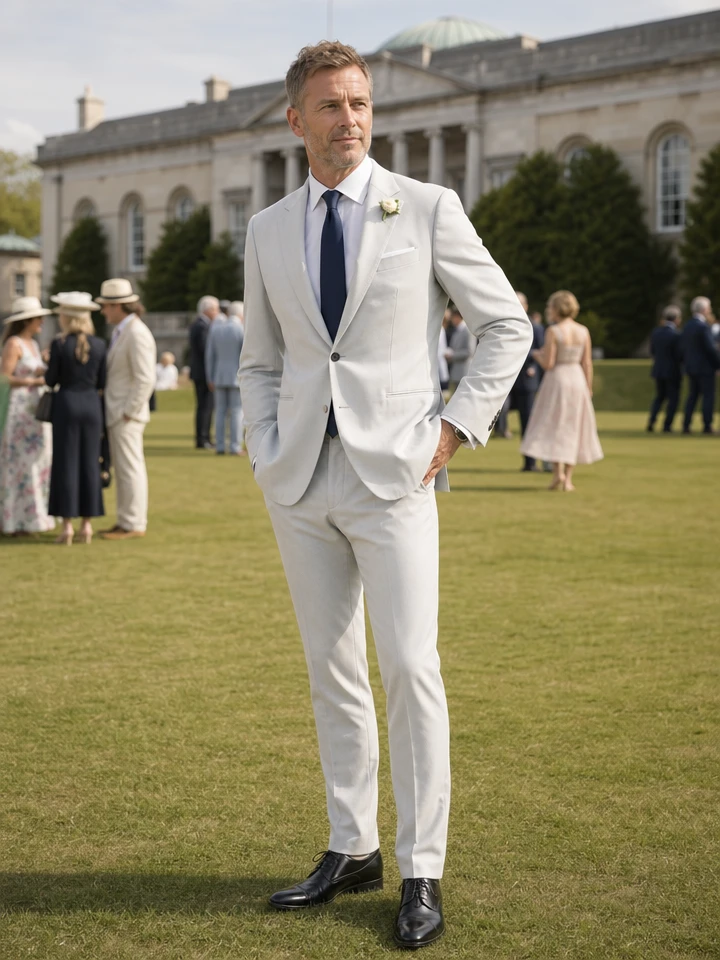
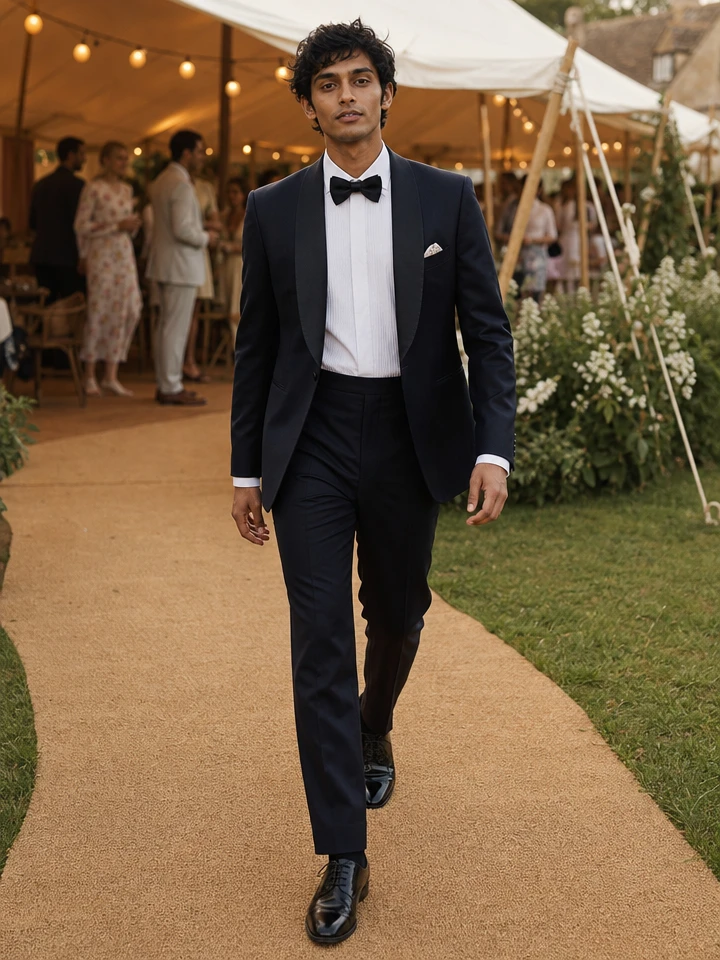
A dark dinner jacket (for evening) in a lightweight wool blend, or a formal dark suit. For daytime, a light coloured formal suit (e.g., light grey, pale blue) with a tie is acceptable.
Arrow keys or a swipe
Look plates
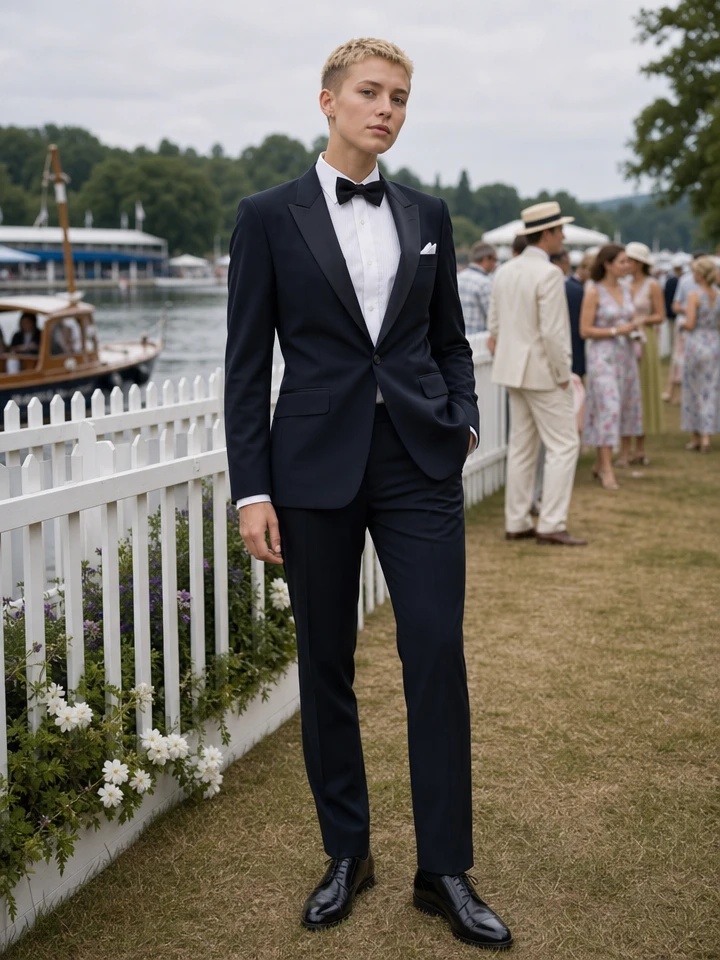
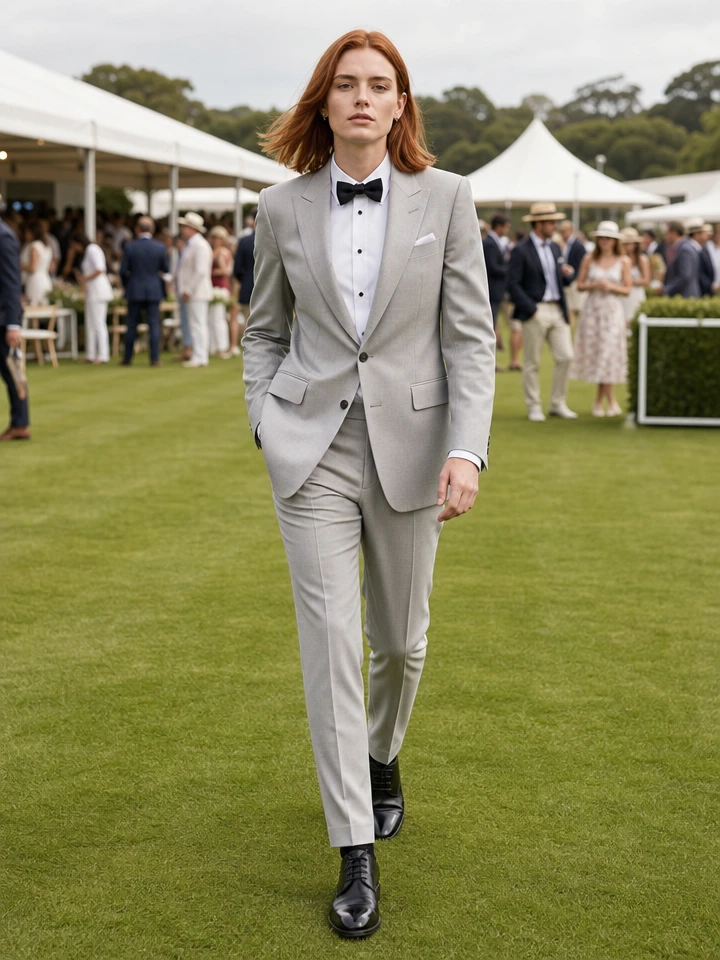
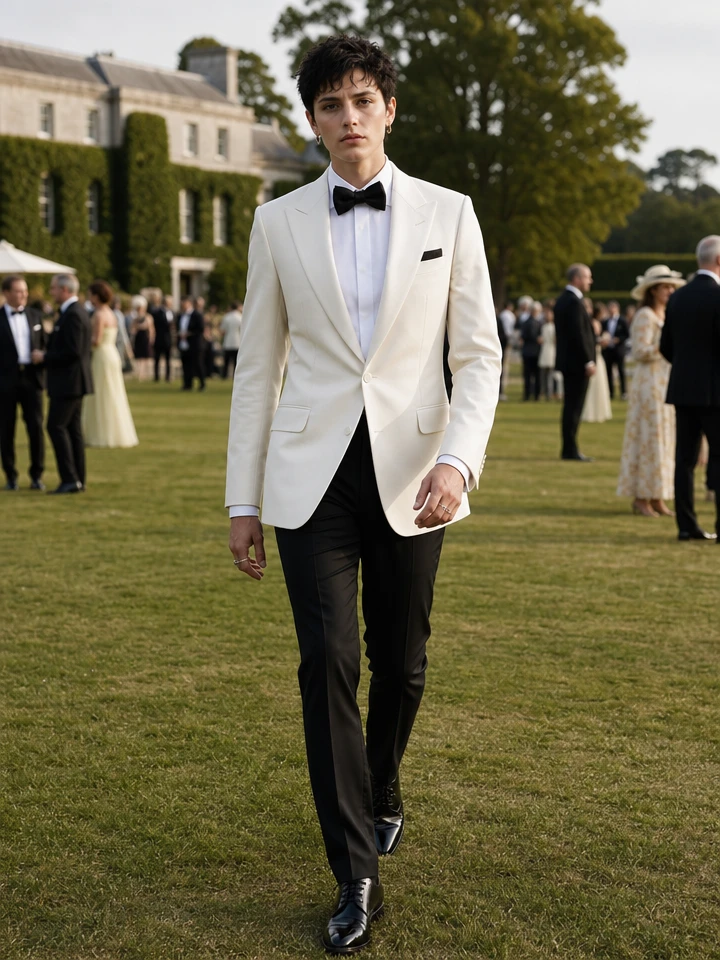
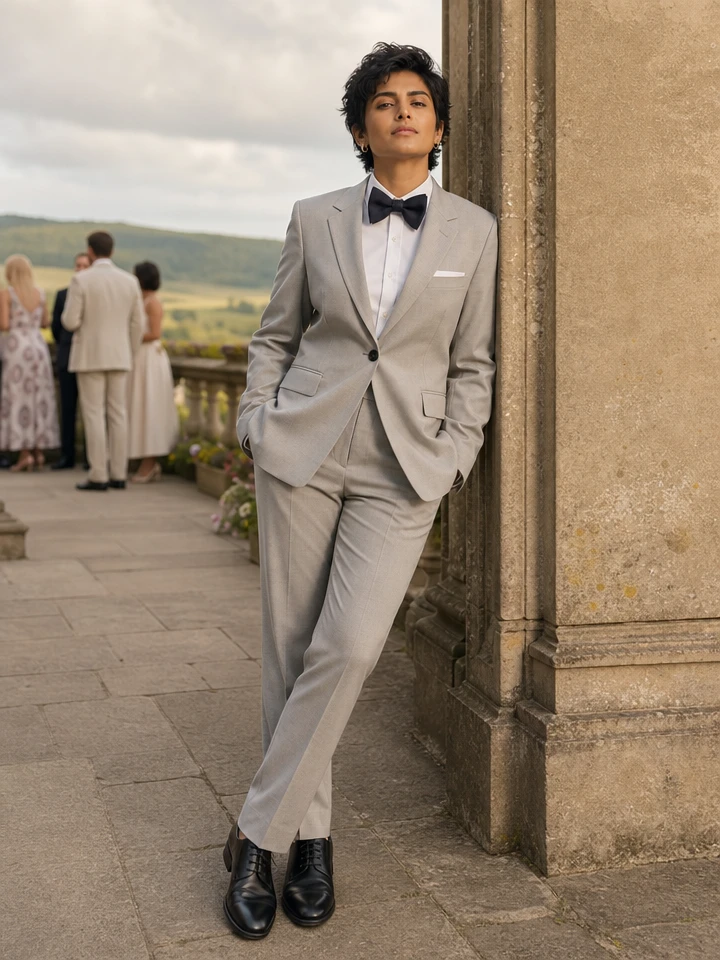
Gender Neutral
A formal gown or a perfectly tailored suit ensemble in light, high quality fabrics. Maintain the highest level of polish.
Arrow keys or a swipe
Common mistakes
FEMININE
Heavy velvet, thick wool, or brocade fabrics that feel oppressive in warm weather. Casual dresses, jeans, trainers, or anything that reads as standard daywear rather than formal attire.
MASCULINE · GENDER NEUTRAL
Heavy velvet, thick wool, or brocade fabrics. Casual shirts, jeans, trainers, or anything that looks like standard business attire. For evening Summer Formal events, a standard lounge suit without a dinner jacket risks appearing underdressed.
Fabric and colour
FEMININE
Lightweight silk, silk crepe, chiffon, and fine cotton voile are ideal. Colours can be lighter and brighter than winter formal, so pastels, champagnes and soft jewel tones all suit a British summer formal occasion. An evening wrap in a complementary shade is a practical addition for cooler evenings.
MASCULINE · GENDER NEUTRAL
Lightweight wool or wool mohair blends suit a dinner jacket, and linen or lightweight wool suits a formal daytime outfit. Colours can be lighter than winter formal in daylight, so a light grey or pale blue suit is appropriate. For evening, the dinner jacket remains the correct choice, in a lightweight fabric that allows comfort in warmer conditions.
Footwear and accessories
FEMININE
Formal heels, which may include elegant open toed shoes for summer events. A clutch bag and fine jewellery.
MASCULINE · GENDER NEUTRAL
Polished black leather dress shoes. A tie or bow tie must be worn. Lighter leather loafers or tan brogues may suit daytime Summer Formal events.
Seasonal
FEMININE
Summer Formal is built around the British summer (Jun to Aug). Light fabrics, brighter colours, and a slightly more open palette than winter formal are all appropriate. Always carry an elegant wrap or a fine stole, because British summer evenings at outdoor venues such as Glyndebourne, marquee receptions or country house gardens turn cool without warning.
MASCULINE · GENDER NEUTRAL
This code is specifically designed for the British summer season (Jun to Aug). A lightweight dinner jacket in a tropical weight wool is ideal for evening events. A light coloured formal suit in a lighter weight fabric is appropriate for daytime Summer Formal occasions such as outdoor weddings and luncheons. An overcoat or quality jacket should be available for British summer evenings that turn cool.
In United Kingdom
Summer Formal in the United Kingdom
Britain has a small but distinctive set of occasions that make this code worth naming. Glyndebourne is the best known. The festival runs from May to August, evening dress is the customary standard, the long interval is spent picnicking on the lawns and gardens in full evening wear, and the audience walks across grass to do it. College summer balls at Oxford and Cambridge run in May and June and hold to their own written standards. Marquee and country house wedding receptions fill the rest of the calendar, along with outdoor charity galas. The British version of this code is not really about heat, since a British summer evening rarely stays warm. It is about light cloth in daylight and a wrap after sunset, and that combination is what British guests plan around. Lightweight wool or wool mohair for a dinner jacket, linen or light wool for a daytime suit, silk crepe or fine cotton voile for a dress, and an elegant stole or a fine wrap in hand. The other constant is ground. Grass, gravel and long walks from car parks make a block heel or a wedge a better decision than a stiletto.
Frequently asked
What is Summer Formal?
Summer Formal adapts traditional formal wear for warm weather events. It maintains a high level of polish while using lighter fabrics, lighter colours and seasonal styling, so think lightweight wool dinner jackets, silk crepe gowns and breathable fabrics that give up nothing in elegance.
Can I wear a light coloured suit to a Summer Formal event?
MASCULINE · GENDER NEUTRAL
Yes. Light grey, cream or pale blue suits are appropriate for a daytime or outdoor Summer Formal event. Pair with a crisp shirt and tie, and polished shoes. Dark colours still work but lighter tones suit the seasonal spirit, particularly for garden weddings and luncheons.
Are open toed shoes acceptable for Summer Formal?
For women, elegant heeled sandals or dressy open toed shoes are perfectly appropriate at Summer Formal events. For men, closed toe shoes remain the standard, though leather loafers or tan brogues work as a seasonal alternative to Oxfords at daytime outdoor events.
What British events typically use a Summer Formal dress code?
High end summer weddings, particularly marquee and country house receptions, fall under this code in Britain, along with Glyndebourne opera evenings, outdoor charity galas, summer balls at Oxford and Cambridge colleges, formal garden party dinners and corporate summer events. Glyndebourne is the most celebrated example. Evening dress is customary there, and picnic suppers taken on the lawns in evening gowns are a long standing British tradition.
Should I wear a dinner jacket or a suit to a Summer Formal evening event?
MASCULINE · GENDER NEUTRAL
For any evening event of this kind, whether a summer ball, a gala or a formal dinner, a dinner jacket is the correct choice. A lightweight wool or tropical weight dinner jacket keeps the formality while remaining comfortable in warm conditions. A dark lounge suit is a secondary option at less strictly observed venues, but a dinner jacket is always the safer and more impressive choice for formal British summer evenings.
What is expected at Glyndebourne?
Evening dress is the customary standard through the festival season from May to August, and most of the audience holds to it. The distinguishing feature is the long interval, which is spent picnicking on the lawns and in the gardens in full evening wear. Plan for grass underfoot, a rug or a table, and a wrap, because the gardens cool quickly in the evening.
Do I need to bring a wrap to a British summer formal event?
Yes, and it is the single most useful thing in the outfit. British summer evenings drop sharply after sunset even in July, and marquee receptions, garden dinners and outdoor galas all leave you outside at that point. A fine stole, a silk wrap or a light tailored jacket in a complementary shade solves it without breaking the formality.
Where this sits
This code sits in the formal band.
Hosts also file it under the wedding hub.
Related dress codes
From the ledger
- Summer Event Dressing That Stays Cool and Sharp
How to dress for warm weather events without sacrificing style, from garden parties to summer cocktail evenings.
Know a local variation
Dress codes shift between cities and between crowds. If Summer Formal means something different where you are, tell us and we will look into it. Submit a dress code.
The DressDex letter
One note when a code changes or a new edition lands. No more than that.