FESTIVE ATTIRE · SINGAPORE · FORMALITY 6 OF 10
Festive Attire
Singapore spreads Festive Attire across a year round multicultural calendar, where the right colour and the right traditional dress matter as much as the level.
Formality
Sits in the semi formal band of the scale.
Quick answer
Festive Attire here covers Chinese New Year in January or February, Hari Raya Aidilfitri, Deepavali, National Day on 9 August, and Christmas and New Year parties in December. The level stays at cocktail throughout, but the palette changes with the occasion, and that is the part guests most often get wrong. Red and gold suit Chinese New Year while white and black are best avoided there, green and jewel tones suit Hari Raya, vibrant colour suits Deepavali, and red and white suit National Day. Traditional dress is welcomed rather than merely tolerated, so a cheongsam, a baju kurung, a kebaya, a sari or a formal batik shirt all sit at the top of this code. Lightweight cloth is essential all year, because the tropical heat does not pause for any of these occasions.
Everything below is written for the tab you pick, including the mistakes, the fabrics and the questions.
What to wear
REFERENCE PLATES · UNITED STATES EDITION
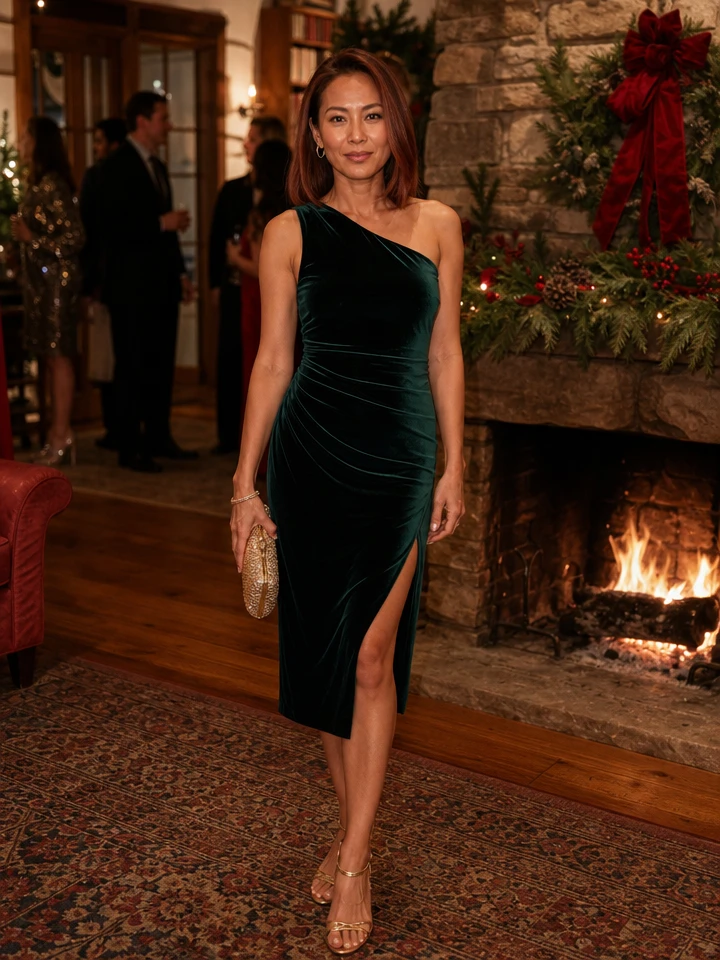
Feminine Presenting
A cocktail length dress, skirt or trouser suit in a bold colour, a metallic fabric, or with festive embellishment such as sequins or sparkle. Traditional cultural attire in celebratory colours is a beautiful and widely welcomed option, and that includes a red or gold cheongsam for Chinese New Year, a baju kurung or kebaya for Hari Raya, a sari for Deepavali, and a batik dress for National Day events.
REFERENCE PLATES · UNITED STATES EDITION
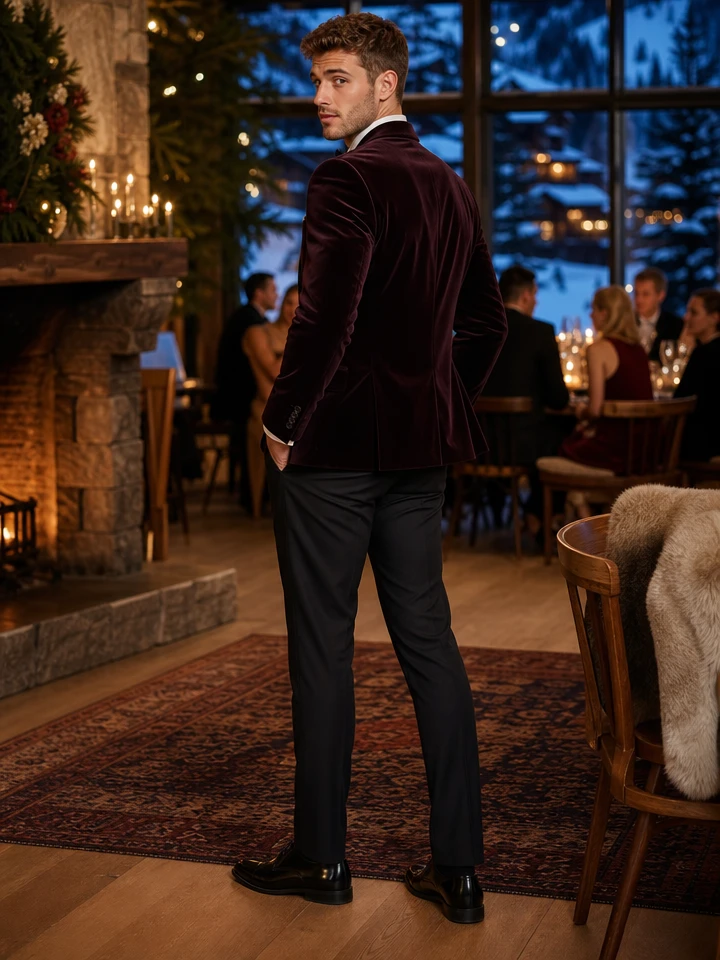
Masculine Presenting
A tailored dark suit with a festive element, whether that is a bold tie, a colourful or patterned shirt, or a velvet jacket in a rich jewel tone. A quality batik shirt in a formal fabric is a widely welcomed and culturally appropriate option at Chinese New Year and National Day events. Traditional cultural attire in festive colours is equally appropriate.
REFERENCE PLATES · UNITED STATES EDITION
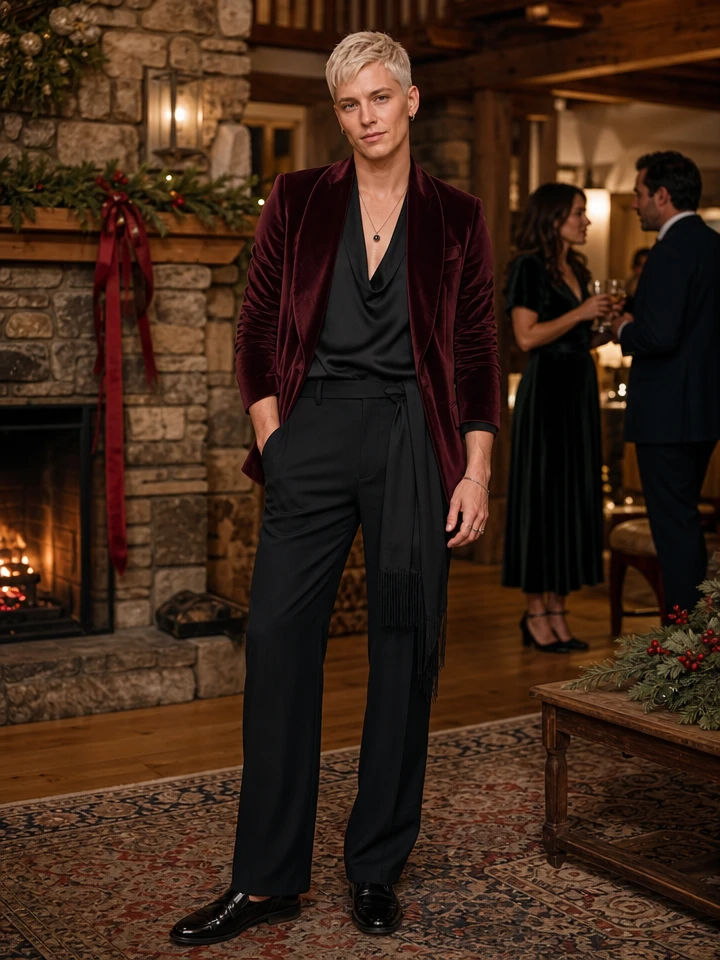
Gender Neutral
A polished ensemble carrying one celebratory element, such as a statement jacket in a festive colour, a metallic skirt or trouser, or a traditional cultural piece in a celebratory fabric. The outfit should communicate joy and an awareness of the occasion.
Common mistakes
FEMININE
Novelty fancy dress items, overly casual themed outfits, ripped jeans, trainers, tee shirts, or anything that reads as too casual for a Singapore festive event. At Chinese New Year banquets, Hari Raya gatherings, Deepavali celebrations and Christmas hotel parties here, the festive spirit is expressed through colour, cultural significance and quality rather than through cheap novelty items.
MASCULINE · GENDER NEUTRAL
Novelty items, very casual outfits, ripped denim, trainers, or anything below Smart Casual. In Singapore's multicultural festive calendar, dressing appropriately for the specific celebration shows cultural respect and awareness. A standard dark office suit without any festive colour or element also misses the spirit of the occasion.
Fabric and colour
FEMININE
Rich fabrics carry the look, so silk, satin, brocade, metallic blends, fine lace and quality embellished pieces. Bold, celebratory colours matter just as much. Red and gold suit Chinese New Year, where white and black are best avoided because both are associated with mourning. Green and jewel tones suit Hari Raya, vibrant colours suit Deepavali, and red and white suit National Day. Metallics and rich jewel tones are excellent for Christmas and New Year events.
MASCULINE · GENDER NEUTRAL
Rich fabrics with a festive dimension work best, so a silk tie in a bold colour, a velvet jacket, or a quality suit in a more expressive tone. For Chinese New Year, a sharp suit in red, burgundy or deep navy acknowledges the occasion. A quality batik shirt in a formal fabric such as silk or fine cotton is widely accepted and welcomed at Chinese New Year corporate events and National Day occasions here.
Footwear and accessories
FEMININE
Dressy heels or elegant flats. Statement jewellery and a sparkly or festive coloured clutch. Accessories are a key part of the festive expression.
MASCULINE · GENDER NEUTRAL
Polished dress shoes or velvet loafers. A festive pocket square, distinctive cufflinks, or a bold tie that adds a celebratory dimension to the suit.
Seasonal
FEMININE
Singapore's festive calendar spans the full year. Chinese New Year falls in January or February, Hari Raya moves annually, National Day is on 9 August, Deepavali falls in October or November, and Christmas and New Year close the year in December. Each celebration carries its own colour palette and dress traditions. Lightweight fabrics are essential in every one of them because of the tropical heat.
MASCULINE · GENDER NEUTRAL
Singapore's year round festive calendar means there is no seasonal shift in the dress standard, only in the colour palette and cultural inspiration appropriate to each celebration. Lightweight fabrics are always essential. A quality batik shirt is a culturally welcomed and widely accepted option for National Day and Chinese New Year corporate events here.
In Singapore
Festive Attire in Singapore
Singapore is the one market in this index where this code is not seasonal at all. The city's festive calendar runs through the whole year, taking in Chinese New Year in January or February, Hari Raya Aidilfitri on a moving date, National Day on 9 August, Deepavali in October or November, and Christmas and New Year in December. Because the climate never changes, the dress standard does not change either, and lightweight silk, satin, fine brocade, lace and metallic weaves are the constant materials. What changes instead is the palette, and getting it right is the local skill. Red and gold are the auspicious colours for Chinese New Year, and white and black are best avoided at those gatherings because both carry associations with mourning. Green and jewel tones suit Hari Raya, vibrant colour suits Deepavali, and red and white suit National Day. The second local distinction is that traditional dress is genuinely welcomed rather than tolerated. A cheongsam, a baju kurung, a baju melayu, a kebaya, a sari or a formal batik shirt all sit at the top end of this code, and a guest who dresses in a way that acknowledges the tradition being marked is well received. Ballrooms are heavily air conditioned, so a light wrap is useful.
Frequently asked
What counts as Festive Attire?
Festive Attire means polished occasion dressing with a celebratory flair, so jewel tones, velvet, sequins, metallics and seasonal embellishment. It sits at a cocktail or semi formal level of formality but gives you licence to be more playful and expressive than a standard cocktail event. In Singapore, traditional cultural dress for the relevant celebration is always an excellent choice.
What festive occasions use this dress code in Singapore?
Singapore's multicultural calendar provides many occasions for this code across the year. Chinese New Year banquets and family gatherings fall in January or February, Hari Raya open houses move annually, Deepavali celebrations fall in October or November, and National Day dinner events fall in August. Christmas corporate parties and New Year's Eve celebrations at the city's luxury hotels and rooftop venues close the year.
Can I wear all black to a festive event in Singapore?
A sleek all black outfit with statement accessories such as bold jewellery, a sequin clutch or metallic shoes is generally chic and acceptable for Christmas and New Year events. For Chinese New Year celebrations, avoid all black, since the colour is associated with mourning in Chinese cultural tradition. Choose red, gold or jewel tones instead.
How formal is Festive Attire compared to Cocktail?
They sit at roughly the same formality level, and Festive Attire is essentially cocktail level dressing with a seasonal or cultural celebratory edge. A cocktail dress or a dark suit are both appropriate starting points, and the festive element then comes through fabric, colour, accessories or traditional dress.
What fabrics are best for Festive Attire?
Velvet, sequins, satin, lace and brocade are all ideal, and anything that catches the light or feels luxurious is appropriate. Rich jewel tones such as emerald, burgundy and sapphire, and metallics in gold, silver or bronze, are the classic choices. Silk brocade and embroidered silk work beautifully for traditional pieces such as the cheongsam, the baju kurung and the kebaya.
Is traditional cultural dress appropriate for Singapore festive events?
Absolutely. Traditional cultural dress is not merely appropriate at Singapore festive occasions, it is warmly welcomed. A cheongsam for Chinese New Year, a baju kurung or baju melayu for Hari Raya, a sari for Deepavali, and a kebaya for broader cultural events are all excellent and respected choices. Guests who dress in a way that acknowledges the tradition being marked are well received.
Are there colours I should avoid at Chinese New Year celebrations in Singapore?
Yes. White and black are traditionally associated with mourning in Chinese culture and are best avoided at Chinese New Year celebrations and banquets. Red, gold and other auspicious bright colours are the preferred palette. Deep jewel tones such as burgundy, emerald and royal blue are also excellent choices. Wearing red, or a colour with positive cultural significance, shows respect and an awareness of the occasion.
How do I dress for a Hari Raya open house in Singapore?
Modestly and in colour. Hari Raya open houses are family occasions, and guests are expected to cover shoulders and knees whether or not they are Muslim. Green and jewel tones are the traditional palette and are always safe, and many families choose a colour for the household that guests are welcome to echo. A baju kurung or a baju melayu is warmly received from any guest, and a modest dress with sleeves or a long sleeved top with tailored trousers works equally well. Shoes come off at the door, so choose a pair that slips off easily.
What should I wear to a Deepavali celebration in Singapore?
Bright, celebratory colour in a good fabric. Deepavali is a festival of light and the dress reflects it, so jewel tones, golds, oranges, pinks and rich reds all read correctly, and black is generally avoided. A sari, a salwar kameez or a lehenga is welcomed from any guest, and if you would rather not wear traditional dress, a cocktail dress or a well cut suit in a vivid colour with gold accessories fits comfortably. Expect to remove your shoes at a home visit, and expect the day to involve a lot of movement between houses.
Where this sits
This code sits in the semi formal band.
Hosts also file it under the office hub.
Related dress codes
Know a local variation
Dress codes shift between cities and between crowds. If Festive Attire means something different where you are, tell us and we will look into it. Submit a dress code.
The DressDex letter
One note when a code changes or a new edition lands. No more than that.