FESTIVE ATTIRE · NEW ZEALAND · FORMALITY 6 OF 10
Festive Attire
New Zealand runs two festive seasons, a warm December Christmas and a midwinter Matariki, and each asks for a different fabric and palette.
Formality
Sits in the semi formal band of the scale.
Quick answer
Festive Attire sits at cocktail level here and gives guests licence to be creative and themed, but the local calendar splits it in two. Christmas and New Year fall in summer, between December and February, alongside the end of year corporate party season in Auckland and Wellington, and they call for lighter silk, crepe and summer metallics in bright colour. Matariki, the Māori New Year and a public holiday since 2022, falls in June or July and brings a midwinter aesthetic of earth tones, night sky blues and deep reds in velvet, heavy silk and merino. Diwali, Eid and cultural festivals add further occasions across the year. Heavy northern hemisphere Christmas cloth looks wrong at a December party here.
Everything below is written for the tab you pick, including the mistakes, the fabrics and the questions.
What to wear
REFERENCE PLATES · UNITED STATES EDITION
Feminine Presenting
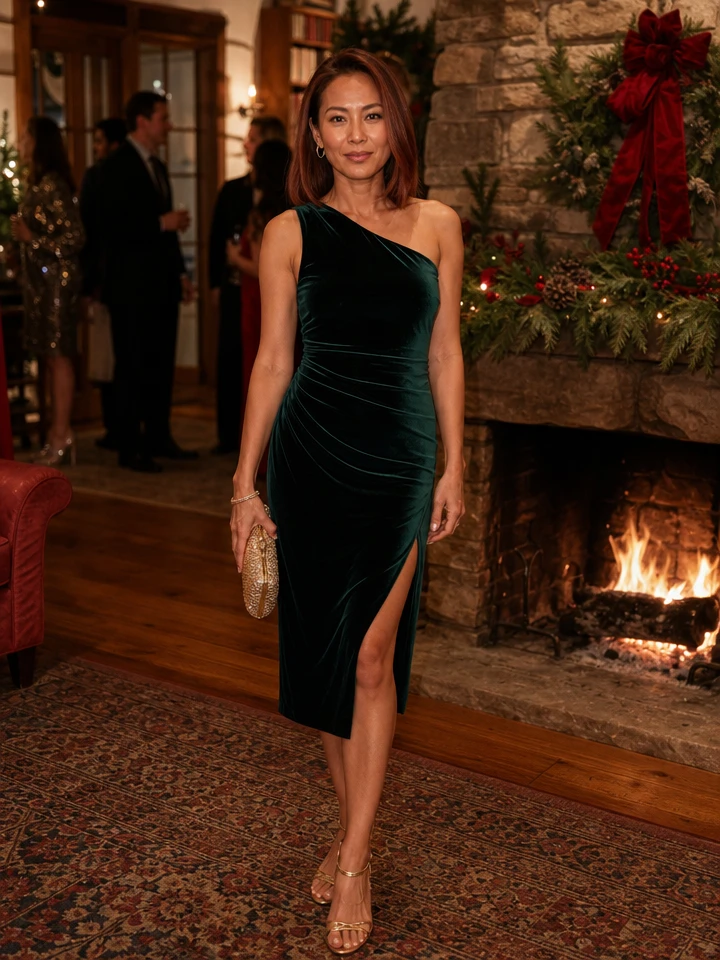
A cocktail length dress, skirt, or pantsuit in a bold colour, metallic fabric, or with festive embellishments like sequins or sparkle. For NZ Christmas (summer), lighter metallics, bold tropical prints, and bright celebratory colours in silk or crepe work beautifully. For Matariki (winter, June and July), rich velvets, deep jewel tones, and heavier evening fabrics are more appropriate. NZ designers such as Trelise Cooper and Karen Walker offer vibrant festive options.
REFERENCE PLATES · UNITED STATES EDITION
Masculine Presenting
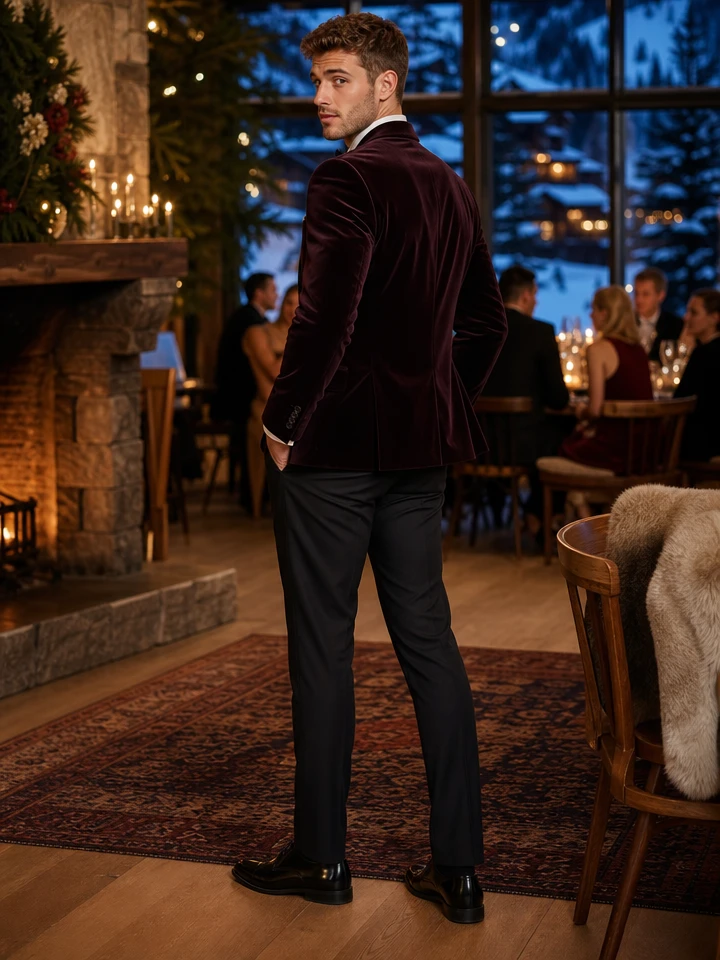
A tailored dark suit with a festive element, whether that is a bold or patterned tie, a colourful dress shirt, or a velvet jacket for Matariki winter events. For Christmas and New Year end of year parties here, a dark navy suit with a vibrant pocket square or a festive patterned tie is the well judged local combination, genuinely celebratory without being theatrical.
REFERENCE PLATES · UNITED STATES EDITION
Gender Neutral
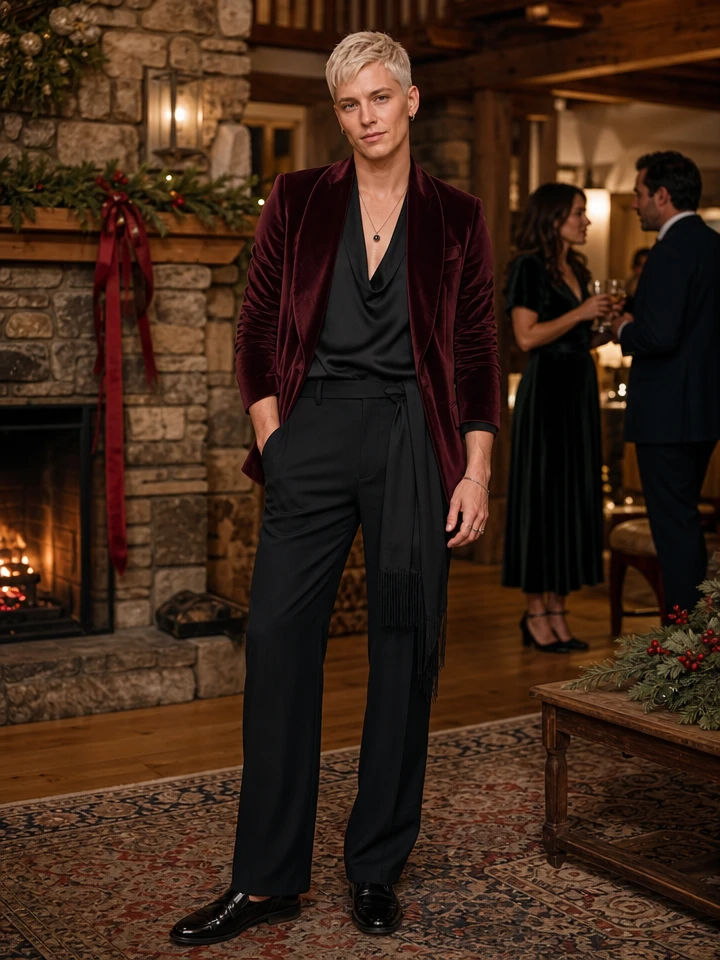
A polished ensemble carrying one celebratory element, such as a statement jacket in a festive or bold colour, metallic trousers or a skirt, or a distinctive festive accessory. Christmas here falls in summer, so bright and celebratory choices are well received. Matariki falls in winter, so richer and warmer tones suit that occasion instead.
Common mistakes
FEMININE
Novelty items that read as purely theatrical rather than genuinely festive, since a full Santa costume at a corporate Christmas party is usually too much. Anything below Smart Casual is also out, including ripped jeans, trainers and jandals, because this is still a dressed occasion. For Christmas parties here, the heavy velvet and wool that suit a northern hemisphere winter look incongruous in the summer heat.
MASCULINE · GENDER NEUTRAL
Novelty items that read as costume rather than celebration. Anything below Smart Casual is out too, because this is a dressed occasion however relaxed the party feels. For Christmas and New Year parties here, heavy winter fabrics such as thick velvet and heavy flannel look out of place in a December to February summer, and lighter festive cloth is more appropriate.
Fabric and colour
FEMININE
For Christmas and New Year, which fall in summer between December and February, choose lighter festive fabrics such as silk, satin blends, lighter metallics and quality crepe in bold celebratory colours. Bright reds, greens, vivid blues and tropical prints all fit the local summer festive season. For Matariki and other winter celebrations in June and July, choose rich velvet, heavy silk and merino in deep jewel tones. Earth tones, night sky hues and rich blues reflect the astronomical theme of Matariki.
MASCULINE · GENDER NEUTRAL
For Christmas and New Year, which fall in summer here, choose lighter fabrics with a festive element, such as a vibrant patterned shirt, a metallic tie, or a boldly coloured pocket square in a fine cloth. For Matariki in June and July, choose richer and warmer tones of deep red, forest green and rich navy, with a quality velvet or heavy silk element suited to a midwinter celebration.
Footwear and accessories
FEMININE
Dressy heels or elegant flats, finished with statement jewellery. Pounamu or pearl pieces make a beautiful local festive choice, particularly at Matariki events. Add a sparkly clutch or a festive bag. For outdoor summer Christmas events, block heels or wedges are far more practical than stilettos on grass or decking.
MASCULINE · GENDER NEUTRAL
Polished leather dress shoes, or quality velvet loafers for Matariki winter events. Add a festive pocket square or distinctive cufflinks. For Auckland summer Christmas parties, polished leather loafers or quality brogues are practical and appropriate, since they handle outdoor summer settings better than formal Oxford shoes.
Seasonal
FEMININE
Christmas and New Year fall in summer here, between December and February, and that is the busiest festive season of the year. It calls for lighter fabrics, brighter colours and summer appropriate metallics rather than heavy velvet. A floral or bold print silk dress suits an Auckland rooftop Christmas party far better than a heavy velvet gown. Matariki, a public holiday in June or July, calls for warmer and richer fabrics suited to winter.
MASCULINE · GENDER NEUTRAL
The Christmas and New Year festive season falls in summer here, between December and February, and it is the busiest period for end of year corporate parties, Christmas functions and New Year celebrations. Lighter festive fabrics and summer appropriate colours fit far better than heavy winter party wear. Matariki, a public holiday in June or July, and other mid year winter celebrations call for warmer, richer fabrics and deeper tones.
In New Zealand
Festive Attire in New Zealand
New Zealand is unusual in having two genuinely distinct festive seasons that use this code, and they pull in opposite directions. The first is the summer holiday season. Christmas, New Year and the end of year corporate party circuit all fall between December and February in warm weather, frequently outdoors on a rooftop, a lawn or a deck. That makes the heavy velvet and wool of a northern hemisphere Christmas visibly wrong, and the local answer is lighter silk, quality crepe, summer weight metallics and bold colour, with a block heel or a wedge for grass and decking. The second season is Matariki, the Māori New Year, marked by the rising of the star cluster of that name in late June or early July and a public holiday since 2022. Matariki is a midwinter occasion with a contemplative, community focused character, and its aesthetic runs to earth tones, night sky blues, dark greens and deep reds in velvet, heavy silk and merino. Dressing for it well means reading the tone as reflective rather than as party. Other occasions fill the rest of the year, including Diwali celebrations in Auckland, Eid gatherings and cultural festivals such as WOMAD in New Plymouth, each with its own colour tradition.
Frequently asked
What counts as Festive Attire in New Zealand?
Festive Attire in New Zealand means polished occasion dressing with a celebratory flair, so jewel tones, metallics, sequins, bold prints and seasonal embellishment. It sits at a cocktail or semi formal level but gives you licence to be more expressive and playful. The local distinction that matters is that Christmas here happens in summer, which makes the whole aesthetic lighter, brighter and more summery than the heavy velvet version used in the northern hemisphere.
What are the main Festive Attire seasons in New Zealand?
New Zealand has two main festive seasons for this code. The first is the summer holiday season, running from December to February and covering Christmas, New Year, end of year corporate parties and outdoor celebrations. The second is Matariki, the Māori New Year and a public holiday since 2022, celebrated in June or July with a midwinter, star themed aesthetic. A summer Christmas produces a very different look from a northern hemisphere one, with lighter fabrics, warmer weather and outdoor settings as the norm.
Can I wear all black to a festive event in New Zealand?
Yes. A sleek all black outfit with statement accessories such as bold jewellery, a sequin clutch or metallic shoes is always appropriate and chic. Black is universally accepted at New Zealand festive events, and the accessories carry the celebratory element. Pounamu jewellery worn with a black cocktail dress is an elegant and distinctly local choice.
How formal is Festive Attire compared to Cocktail in New Zealand?
They sit at roughly the same formality level, and Festive Attire is essentially cocktail level dressing with a seasonal, celebratory edge. A cocktail dress or a dark suit are both appropriate starting points, and the festive element comes through fabric, colour or accessories. At Auckland end of year corporate parties and Wellington Christmas events, a dark suit with a festive tie or pocket square is entirely appropriate.
What fabrics are best for NZ Christmas Festive Attire?
Christmas here happens in summer, between December and February, so lighter festive fabrics are ideal. Silk, quality crepe, lighter satin blends and summery metallics all work. Heavy velvet and thick wool, which suit a European winter Christmas, look and feel out of place at a December rooftop party or an outdoor garden celebration. Bold colours, tropical prints and vibrant metallics in breathable cloth are the right local summer combination.
What is Matariki and how does it affect Festive Attire in New Zealand?
Matariki is the Māori New Year, marked by the rising of the star cluster of the same name in late June or early July, and it became a New Zealand public holiday in 2022. Matariki celebrations are midwinter occasions with a distinctive aesthetic built on earth tones, night sky hues such as deep blue, dark green and rich red, and a contemplative, community focused character. Dressing for it suits warmer, richer fabrics such as quality wool, velvet and heavier silk in those deep tones.
Are there other NZ festive occasions that use this dress code?
Beyond Christmas, New Year and Matariki, other local festive occasions include Diwali, where the Auckland festival in October or November is one of the country's largest cultural events and vibrant colour is strongly encouraged. Eid celebrations within the Auckland and Wellington Muslim communities and cultural events such as WOMAD in New Plymouth also use this register. Each carries its own colour and fabric traditions, and for shared community events, vibrant colour in a quality cloth is always appropriate.
How do I dress for an outdoor New Zealand Christmas party?
Light, bright and practical for a lawn or a deck. A silk or crepe dress in a bold colour or a summer print, or a lightweight suit with a vivid tie or pocket square, both read as properly festive without the heat of velvet. Choose a block heel or a wedge, since a stiletto sinks into grass and catches in decking. Take sun into account for a daytime start, because summer ultraviolet levels here are high. Carry a light wrap for after sunset, as evenings cool quickly even in January.
Do New Zealand workplaces use Festive Attire for end of year functions?
Very commonly, and the end of year function is the biggest single occasion this wording covers here. Most are held in November or December at an Auckland or Wellington venue, often with an outdoor element. Read it as cocktail level with room for colour, and remember that it remains a work event, so keep hemlines and sheer panels closer to a client dinner than to a night out. A dark suit with a festive tie or a bright pocket square is entirely correct on the masculine side, and it survives a warm room better than a jacket in a heavy cloth.
Where this sits
This code sits in the semi formal band.
Hosts also file it under the office hub.
Related dress codes
Know a local variation
Dress codes shift between cities and between crowds. If Festive Attire means something different where you are, tell us and we will look into it. Submit a dress code.
The DressDex letter
One note when a code changes or a new edition lands. No more than that.