BLACK TIE OPTIONAL · US / GLOBAL · FORMALITY 8 OF 10
Black Tie Optional
Guests are encouraged, but not strictly required, to wear Black Tie, offering flexibility for a formal suit.
Formality
Sits in the formal band of the scale.
Quick answer
This code gives guests the choice between wearing a tuxedo or a very formal dark suit. In the US, it is one of the most common formal dress codes, frequently used for upscale weddings, charity galas, and corporate award ceremonies. It shows respect for formality while acknowledging that not all guests own a tuxedo. The key is to dress at the formal end of the spectrum.
Showing US / Global
What to wear
Look plates
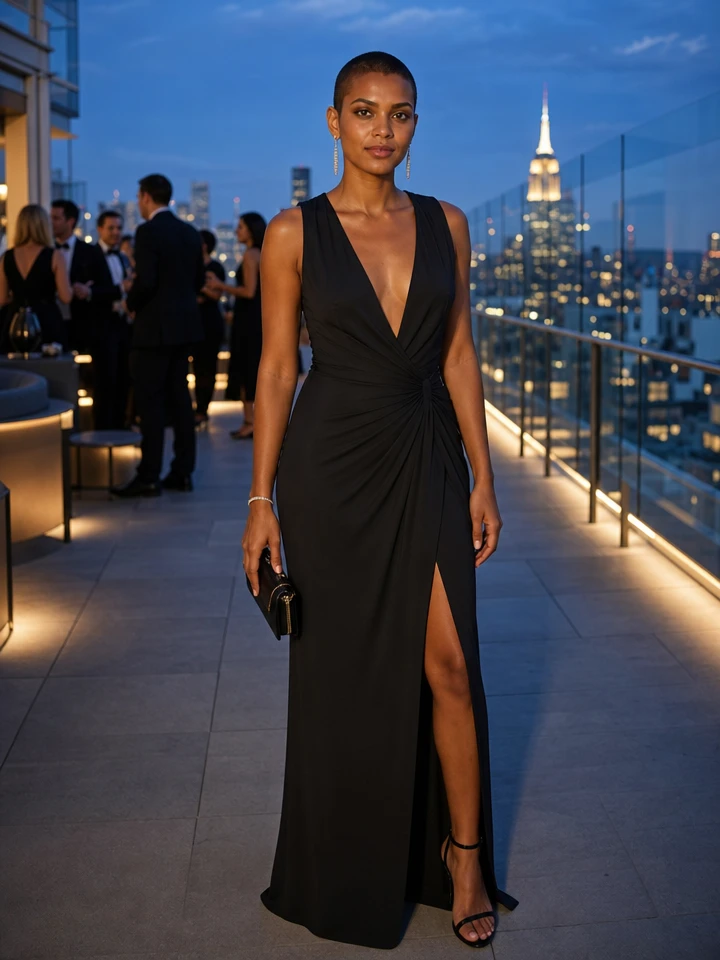
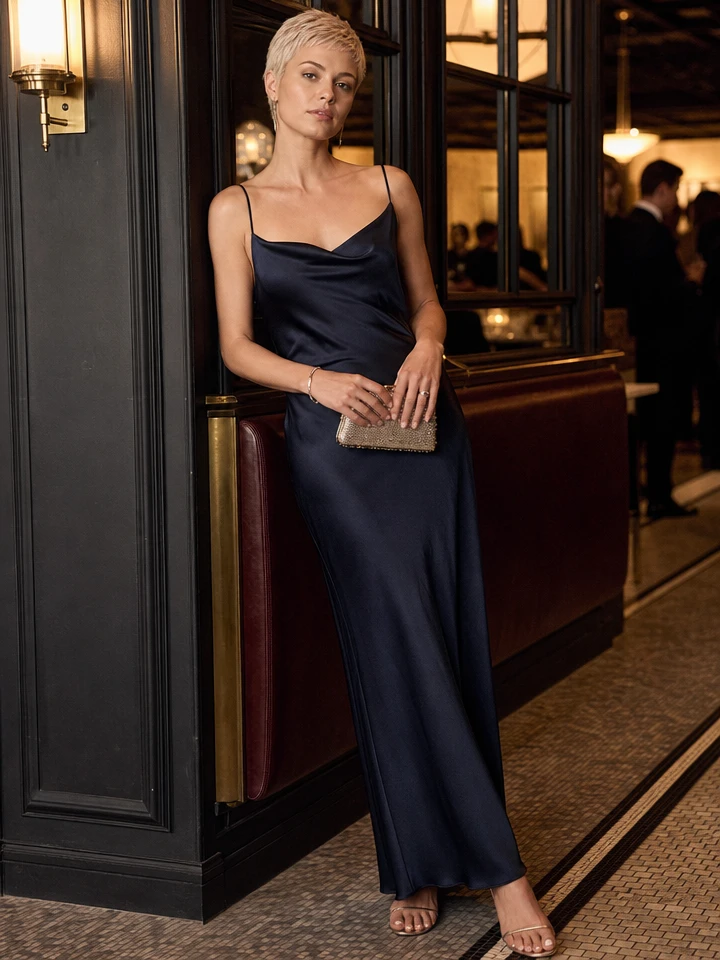
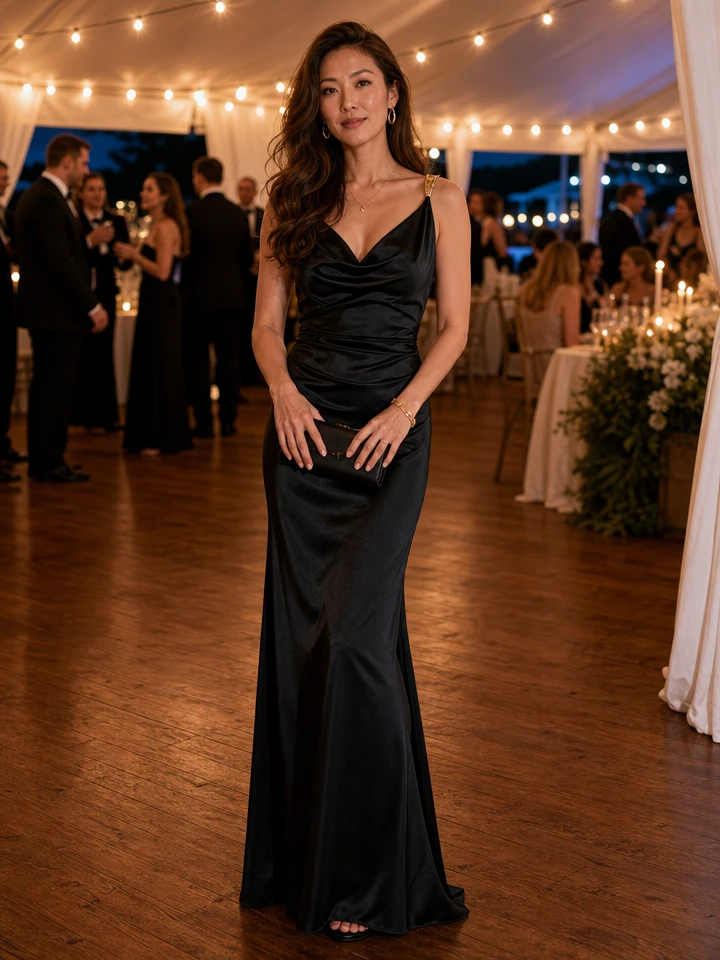
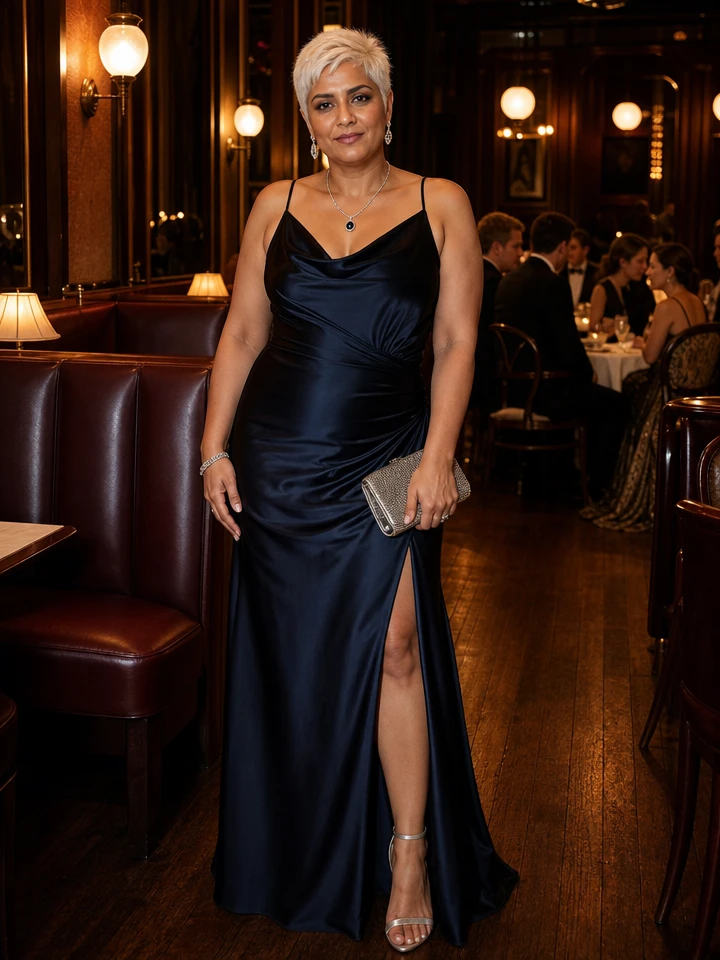
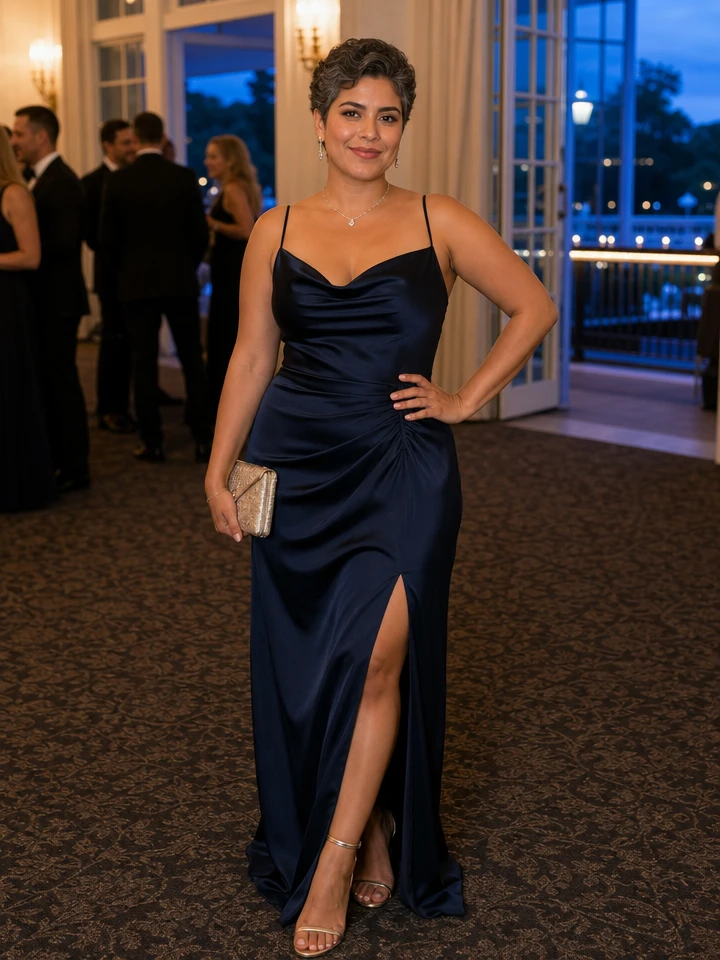
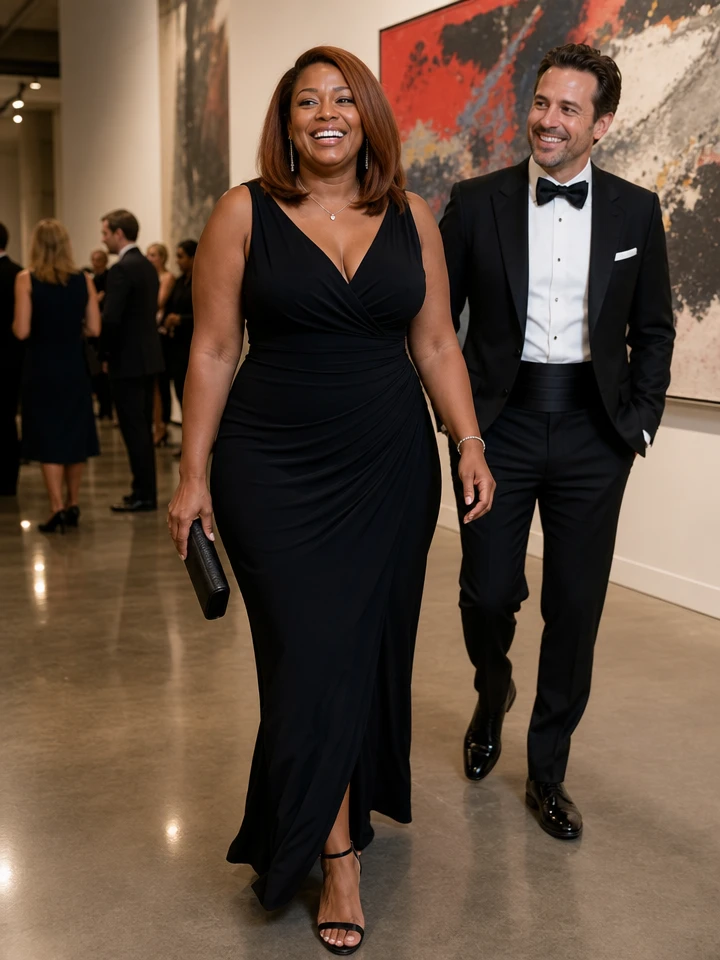
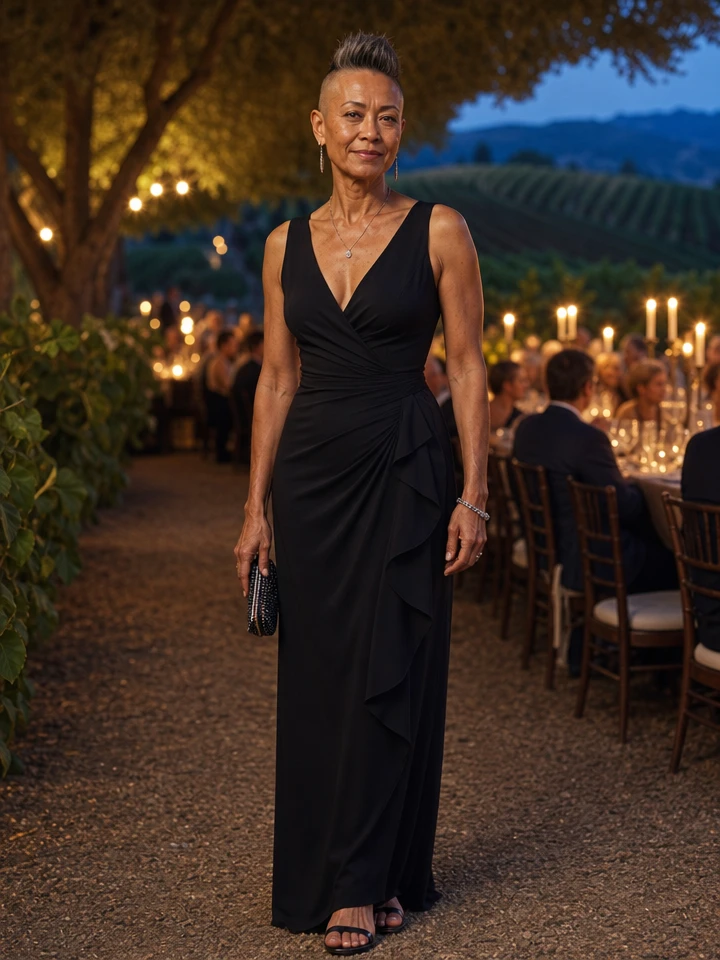
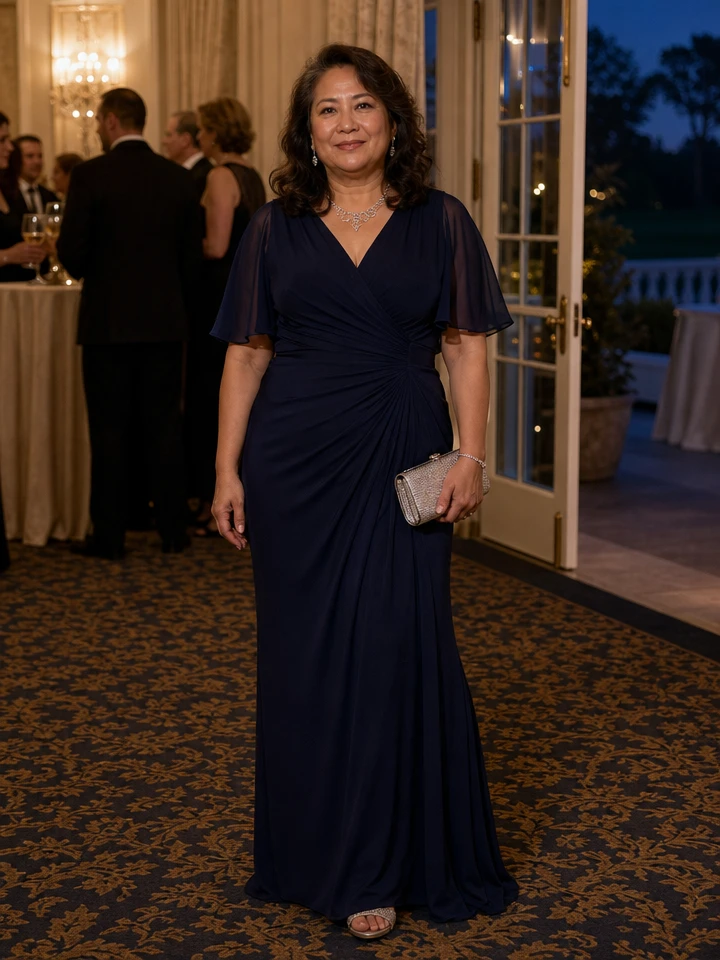
Feminine Presenting
A formal floor length gown (preferred) or a highly sophisticated, elegant cocktail dress/pantsuit.
Arrow keys or a swipe
Look plates
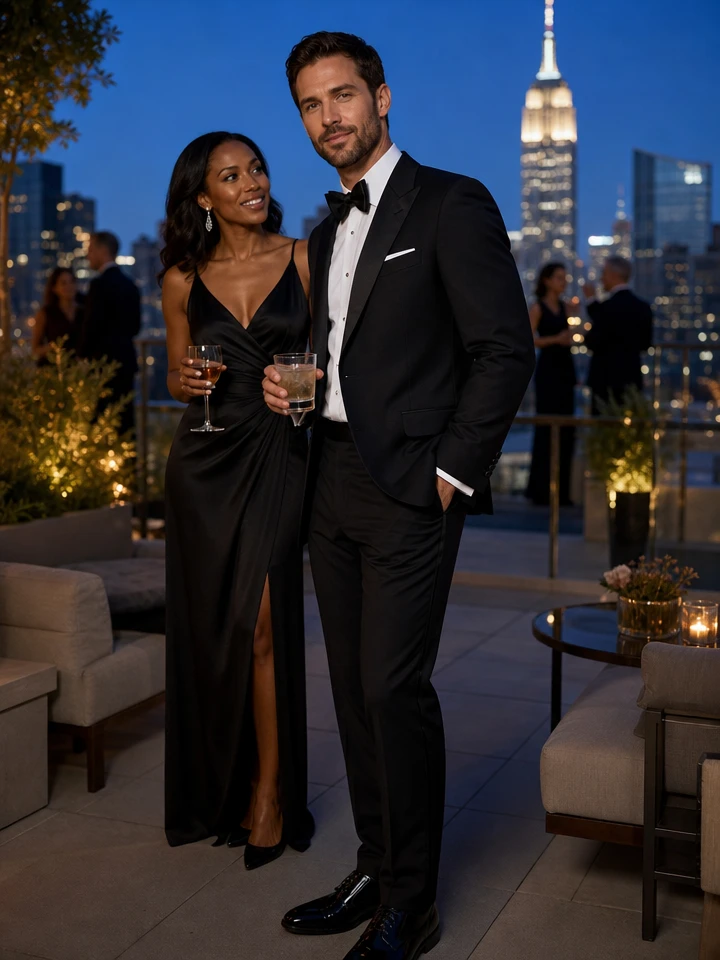
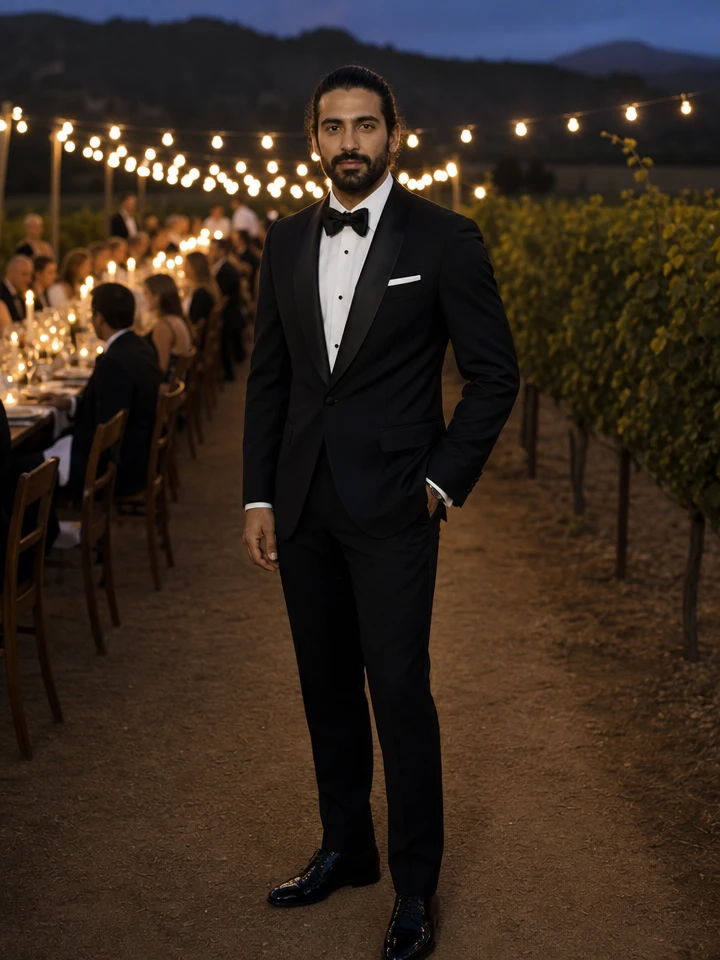
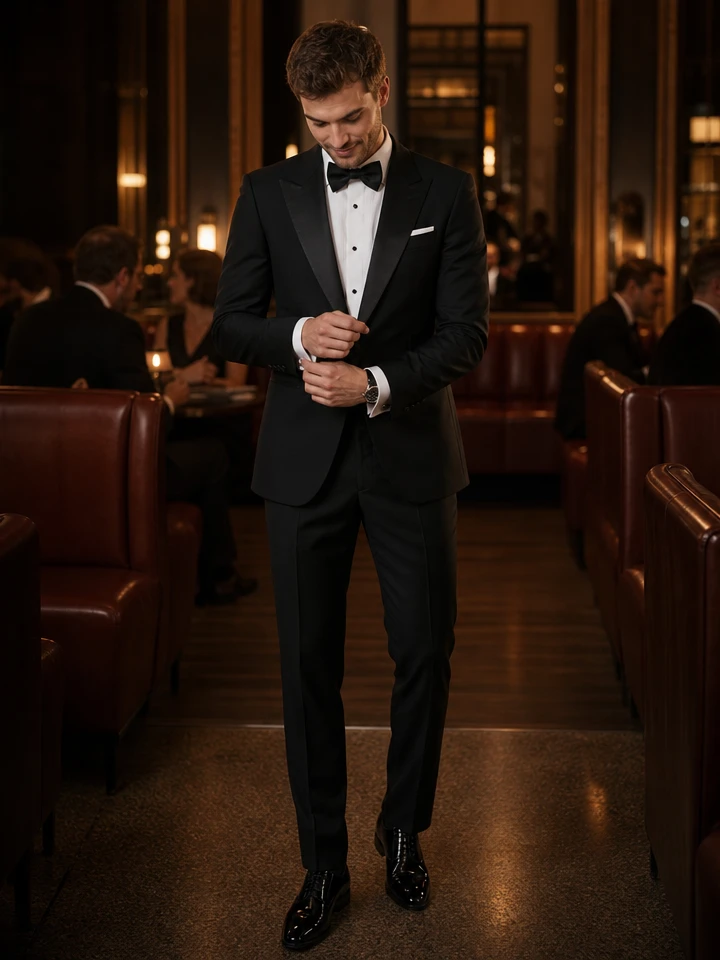
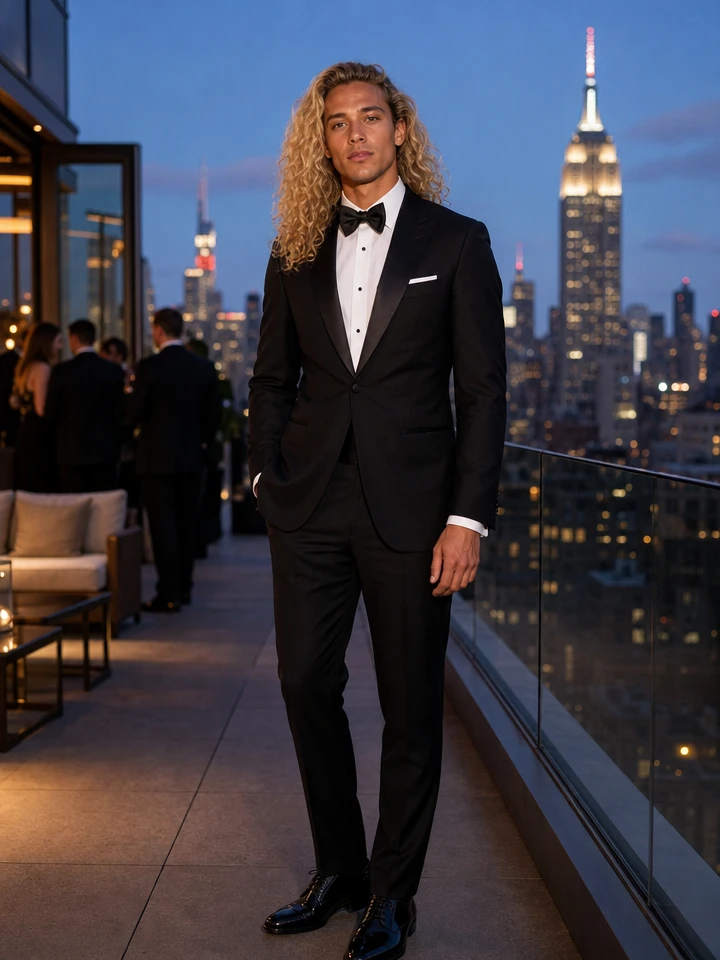
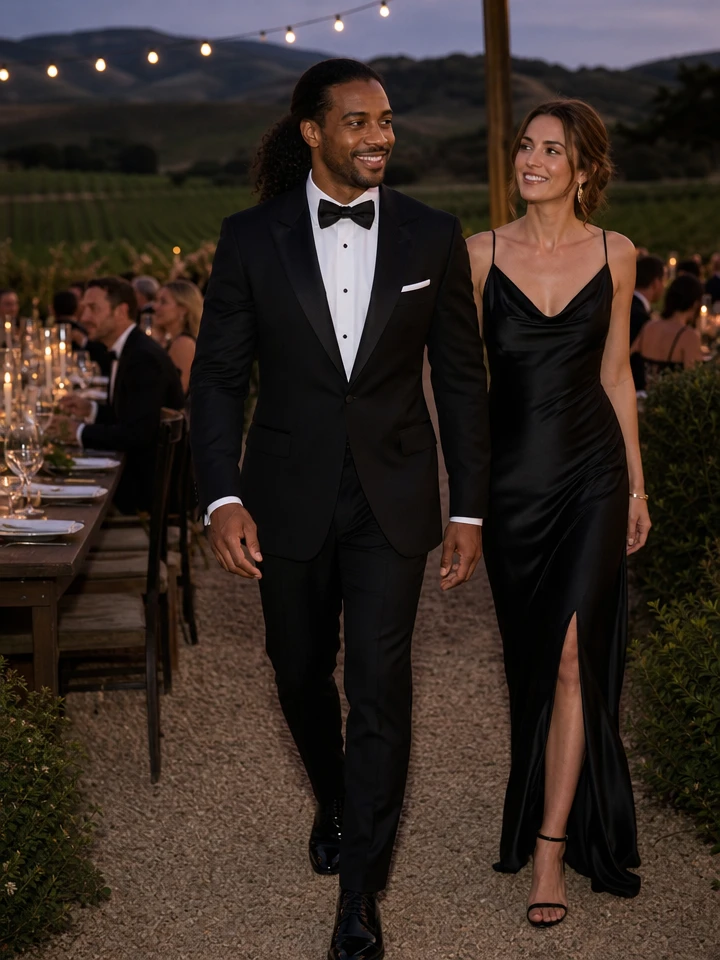
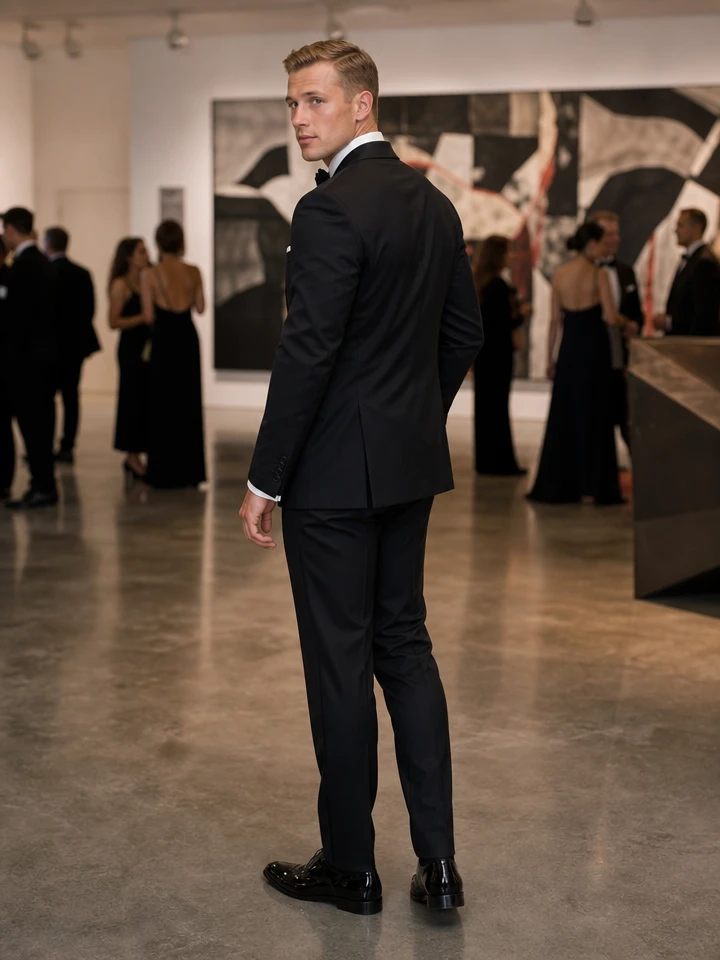
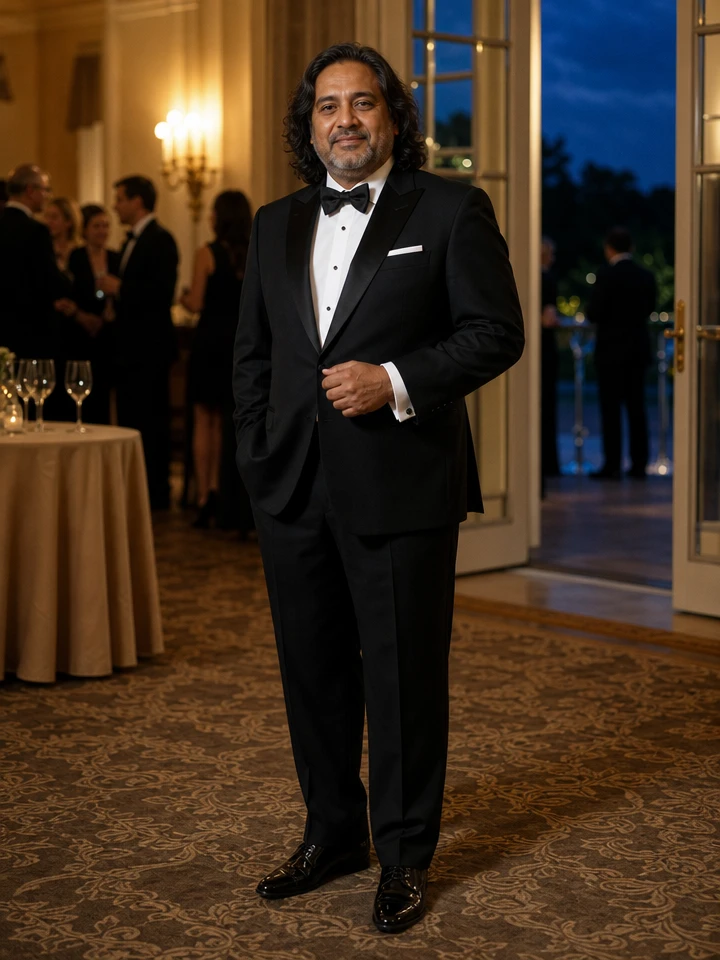
Masculine Presenting
A tuxedo (dinner suit) is the best option. The alternative is a very dark, formal business suit (black, charcoal, or navy) worn with a white dress shirt and a dark, conservative tie.
Arrow keys or a swipe
Black Tie Optional in the US
This wording is an American solution to an American problem. Tuxedo ownership is low, hire is easy but nobody wants to make it compulsory, and a host who writes plain Black Tie risks half the guest list panicking. Black Tie Optional keeps the room looking formal while giving people a way in, which is why it is increasingly common on US wedding invitations. It is standard at upscale weddings, at charity galas and museum benefits, at corporate award nights and at the winter holiday party circuit. The word optional is what causes the confusion, because it does not mean the formality is optional. It means one specific choice is, the choice between a tuxedo and a very dark suit. Everything below that, including a mid grey suit, a blazer with separate trousers or a daytime dress, is outside the code. Two American habits are worth naming. Guests routinely under read it and arrive in office wear, which is conspicuous in a ballroom. And a black suit, which some markets reserve for funerals, is entirely correct here and is often the better choice than navy under evening light. If you are choosing the suit route, a bow tie signals that you understood the invitation.
Wear it differently where you live? Tell us about a local variation.
Black Tie Optional in Australia
A loosely used Australian evening code where the wording matters less than the summer calendar it usually sits in.
The first thing to understand about this code in Australia is that the wording is unreliable. Hosts write Black Tie, Black Tie Optional and even black tie preferred to describe the same evening, and guests arrive across a wider range than in markets with firmer conventions. A short message to the host settles it faster than any general rule, and nobody here thinks the question is rude. The second thing is the calendar. The Australian formal evening season runs from roughly November to March, which is high summer, so a guest is often walking from a car park or a tram stop in twenty eight degrees to a room that will be crowded by nine. That makes fabric the decision that actually matters. A tropical weight dinner suit, a fine wool and mohair blend or an unlined jacket keeps the correct silhouette without the misery. An ivory or white dinner jacket is genuinely at home at a coastal, island or garden reception here and reads as correct rather than theatrical, which is not true in the Northern Hemisphere. For feminine guests, lighter evening fabrics such as silk, chiffon and fine crepe do the work that velvet does elsewhere, and open toe evening sandals are entirely standard. One boundary is worth naming. A Spring Racing Carnival invitation is a daytime code and has nothing to do with this one.
In Australia most events using this wording are charity balls, corporate awards nights and evening weddings in Sydney and Melbourne.
Where it comes up
- charity balls
- corporate awards nights
- summer evening weddings
Asked in Australia
Do Australian hosts use Black Tie and Black Tie Optional to mean the same thing?
Often, yes. Australian invitations use the two phrases loosely and inconsistently, so the wording carries less information here than it does in the United States or Britain. If the difference matters to you, message the host and ask whether most guests will be in dinner suits. That question is completely normal at an Australian event and will get you a straight answer, which is more useful than guessing from the card.
Is a white dinner jacket acceptable at an Australian Black Tie Optional event?
At the right venue, yes, and Australia is one of the few places where it reads as correct rather than as costume. An ivory or white dinner jacket with black evening trousers suits a coastal reception, an island resort or a warm garden wedding. Keep it for those settings. At a city ballroom in Sydney or Melbourne, black or midnight blue remains the right choice and a white jacket will look out of step with the room.
Wear it differently in Australia? Tell us about a local variation.
Black Tie Optional in the United Kingdom
A softening of Black Tie that Britain uses sparingly, since dinner jacket ownership here is high enough that hosts usually just write Black Tie.
Britain has a functioning Black Tie culture, and that changes what this wording means here. Dinner jacket ownership is comparatively high, hire is straightforward, and British hosts are generally comfortable writing Black Tie and expecting it, so the optional version is used more sparingly than in America. Where it does appear is predictable. Corporate and charity dinners in London that want a broad guest list, professional association evenings, and weddings where the couple would rather not put a hire bill on their guests. The practical consequence is that a British Black Tie Optional room usually looks like a Black Tie room, because most guests wear the dinner jacket anyway. That raises the bar for anyone taking the suit route. The suit has to look like an evening choice rather than a working one, which means a fine dark wool, a proper white shirt and a bow tie rather than a business tie. Colour is the specifically British adjustment. Black, charcoal and midnight blue are all read as properly formal here, so what matters more is finish. A fine wool with no shine and no pattern will look like a chosen evening suit rather than a work suit dressed up for the night. For feminine guests the code sits closer to full Black Tie than the wording suggests, so a floor length gown or a very formal midi in an evening fabric is the safe reading.
MASCULINE
Local notes
For marquee events in a British summer, a lighter weight dinner jacket or a fine dark suit is appropriate, while casual suits, light coloured suits, business attire below lounge suit standard, polo shirts and open neck shirts without a tie are not.
Where it comes up
- London charity dinners
- corporate awards evenings
- hotel ballroom weddings
Asked in the United Kingdom
What suit should I wear if I choose the suit option in Britain?
Midnight blue or a very dark charcoal in a fine wool, worn with a crisp white shirt, a bow tie and polished black shoes. A plain black suit can read as sombre next to a dinner jacket, so midnight blue or charcoal is often the sharper choice, though black is not wrong. Avoid anything with a pattern or a matt finish. The point of the suit route is that it should read as an evening decision, not as the suit you wore to work on Thursday.
Should feminine guests treat British Black Tie Optional as full Black Tie?
Broadly yes. Because most British guests wear the dinner jacket, the room ends up looking like a Black Tie room, and a daytime dress will stand out. A floor length gown, a very formal midi in silk, velvet or crepe, or a tailored evening jumpsuit are all correct. Keep the fabric in the evening register and add proper jewellery, since the wording relaxes the masculine side of the room far more than the feminine side.
Wear it differently in the United Kingdom? Tell us about a local variation.
Black Tie Optional in Canada
The default formal wording for Canadian galas and weddings, where the real planning problem is the walk in from the car.
Canada leans on this wording more than on plain Black Tie, and the reason is practical rather than stylistic. The formal calendar here is concentrated in the autumn and winter gala season, a lot of it charity and fundraising work, and hosts want a full room rather than a perfectly uniform one. So it appears at Toronto and Vancouver benefit dinners, at Montreal gala evenings, at corporate awards nights and at a large share of Canadian weddings. Guests generally read it upward, which means the room usually looks close to full Black Tie and anyone in a business suit is visible. The Canadian complication is not the clothing but the journey to it. From November to March an evening event starts with a cold walk from a car park or a transit stop, and the outfit has to survive it. A tailored wool overcoat in a dark colour, a dark scarf and leather gloves keep the line of the suit or dinner jacket intact. Many guests wear boots and carry dress shoes, which is entirely normal here and nobody comments. Feminine guests should plan a real coat rather than a wrap, and factor in that coat check at a large Canadian gala can take fifteen minutes at both ends of the evening.
We have no photographs of Black Tie Optional in Canada yet. Share a photo or a local variation.
Asked in Canada
How do I handle a Canadian winter arrival in evening dress?
Plan the outer layer as part of the outfit. A tailored wool overcoat in black, charcoal or navy sits properly over a dinner jacket or a dark suit, and a dark scarf and leather gloves finish it. Boots for the walk with dress shoes carried and changed inside is standard practice at Canadian formal events. For a gown, choose a full length coat rather than a wrap, and allow time at both ends of the evening for the coat check queue.
What should feminine guests wear to a Canadian Black Tie Optional gala?
A floor length gown, a formal midi in an evening fabric, or a tailored evening jumpsuit are all correct, and the room will lean long. Choose a fabric with some weight for winter events, since velvet, heavy crepe and structured satin photograph well and cope with the temperature swing between a cold entrance and a warm ballroom. Keep a wrap for indoors and a proper coat for outdoors, and choose a shoe you can walk in over salted pavement.
Wear it differently in Canada? Tell us about a local variation.
Black Tie Optional in Singapore
A hotel ballroom code in a tropical city, where the room is cold, the street is not, and the fabric has to handle both.
Singapore's formal evening life is a ballroom life, and this code sits squarely inside it. The venues are the large hotels and integrated resorts around Marina Bay and Orchard Road, and the occasions are charity galas, corporate award dinners, chamber of commerce evenings and the upper end of the wedding market. Because the guest lists mix local, expatriate and regional attendees, the room usually reads formal and most guests take the dinner jacket option, which raises the bar for anyone choosing the suit. A very dark suit in a fine wool with a bow tie is correct. A business suit with a work tie is not, and it will be obvious. The tropical climate changes the practical advice rather than the standard. Guests arrive having crossed from a taxi or an MRT exit into humidity, then spend four hours in aggressive air conditioning, so the cloth has to survive both. A tropical weight wool with a high twist holds its line through the transition better than a soft finish, and a light wrap or stole earns its place indoors rather than outside. Cultural dress is fully accepted at this level in Singapore, so a cheongsam in silk brocade, embroidered silk or fine satin is a correct and well understood answer rather than an exception.
MASCULINE
Local notes
The consistent air conditioning in Singapore's luxury hotel ballrooms means the jacket must always be worn, and underdressing at a luxury hotel gala is particularly visible.
We have no photographs of Black Tie Optional in Singapore yet. Share a photo or a local variation.
Asked in Singapore
Is a cheongsam appropriate for a Black Tie Optional event in Singapore?
FEMININE
Yes. A cheongsam in a formal fabric such as silk brocade, embroidered silk or fine silk satin is an excellent and culturally resonant choice for Black Tie Optional events in Singapore. The formality of the fabric and the tailored silhouette meet the Black Tie Optional standard. Ensure it is a formal quality piece rather than a casual cotton interpretation.
Does a Chinese wedding banquet in Singapore follow this dress code?
Often, and it is worth reading the invitation carefully. A hotel banquet with a Black Tie Optional line asks for the same range as a gala, so a dinner jacket or a very dark suit, and a gown, a formal midi or a cheongsam in an evening fabric. Two banquet specific points. Avoid white and stark black for the whole outfit, since both carry funeral associations, and expect a long seated evening in a cold room, so bring a wrap.
How do I dress for the shift between Singapore's humidity and a cold ballroom?
Choose a cloth that survives the transition. A tropical weight, high twist wool holds a crisp line through outdoor humidity and does not collapse, which soft finished suiting does. Carry the jacket outside and put it on before you enter. For feminine guests a light stole or wrap is genuinely useful indoors, since Singapore ballrooms run cold enough that guests in sleeveless gowns are uncomfortable by the second hour.
Wear it differently in Singapore? Tell us about a local variation.
Black Tie Optional in the United Arab Emirates
A luxury ballroom standard in the Emirates, always indoors, and read alongside clear expectations about coverage.
The Emirates run one of the most formal hospitality calendars anywhere, and this wording is how hosts open it up without lowering it. It appears at hotel ballroom galas, at charity and business awards evenings, at luxury private dinners and at the upper end of the wedding market in Dubai and Abu Dhabi. In practice the room is dressed at or near full Black Tie, so treat the suit option as a genuine alternative rather than as a relaxation, and make the suit look like an evening choice with a fine dark wool and a bow tie. Two local factors matter more than anything about the tailoring. The first is that these events are held at an indoor venue without exception, since the heat outside makes a ballroom the only workable setting for most of the year, and the outfit is therefore chosen for a strongly air conditioned room. The second is coverage. Feminine guests are expected to keep the shoulders covered and the hemline low, so a sleeved gown, a high necked evening dress or a gown worn with a fine wrap or bolero is the reliable answer, and a deep split or a plunging neckline is not. During Ramadan the calendar itself shifts, with events moving later and celebration muted, so confirm timing with the host.
FEMININE
Local notes
Dark jewel tones, metallic accents, black, navy and rich neutrals all suit the UAE's polished eveningwear culture, while jersey dresses, daytime fabrics, loud embellishment or anything nightclub leaning misses the tone of a formal evening event. Lightweight evening fabrics are useful year round, especially for arrivals, terraces and hotel entrances.
MASCULINE
Local notes
Lighter weight wool works best for most of the year in the UAE.
We have no photographs of Black Tie Optional in the United Arab Emirates yet. Share a photo or a local variation.
Asked in the United Arab Emirates
Are UAE Black Tie Optional events ever held outdoors?
Rarely, and only in the cooler months. For most of the year the heat and humidity make an outdoor evening impractical, so these events run in hotel ballrooms and private indoor venues in Dubai and Abu Dhabi. Between December and February a terrace or garden reception is possible, in which case a lighter evening fabric is sensible, but the ballroom remains the default assumption behind the wording.
How does Ramadan affect a formal event in the UAE?
The standard of dress does not relax but the timing and the tone change. Events move to after sunset, hospitality becomes quieter and anything that reads as celebratory dressing is better set aside. Keep the styling plain, avoid bold jewellery and bright accessories, and confirm the start time directly with the host, since published schedules often shift during the month. Many hosts simply move formal evenings outside Ramadan altogether.
Wear it differently in the United Arab Emirates? Tell us about a local variation.
Black Tie Optional in New Zealand
The most used high formality wording in New Zealand, where hiring a dinner jacket is normal and nobody pretends otherwise.
New Zealand writes this wording more often than plain Black Tie, and the reason says something about the country. Formal dressing here is taken seriously at the event but not treated as an identity, hire is normal and unremarkable, and hosts would rather have everyone in the room than have three people decline over a dinner jacket. It appears at Auckland charity galas, at Wellington awards dinners and charity events, at corporate ceremonies in both cities, and at the upper end of the wedding market at luxury hotels and winery estates. The important point is that the room still reads formal. Most guests take the dinner jacket option, so a mid weight business suit and a work tie will stand out for the wrong reason, and anyone choosing the suit should treat it as an evening decision with a very dark fine wool and a bow tie. Two local details. Merino suiting is a genuinely good choice here because it holds a sharp line through the temperature swing between a cold street and a crowded function room. And New Zealand evenings are cool for most of the year, Wellington especially, so a proper formal coat or a structured wrap is part of the outfit rather than an afterthought.
FEMININE
Local notes
New Zealand designers such as Juliette Hogan, Trelise Cooper and Karen Walker offer excellent Black Tie Optional pieces with a distinctive local sensibility, often in earthy, natural tones that reflect the landscape. Fine jewellery works best, and pounamu (New Zealand greenstone) or pearl pieces add a culturally meaningful local touch, while a heavy fur stole or overly theatrical accessories look out of place given the preference for understated elegance. In summer, from December to February, a lighter weight formal gown in silk crepe or chiffon is advisable, because evenings can be warm, particularly in Auckland.
We have no photographs of Black Tie Optional in New Zealand yet. Share a photo or a local variation.
Asked in New Zealand
What New Zealand events typically use Black Tie Optional?
Black Tie Optional is one of the most common high formality dress codes in New Zealand. It appears frequently at Auckland charity galas at the Langham Auckland, SkyCity Grand Hotel and Sofitel Viaduct Harbour, at Wellington awards dinners and charity events at the Michael Fowler Centre and TSB Arena, at major corporate awards ceremonies in Auckland CBD venues, at upscale weddings in luxury New Zealand hotels and winery estates, and at New Zealand racing events during formal occasions at Ellerslie Racecourse.
Is hiring evening wear normal in New Zealand?
Completely, and it carries no stigma at all. Hire shops in Auckland, Wellington and Christchurch cover the main centres and most guests who do not own a dinner jacket hire one rather than take the suit option. Check the fit rather than accepting the first jacket offered, since a badly fitted hire is more noticeable than a well chosen dark suit, and confirm the hire includes a dress shirt, a black bow tie and formal shoes.
How cool do New Zealand evenings get at a formal event?
Cooler than most guests plan for, and Wellington in particular can be cold and windy in any month. Treat the outer layer as part of the outfit rather than something to leave in the car. A formal wool overcoat over a dinner jacket, or a structured wrap or evening coat over a gown, covers the walk between a car park and the venue. Merino suiting handles the swing between a cold street and a warm crowded room better than most cloths.
Wear it differently in New Zealand? Tell us about a local variation.
Black Tie Optional in Ireland
An Irish formal standard shaped by a strong ball and debs culture, where a dark suit worn properly has always been an accepted answer.
Ireland has an unusually deep formal ball culture for a country of its size, and it starts early. The debs, the school leavers ball that most, though not all, schools still hold, runs on exactly this compromise, with some guests in hired dinner jackets and others in a good dark suit, and nobody treating the second as a failure. College balls, GAA club dinners, charity nights and hotel led formal evenings carry the same habit into adult life. So when a Dublin, Cork or Galway invitation says Black Tie Optional, Irish guests already know how to read it. The dinner jacket is preferred, the very dark suit is genuinely accepted, and the line falls below that. What separates a good suit choice from a poor one here is finish rather than price. A dark fine wool, a proper white shirt, a bow tie instead of a business tie and polished shoes read as an evening decision. The same suit with a striped work tie reads as a man who came straight from the office. Two Irish practicalities. Venues are frequently hotels with a car park and a walk, so a proper overcoat and an umbrella matter, and hotel function rooms warm up quickly, which argues for a lighter evening fabric than the weather outside suggests.
FEMININE
Local notes
Black, navy, emerald, burgundy and other deeper evening colours work especially well for Irish weddings and gala settings, where the tone is formal but not rigidly ceremonial.
We have no photographs of Black Tie Optional in Ireland yet. Share a photo or a local variation.
Asked in Ireland
Does the debs tradition explain how Ireland reads this code?
It helps a great deal. The debs is the Irish school leavers ball, and it has always run on a mix of hired dinner jackets and good dark suits with nobody treating the suit as second best. Most Irish adults have done it, so they arrive at a Black Tie Optional wedding or gala already understanding that both options are real. The lesson it teaches is the useful one, which is that the suit route works when it is finished properly rather than worn as office clothing.
What should I plan for weather at an Irish formal night?
A wet walk in and a warm room once you are inside. Most Irish formal events are at hotels with a car park between you and the door, so a proper dark overcoat and a compact umbrella are worth having, and a rubber soled dress shoe survives a wet path better than a leather sole. Once indoors, function rooms heat up fast, so choose a lighter evening fabric than the weather outside would suggest and keep the coat at the cloakroom.
Wear it differently in Ireland? Tell us about a local variation.
Common mistakes
FEMININE
Wearing an overly short or casual dress. Even though 'optional' offers flexibility, the event is still formal. Avoid casual fabrics like jersey or denim, overly trendy or revealing silhouettes, and excessive costume jewelry.
MASCULINE
Treating 'optional' as permission to dress casually. A light colored suit, business casual separates, or chinos are too informal. If wearing a suit instead of a tuxedo, it must be dark (navy, charcoal, or black) and impeccably tailored.
Fabric and colour
FEMININE
Silk, satin, velvet, crepe, or high quality structured fabrics. Rich dark tones (black, navy, burgundy, emerald) or metallic finishes work well. A floor length gown or a refined cocktail dress in luxurious fabric are both appropriate.
MASCULINE
If wearing a tuxedo, black or midnight navy wool barathea with satin faced lapels. If wearing a suit, dark wool in navy, charcoal, or black. Avoid lighter fabrics or casual textures like tweed or flannel. The shirt must be a crisp white cotton.
Footwear and accessories
FEMININE
Formal heels, strappy evening sandals, or elegant pointed flats. A clutch bag in satin, leather, or metallic. Fine jewelry or a statement piece such as earrings, a bracelet, or a delicate necklace.
MASCULINE
Polished black leather Oxford or Derby shoes. If wearing a tuxedo, patent leather is ideal. A tie or bow tie is expected. A bow tie pushes a dark suit closer to tuxedo formality. Cufflinks and a pocket square add polish.
Seasonal
FEMININE
In summer (Jun to Aug), lighter silk or chiffon gowns are comfortable and appropriate, particularly for outdoor events in warm locations like the Hamptons, Southern California, or Florida. Open toe heels and strappy sandals work well. In winter (Dec to Feb), velvet dresses, heavier fabrics, and a formal wrap or evening coat are ideal.
MASCULINE
In summer (Jun to Aug), a lighter weight wool tuxedo or suit is practical, especially in humid cities like New York or Washington DC. A white dinner jacket is acceptable at outdoor or resort events in warm weather locations. In winter (Dec to Feb), heavier wool suits and velvet dinner jackets are appropriate.
Frequently asked
Should I wear a tuxedo or a dark suit to a Black Tie Optional event?
MASCULINE
Either is correct. A tuxedo is the preferred choice and shows you have made the effort, but a dark suit (navy, charcoal, or black) with a white dress shirt and tie is fully acceptable. When in doubt, a tuxedo is always the safer option.
Can women wear a shorter dress to a Black Tie Optional event?
FEMININE
Yes. A cocktail length or midi dress is appropriate for Black Tie Optional. A floor length gown is also excellent. The key is choosing a high quality, formal fabric and a polished, refined silhouette.
What does 'optional' actually mean? Can I dress casually?
No. 'Optional' refers only to the choice between a tuxedo and a formal dark suit. It does not mean casual dress is acceptable. Business casual, smart casual, or anything below a well tailored dark suit would be underdressed.
Is Black Tie Optional less formal than Black Tie?
Yes, slightly. It signals that the host acknowledges not all guests own a tuxedo. The event itself will still be formal, and guests in tuxedos and floor length gowns will be present. Dress at the formal end of the spectrum regardless.
What color suit is best if I'm not wearing a tuxedo?
MASCULINE
Navy or charcoal are the most appropriate choices. Black is also acceptable. Avoid lighter colors like mid gray, tan, or light blue as they will look underdressed in a room full of tuxedos.
Can I wear a jumpsuit to a Black Tie Optional event?
FEMININE
Yes. A well tailored, formal jumpsuit in a luxurious fabric like crepe, silk, or satin is a stylish and appropriate choice. Pair it with heels and refined accessories to maintain the formal tone.
Should I wear a bow tie or a necktie with a dark suit?
MASCULINE
Both are acceptable. A bow tie signals you have aimed for the more formal end of the dress code, which is always appreciated. A dark silk necktie is perfectly fine if you prefer. Avoid novelty ties, bright patterns, or knitted ties.
Why do American hosts write Black Tie Optional instead of Black Tie?
Because it protects the tone of the evening without excluding anyone. Tuxedo ownership in the United States is low, and a host who writes plain Black Tie knows some guests will either hire in a hurry or decline. Black Tie Optional keeps the room looking formal, since most guests still dress at the top of the range, while giving anyone without evening wear a clearly correct alternative. It is increasingly common on American wedding invitations.
Is a black suit the right choice for Black Tie Optional in the United States?
Yes, and often the best one. A black or midnight suit reads closest to evening wear under ballroom lighting, which is exactly the effect the code is asking for. Navy and charcoal both work. Mid grey, tan and any pattern do not, and they are the surest way to look underdressed in the photographs. Pair the suit with a white dress shirt, a dark tie or a bow tie, and polished black leather shoes.
Seen this wording on an invitation? Tell us how it went.
Was this right where you are?
Tell us what the invitation said.
Where this sits
This code sits in the formal band.
Hosts also file it under the wedding hub.
Related dress codes
From the ledger
- The Most Misunderstood Dress Codes and What They Actually Mean
Black Tie Optional, Semi Formal, Smart Casual and other dress codes are easy to misread. Learn what the most confusing codes actually ask you to wear.
- Are Dress Codes Becoming More Casual? How Weddings, Workplaces and Events Are Changing
Workplaces are dressing down while weddings are becoming more flexible. See how modern dress codes are changing and why formalwear still survives.
Know a local variation
Dress codes shift between cities and between crowds. If Black Tie Optional means something different where you are, tell us and we will look into it. Submit a dress code.
The DressDex letter
One note when a code changes or a country gets new local notes. No more than that.