WHITE TIE · CANADA · FORMALITY 10 OF 10
White Tie
The most prescriptive evening code in Canada, kept alive by vice regal, diplomatic and a few legacy ball traditions.
Formality
Sits in the most formal band of the scale.
Quick answer
White Tie in Canada is a ceremonial code rather than a social one. It surfaces at vice regal dinners, at embassy and high commission evenings, and at a small number of legacy balls and orders of chivalry occasions, with Toronto, Montreal and Ottawa accounting for most of them. Winter is the operative complication, because a Canadian formal evening usually starts in a coat check queue. Plan the overcoat, the boots and the change of shoes as part of the outfit rather than as an afterthought, and treat the ensemble itself as fixed.
Everything below is written for the tab you pick, including the mistakes, the fabrics and the questions.
What to wear
REFERENCE PLATES · UNITED STATES EDITION
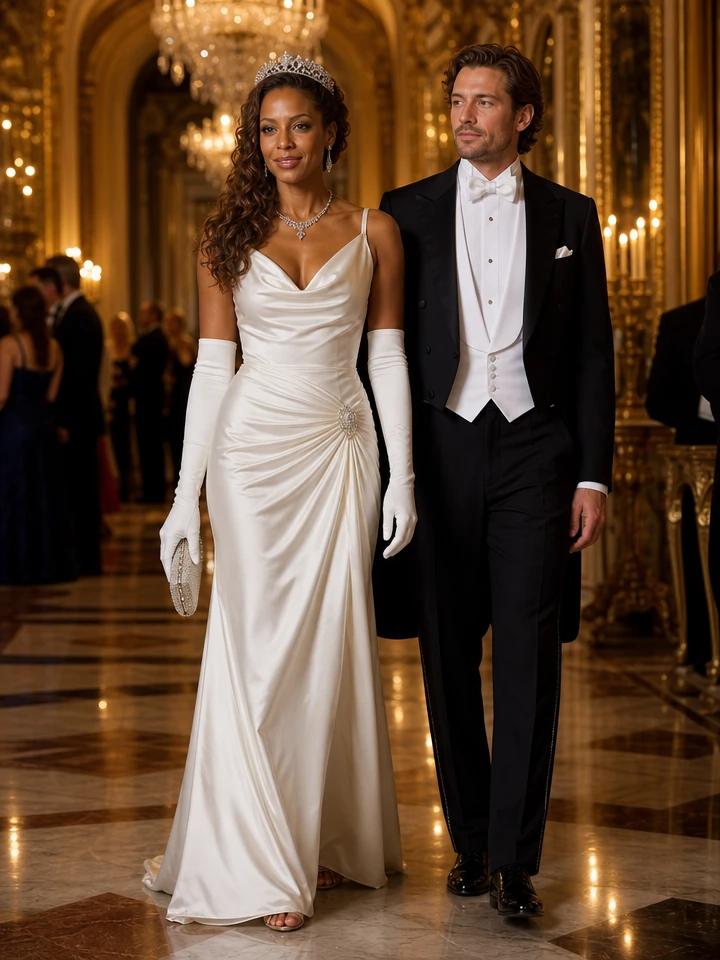
Feminine Presenting
A full length evening gown is the standard, supported by formal jewellery, evening shoes, and often gloves depending on the level of tradition. In Canada, White Tie is so rare that when it appears, the safest reading is strict ceremonial eveningwear rather than modern gala interpretation.
REFERENCE PLATES · UNITED STATES EDITION
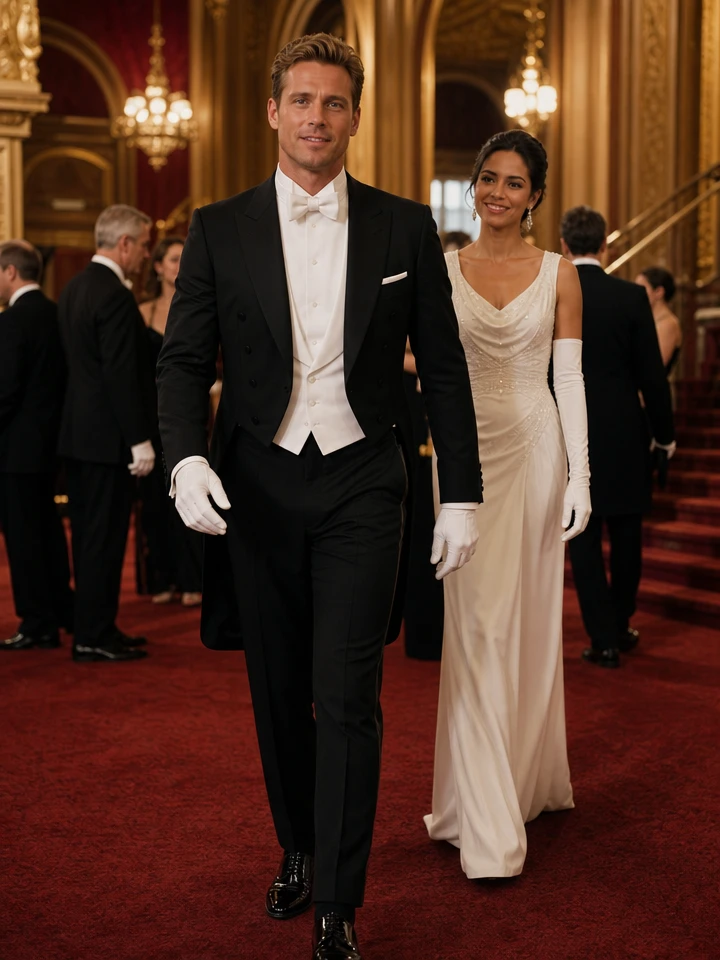
Masculine Presenting
A black tailcoat, white pique waistcoat, white wing collared shirt, white bow tie, formal White Tie trousers, and patent evening shoes are required. A tuxedo is not enough. If the invitation mentions decorations, orders, or protocol, follow it exactly.
REFERENCE PLATES · UNITED STATES EDITION
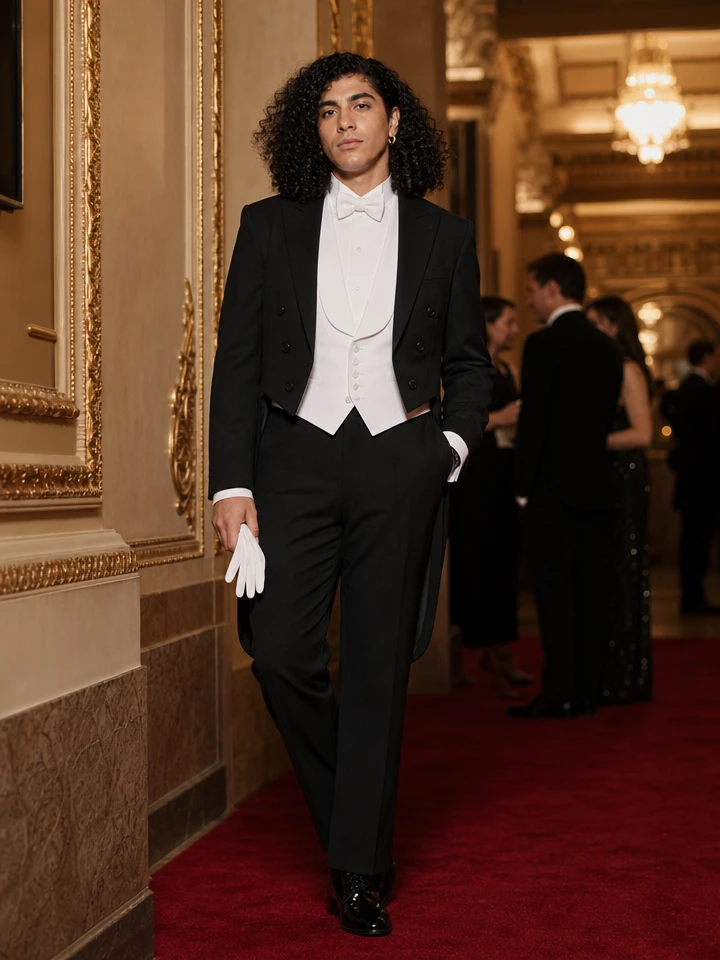
Gender Neutral
Choose either the full traditional White Tie tailcoat ensemble or an equally strict full length ceremonial evening look that respects the highest level of formality. The goal is adherence to the code, not reinterpretation of it.
Common mistakes
FEMININE
Avoid cocktail or floor skimming dresses that stop short of true full length, visibly trendy styling, costume jewellery, and anything that feels like modern gala dressing rather than strict ceremonial eveningwear. White Tie should look timeless, not merely glamorous.
MASCULINE · GENDER NEUTRAL
Do not wear a tuxedo, black bow tie, ordinary evening suit, or standard leather dress shoes. Those are Black Tie or lower. White Tie in Canada is rare enough that a host using it is almost certainly expecting the full traditional specification.
Fabric and colour
FEMININE
Luxurious full length evening fabrics such as silk, satin, chiffon, taffeta, and velvet are all appropriate. Dark tones, jewel tones, black, white, and other classic evening colours tend to suit Canadian White Tie contexts best because they align with the code's ceremonial seriousness.
MASCULINE · GENDER NEUTRAL
The tailcoat and trousers should follow traditional White Tie cloth and colour expectations with essentially no stylistic latitude. Black formal cloth, white pique, stiff formal shirting, and the prescribed black and white structure are part of the code itself rather than aesthetic preference.
Footwear and accessories
FEMININE
Formal heels or equally formal evening flats, a small evening bag, and fine jewellery are the standard. Gloves may still be appropriate at the most traditional White Tie occasions, and highly ceremonial invitations may imply a more protocol aware finish overall.
MASCULINE · GENDER NEUTRAL
Black patent evening shoes are the standard, supported by the correct shirt studs, cufflinks, and any decorations or orders specified by the invitation. White gloves remain traditional even if not always mandatory. A wristwatch is traditionally avoided.
Seasonal
Seasonal Considerations
White Tie itself does not relax for season, but Canadian climate affects arrival and departure. In winter, a formal evening coat or cape, gloves, and carefully planned transport matter because outerwear still needs to respect the seriousness of the event without altering the prescribed indoor dress code.
In Canada
Where the code survives in Canada
Canadian White Tie lives in the ceremonial layer of public life. Vice regal entertaining during a state visit is the clearest case. Beyond that you find it at embassy and high commission evenings, at investitures and orders of chivalry dinners, and at a handful of long running balls in Toronto, Montreal and Vancouver that have kept the instruction for continuity. Because it is so narrow, an ordinary Canadian charity gala that prints White Tie is almost always signalling ambition rather than enforcing a rule, and the room will be dinner jackets. The rule of thumb is the host. An institution of state means the instruction is literal. A committee means it is aspirational, and a very good tuxedo will not embarrass you.
The winter arrival is the real problem
Almost every Canadian White Tie evening happens between November and March, which turns the arrival into a logistics exercise. You will be crossing a car park or a sidewalk in a serious coat, and the coat check is the first room you enter. Wear a proper full length formal overcoat over the tailcoat rather than a parka, carry the patent shoes and wear snow boots to the door, and add a scarf you do not mind surrendering for the evening. Women should plan for the gown hem, because salt and slush do not come out of silk. A wrap that actually covers the shoulders is worth more here than any decorative alternative, and gloves are doing two jobs at once.
Frequently asked
Can I wear a tuxedo to a White Tie event?
MASCULINE · GENDER NEUTRAL
No. A tuxedo is Black Tie attire, not White Tie. If the invitation says White Tie in Canada, the safest assumption is that the full tailcoat ensemble is expected.
Do women need gloves for White Tie?
FEMININE
Traditionally, yes, or at least they remain one of the most correct accessories for the code. Not every modern White Tie event enforces gloves, but they are still part of the classic standard and may feel especially appropriate in ceremonial Canadian contexts.
How long should a gown be for White Tie?
FEMININE
Full length. White Tie does not leave much room for approximation, and a shorter dress usually falls below the standard even if it is otherwise formal.
When would I actually encounter White Tie in Canada?
Very rarely. The most plausible examples are high level vice regal or state style dinners, embassy occasions with strict protocol, and a very small number of elite ceremonial or charitable events. For most Canadians, it is far less common than Black Tie.
Can I rent White Tie instead of buying it?
MASCULINE · GENDER NEUTRAL
Yes, and for most Canadians that is the practical choice. Because White Tie is so uncommon, specialist rental or formalwear services are usually the best route, especially if the invitation expects precise traditional details.
Is White Tie ever used at Canadian charity galas?
It gets printed, but it is rarely enforced. If the host is a state institution or an embassy, take the instruction literally. If it is a committee running a fundraiser in Toronto or Vancouver, expect a room of dinner jackets and treat a very good tuxedo as safe.
How do I handle a Canadian winter arrival in White Tie?
Wear a full length formal overcoat rather than a parka, travel in snow boots and carry the patent shoes, and accept that the coat check is part of the evening. For a gown, guard the hem against salt and slush and bring a wrap that genuinely covers the shoulders.
Can I wear a toque or ordinary winter gear over White Tie?
Over the top of it, yes, and nobody will judge you for crossing a frozen car park sensibly. The point is that all of it comes off at the coat check, so the outer layer should be something you are happy to hand over and the formal ensemble underneath should be untouched.
Where this sits
This code sits in the most formal band.
Related dress codes
From the ledger
- Tuxedo vs Dinner Suit. Why Americans and Britons Use Different Names
Tuxedo, dinner jacket and dinner suit often describe the same Black Tie outfit. Learn where the names came from and why they differ across countries.
- Why Semi Formal Means Different Things in Australia, Britain and America
Semi Formal changes meaning across Australia, Britain and America. Learn why the same dress code can produce different outfits in each country.
Know a local variation
Dress codes shift between cities and between crowds. If White Tie means something different where you are, tell us and we will look into it. Submit a dress code.
The DressDex letter
One note when a code changes or a new edition lands. No more than that.